



2025 and the Great Fracture: Who Will Control the AI War?
As the EU advances its AI Act, the US pushes for innovation, and China tightens state control, 2025 marks a critical split in global technology governance. Experts warn that the window to regulate frontier models is closing.


WISE NEWS PRESS / ISTANBUL, Turkiye — Nov. 22, 2025
The year 2025 has caught the world at one of the most critical junctures in technological history. Artificial Intelligence (AI) is no longer a vague promise of the future or a distant sci-fi threat. It is a reality that is already reshaping economies, upending power balances, influencing elections, and raising fundamental questions about the limits of human responsibility.
The debate is no longer about "Will AI change everything?" Instead, the conflict has shifted to determining how this change will happen and, crucially, who will determine the rules.
Governments, regulators, tech giants, and leading researchers are currently clashing over the architecture of regulation: Who sets the rules, to whom do they apply, who is protected, and who holds the power to dismantle or approve a powerful AI model?
While Europe presses ahead with its landmark AI Act, the United States is attempting to build a more flexible model based on innovation, and China aims to combine technological leadership with strict state control. Meanwhile, prominent scientists such as Geoffrey Hinton, Yoshua Bengio, Stuart Russell, and Timnit Gebru are sounding the alarm.
The result is a multi-faceted war for the future. And 2025 is going down in history as the year it all began to crystallize.


The European Union: The ambitious and rigorous approach
The European Union became the first region in the world to decide that AI required a comprehensive institutional framework. The EU AI Act, the flagship of European digital policy, attempts to develop a risk categorization system:


-
Unacceptable risk
-
High risk
-
Limited risk
-
Low risk
The logic is clear: Protect citizens and fundamental rights, and prevent abuse in critical areas such as health, justice, education, and public administration. However, the devil is in the details.
At the heart of Europe's concern lies the idea that AI cannot be left to the absolute freedom of the market but must operate within a safe environment.
"We cannot allow AI to develop in an uncontrolled way," summarizes Margrethe Vestager, former Executive Vice President of the European Commission. "Protecting citizens is a prerequisite for innovation."
European Parliament President Roberta Metsola added, "AI can transform Europe, but only if there are rules to ensure it serves the people."
However, many tech companies argue that over-regulation stifles innovation. Vassilis Stoidis, CEO of 7L International and MassinGRID, argues:
"We don't need a specific regulatory framework for AI. Existing data protection legislation for individuals should cover AI. We must avoid over-regulation, as it leads to the elimination of individual rights and progress."
Caption: The robot dog 'Loona' is displayed at a tech convention in Barcelona, Spain. (Photo: John Locher / AP)
Stoidis evaluates Europe's current position: "However, regarding AI, Europe can strengthen and simplify its legislation regarding the protection of the individual. Simplification also means extra strengthening of individual rights."
Europe is trying to be the planet's 'regulatory model' but faces a massive problem: It does not have its own tech giants to scale and implement its strategy. While tech companies fear regulations will slow innovation, many SMEs worry about compliance costs.
The US: Regulation through the back door
The United States does not have a uniform law like the EU AI Act. Instead, they utilize:
-
Executive orders,
-
Guidelines for federal agencies,
-
State-level legislative initiatives,
-
Export controls on advanced chips.
The American model seeks to provide companies with room for growth. However, the administration is simultaneously trying to limit the spread of strategic technologies to China through export controls. According to reports, US President Donald Trump is considering pressuring states to halt disparate AI regulations in a draft executive order.
China: Control, speed, and strategic superiority
China has adopted some of the strictest yet fastest regulations in the world. Since 2022, it has implemented:
-
Regulations on algorithms,
-
Rules on deepfakes,
-
An advanced state licensing system.
The philosophy is based on state oversight: AI is strategic infrastructure and must be consistent with state interests. The Chinese approach allows for the very rapid adoption of new technologies at scale. However, it is criticized for a lack of transparency, the absence of independent auditing, and restrictions on freedom of use.
The 'Godfathers' of AI sound the alarm
Yoshua Bengio: 'The most powerful models must not remain unchecked' One of the three 'godfathers' of AI, Bengio has been the most vocal proponent of regulating frontier models—massive systems that could gain unpredictable capabilities. He proposes independent safety tests, mandatory transparency of training data, and international coordination similar to that used for nuclear energy.
Geoffrey Hinton: 'Afraid of his own creation' Hinton, who left Google to speak freely, is perhaps the most iconic figure in the debate. In speeches, he explains that large-scale models develop unpredictable behaviors and insists on international cooperation and limits on system autonomy.
Stuart Russell: 'We built machines we don't know how to control' Russell, one of the most respected academics in AI safety, argues that the fundamental error is traditional system design that maximizes a rigid objective. He states that systems must be uncertain about their objectives so they can be corrected by humans. His proposed new architecture: "AI systems that defer to humans."
Timnit Gebru: 'The voice of ethics and accountability' Ousted from Google over AI ethics disputes, Gebru emphasizes that the debate cannot be just about safety; it must also be about justice. She highlights the risks of discrimination, bias, and social inequality.
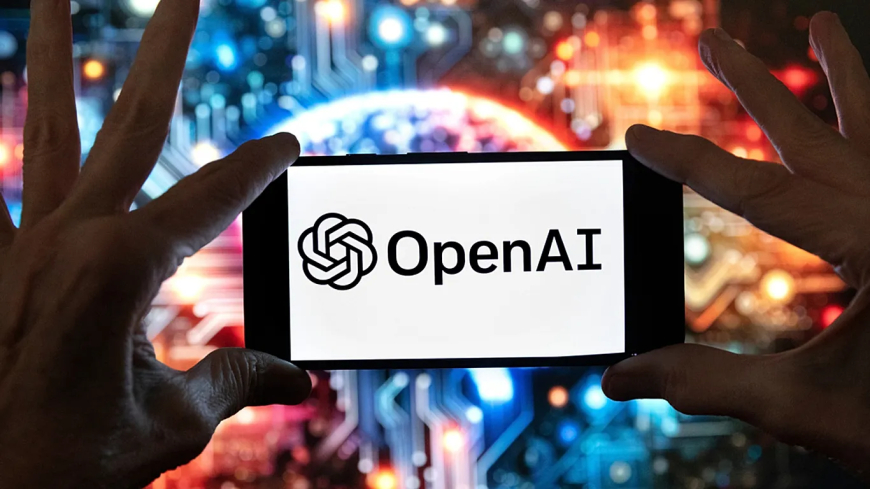
Caption: The OpenAI logo is displayed on a mobile phone in New York. (Photo: Michael Dwyer / AP)
Frontier Models and the black hole of power
The "Frontier Models" of the next two years will have thousands of times more parameters than current ones. They will be able to:
-
Autonomously generate code,
-
Conduct scientific research,
-
Manage crises,
-
Perform complex tasks without human oversight.
Who will certify them? Who decides if they are safe? This is currently the most heated topic of debate.
Experts involved in international initiatives (G7, OECD, UN AI Advisory Body, etc.) are proposing a new global cooperation model. This architecture includes an international body to:
-
Test models before they are released,
-
Assess capabilities, risks, and vulnerabilities,
-
Issue binding certificates.
Mandatory disclosure requirements would include training sources (data), computing power, and the fundamental principles of model operation. This does not mean the disclosure of trade secrets, but it does require democratic accountability.
Who will win the war?
The war to regulate AI is not just institutional, but also:
-
Economic (who will lead the industry),
-
Geopolitical (who will set global standards),
-
Social (who will be protected),
-
Democratic (who will control information).
The big question remains: Will AI serve society, or will it define it? The answer depends on the decisions made within the next two years. And this window of opportunity will not stay open for long.
What's Your Reaction?
 Like
0
Like
0
 Dislike
0
Dislike
0
 Love
0
Love
0
 Funny
0
Funny
0
 Wow
0
Wow
0
 Sad
0
Sad
0
 Angry
0
Angry
0

Editor | Wise News Press — Delivering accurate, timely global news with integrity, insight, and editorial responsibility.



















Comments (0)