



Russia’s Ukraine war reshapes global psychology and security
Russia’s invasion of Ukraine has reshaped public psychology, security thinking, children’s futures, defense industries and global views of Moscow.


By Ahmet Taş | Wise News Press
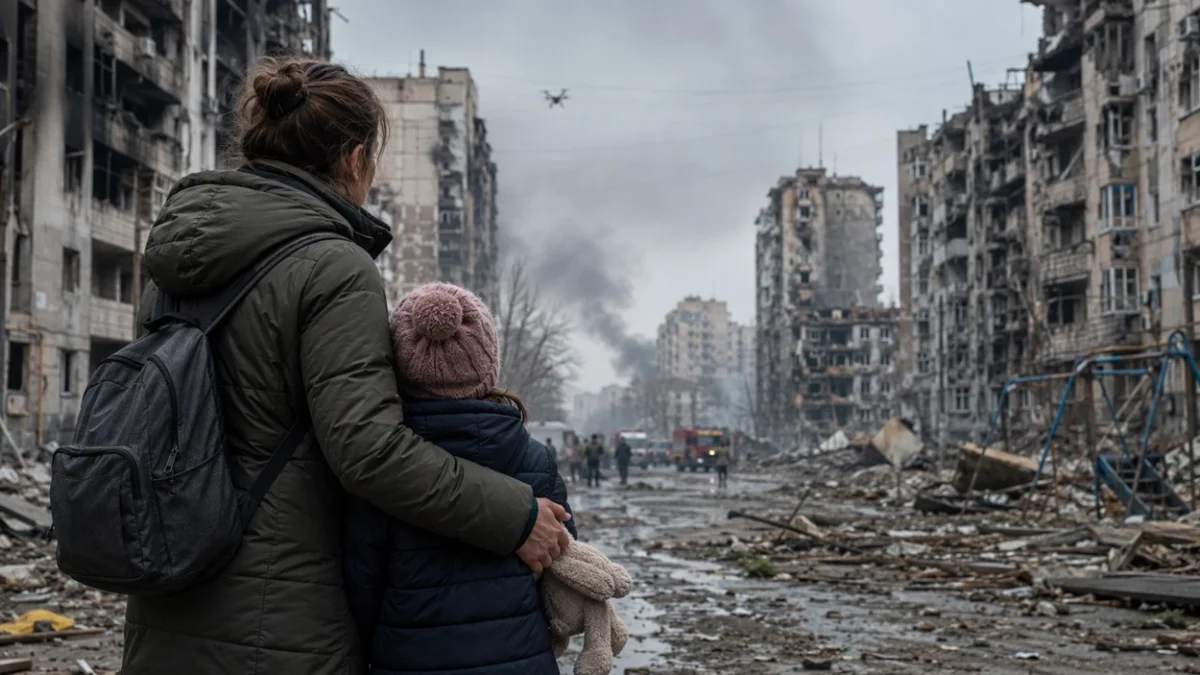
ANKARA, TÜRKİYE | MYKOLAIV UKRAINE — Russia’s invasion of Ukraine has become more than a military conflict, reshaping the psychology of societies, governments, children and global security systems.
The war has entered a stage where its consequences can no longer be measured only by territory, weapons or diplomatic statements. It has transformed how Ukrainians define survival, how Russians live with state narratives and war fatigue, how Europeans think about security, and how Americans debate their role in the world. It has also changed the defense industry, accelerating the age of drone warfare and making psychological endurance a central element of modern conflict.
Ukraine’s trauma has become a national memory
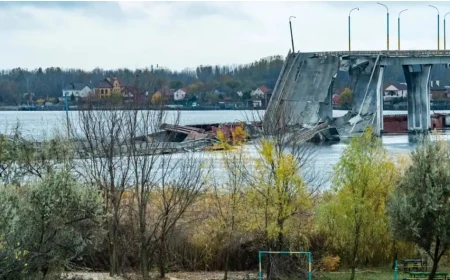
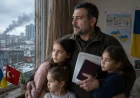
For Ukraine, the war has created a collective trauma that reaches far beyond the battlefield. Air raid sirens, destroyed homes, family separations, power outages, displacement and uncertainty have become part of daily life for millions. UNHCR says millions of Ukrainians have crossed borders since February 2022, while millions more have been displaced inside the country.
The mental health burden is also severe. A 2025 World Health Organization assessment reported that more than 70% of adult respondents in Ukraine had experienced symptoms of anxiety, depression or severe stress in the previous year, while only about one in five had sought professional help.
This shows that the invisible front of the war is not only in trenches but also in homes, schools, hospitals and family relationships. Ukrainian society is trying to preserve daily life under conditions that constantly threaten safety, continuity and trust.
Yet the war has also strengthened Ukrainian national identity. Before the full-scale invasion, Ukraine and Russia shared deep historical, linguistic, cultural and religious connections. Many families were intertwined across borders. But Russia’s attack turned those shared ties into a painful psychological rupture. For many Ukrainians, the war is no longer only about territory; it is about dignity, memory and the right to exist as an independent society.


Russia faces war fatigue beneath the official narrative
The psychological picture inside Russia is more complicated. The state presents the war through narratives of security, history and confrontation with the West. But society also faces sanctions, military losses, mobilization fears, economic pressure and uncertainty about the future.
Levada Center polling in 2025 showed that support for Russian military actions remained high, while the share of Russians favoring peace negotiations had stayed above 60% for several months. This suggests a divided psychological environment: official confidence on the surface, but fatigue and a desire for an exit underneath.
According to Yusuf İnan, General Editor of iyipsikolog.com, Russia made a historic mistake by invading Ukraine. İnan argues that Moscow did not push NATO and the United States away from its borders; instead, it pulled them deeper into the Ukrainian front. In his view, Russia has become trapped in a Ukrainian quagmire that has caused military exhaustion, regional distrust and a wider psychological depression within its own geography.


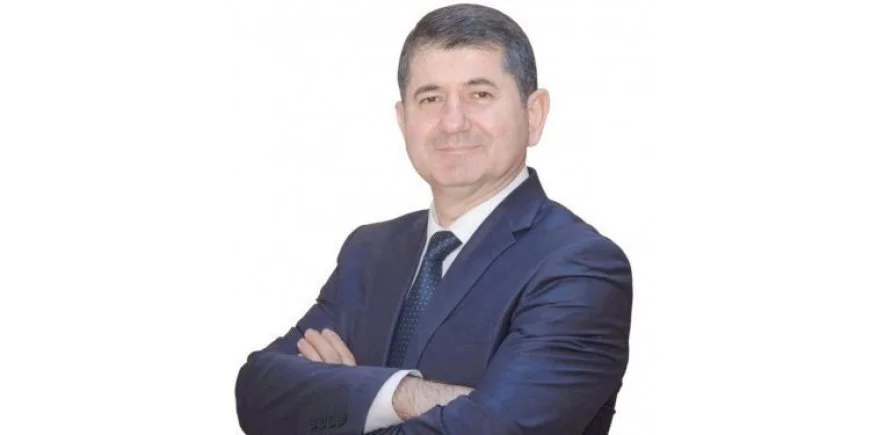
Yusuf İnan, Editor-in-Chief of İyi Psikolog (www.iyipsikolog.com)
İnan also argues that the invasion badly damaged Russia’s dream of reviving the former Soviet sphere. Countries and societies once expected to remain within Moscow’s influence are now more cautious about Russian power, and many are looking more directly toward the West for security and political balance.
Europe and America entered a new security psychology
The war deeply changed Europe’s security mindset. For decades, many Europeans believed that major land wars on the continent belonged to the past. Russia’s invasion shattered that assumption.
Recent Eurobarometer findings show that 76% of respondents agreed Russia’s invasion of Ukraine is a threat to EU security. Earlier Eurobarometer data also showed broad support for welcoming people fleeing the war and for EU measures connected to Ukraine.
This fear has translated into defense spending. SIPRI reported that global military expenditure reached $2.887 trillion in 2025, with European military spending rising 14% in real terms. NATO members accounted for 55% of global military spending, according to SIPRI’s 2026 data.
In the United States, the war has also reshaped public opinion. Pew Research Center reported in 2025 that roughly 69% of Americans viewed the Russia-Ukraine war as important to U.S. national interests.
The war has therefore created a new Western security psychology: Europe feels more exposed, the United States sees the conflict as strategically important, and NATO has become more central. Finland joined NATO in April 2023 after decades of military non-alignment, a shift NATO linked to Russia’s full-scale invasion. Sweden later joined the alliance in March 2024, further changing the security map of northern Europe.
Drone warfare has opened a new defense era
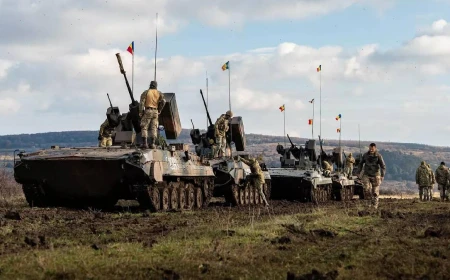
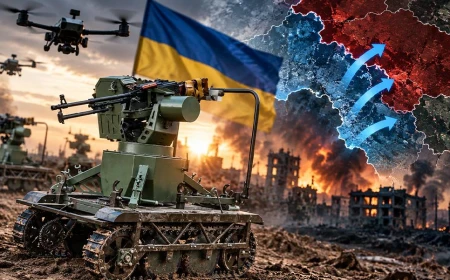
Russia’s war in Ukraine has also pushed defense industries into a new era. Drones, electronic warfare, low-cost strike systems, artificial intelligence-supported reconnaissance and mobile air defenses have become central to the conflict.
Reuters reported in May 2026 that Russia had increasingly focused drone attacks on smaller Ukrainian power substations, with verified data showing that nearly 60% of attacks between October 2025 and April 2026 targeted smaller substations. Reuters also reported that Russia launched more than 27,000 Shahed-type drones and more than 1,000 missiles between November 2025 and March 2026, according to Ukraine’s defense ministry.
This has changed the psychological meaning of war. Civilians no longer face only distant artillery or front-line clashes. Drone warfare can bring fear into cities, power grids, factories, apartment blocks and schools. It turns the sky itself into a source of anxiety.
For defense industries, the message is clear: the future of war will not be shaped only by expensive aircraft, tanks and missile systems. It will also be shaped by cheaper, mass-produced, flexible and networked technologies. The Ukraine war has shown that psychological pressure, industrial speed and technological adaptation can be as decisive as traditional military strength.
Children will carry the deepest wounds
Children in Ukraine are among the most vulnerable victims of the war. UNICEF reported in February 2026 that more than one-third of Ukraine’s children — about 2.59 million — remained displaced as the war entered its fifth year. This includes more than 791,000 children displaced inside Ukraine and nearly 1.8 million living as refugees abroad.
For these children, war is not an event they will simply remember; it is an environment in which they are growing up. Many have experienced displacement, school disruption, separation from relatives, fear of bombardment, loss of friends or family members, and the collapse of normal routines.
The psychological consequences may last for decades. Trauma, anxiety, sleep problems, anger, insecurity and difficulties with concentration can affect education, family life and social development. A generation raised under war may carry deep questions about trust, safety and belonging.
Russian children are also affected, though in a different way. They may grow up with militarized language, state narratives of external enemies, family members sent to war, and a public culture shaped by sacrifice and confrontation. War teaches children not only fear but also how to view the “other.” That is why the postwar memory culture in both countries will be crucial.
Ukraine’s victimhood created broad global sympathy
Ukraine’s position as the invaded country created a strong global perception of victimhood and resistance. European governments opened their doors to refugees, international organizations expanded humanitarian support, and many states provided financial, military and diplomatic backing.
Pew Research Center’s 2025 survey across 25 countries found that a median of 79% viewed Russia unfavorably, while 84% had little or no confidence in Vladimir Putin to do the right thing in world affairs.
This does not mean the whole world sees the war in exactly the same way. In Europe and North America, support for Ukraine is usually framed through sovereignty, democracy and security. In some other regions, the war is viewed more through energy prices, food security, great-power rivalry or skepticism toward Western policy.
Still, Russia’s global image has clearly suffered. Even if the war ends, trust in Moscow will be difficult to restore quickly. İnan argues that the invasion damaged not only Russia’s military reputation but also its moral credibility among neighboring nations and world publics.
A shared culture became a global psychological shock
One of the most painful aspects of the war is that Russia attacked a country with deep cultural, religious and historical ties. The invasion of a neighboring people with intertwined families and overlapping memories produced a profound psychological shock.
For many observers, the war showed that shared religion, shared history and cultural closeness do not automatically prevent violence. This has damaged the global belief that common identity can always protect societies from war.
The conflict also weakened global language about peace, climate cooperation and human solidarity. After the COVID-19 pandemic, many international discussions focused on common destiny, climate action and global cooperation. Russia’s invasion brought back a harsher reality: military power, occupation, energy warfare and nuclear anxiety.
The environmental cost is also serious. UNDP has warned that war-related forest fires, attacks on fuel and industrial facilities, and chemical leakage into rivers and groundwater could leave a toxic legacy for generations.
Ukraine’s economic and natural resources have also been deeply damaged. The World Bank’s 2026 assessment estimated Ukraine’s reconstruction and recovery needs at almost $588 billion over the next decade.
For İnan, this is one of the greatest tragedies of the war: Ukraine’s underground wealth, agricultural capacity, infrastructure and human potential are being wasted by destruction. At the same time, he says, Russia has weakened the very regional influence it hoped to restore.
In the end, the Russia-Ukraine war has become a test of global psychology. It has tested the endurance of Ukrainians, the moral confidence of Russians, the security instincts of Europe, the strategic patience of America and the conscience of the world. Its pain will not be forgotten easily, because it has entered not only history books but also childhood memories, family stories, state doctrines and the emotional map of the 21st century.
What's Your Reaction?
 Like
0
Like
0
 Dislike
0
Dislike
0
 Love
0
Love
0
 Funny
0
Funny
0
 Wow
0
Wow
0
 Sad
0
Sad
0
 Angry
0
Angry
0

Editor | Wise News Press — Delivering accurate, timely global news with integrity, insight, and editorial responsibility.












Comments (0)