



Igor Yermolaev on Mykolaiv, memory and Ukraine’s future
Ukrainian journalist and photographer Igor Yermolaev speaks to Yusuf İnan about Mykolaiv, culture, travel, war and Ukraine’s future.




Interview by Yusuf İnan | Wise News Press
Yusuf İnan is the Editor-in-Chief of Wise News Press, journalist and writer.
MYKOLAIV, UKRAINE — Ukrainian journalist, photographer and traveler Igor Yermolaev has spent decades documenting culture, cities, theaters, people and memories through both words and images. His archive stretches from the stages and streets of Mykolaiv to dozens of countries around the world. In this exclusive interview with Wise News Press Editor-in-Chief Yusuf İnan, Yermolaev reflects on his personal roots, journalism, photography, the transformation of Mykolaiv, Russia’s war against Ukraine and the future he hopes to see.

A life shaped by family, photography and Mykolaiv
Yusuf İnan: Could you briefly introduce yourself? Who is Igor Yermolaev?
Igor Yermolaev: I usually introduce myself in three words: photographer, journalist and traveler. But if I speak more personally, I would say I am a decent, friendly and responsible person. I try to be useful to people and to society, and I value the same qualities in others.


Yusuf İnan: Where were you born, and what kind of family did you grow up in?
Igor Yermolaev: My roots are in Mykolaiv, but I was born in Riga, the capital of Latvia. At that time, my father was working at a ship repair enterprise in Riga as a specialist in ship equipment. My mother worked as a shop assistant. She was an exceptionally good mother. She always loved and protected me. I believe that many of my best qualities as a person came from her.
On my father’s side, I inherited a certain intelligence and an ability for visual creativity. My grandfather also had a very strong influence on me. He was an excellent photographer and became my first teacher in this difficult art. His own father, even before the revolution, was one of the first photographers of Mykolaiv. Some of his unique photographs are preserved in city museums, including images of shipbuilding and warships constructed at the Naval shipyard.



School years and early dreams
Yusuf İnan: Where did you receive your education?
Igor Yermolaev: I first studied at School No. 54 in Riga. Later, when my parents moved to Mykolaiv, I continued at School No. 35. After school, I entered the Mykolaiv Shipbuilding Institute and graduated with honors. After graduation, I was invited to stay for scientific work at the institute, in a laboratory connected with underwater technology. In 1990, I entered postgraduate studies and worked on a scientific and technical dissertation.
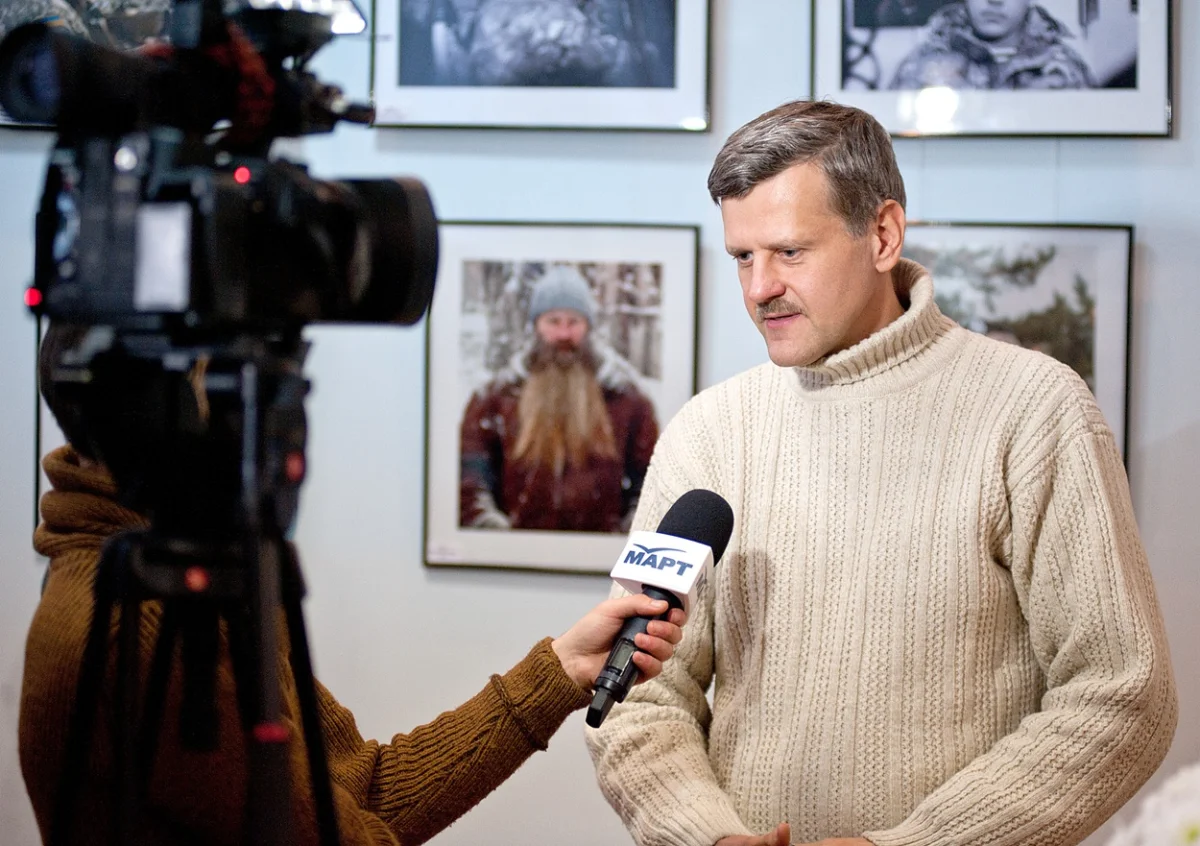
Yusuf İnan: When you look back at your school years, what do you remember most?
Igor Yermolaev: To be honest, I do not remember much good from the Soviet school system, except for one friend, Sasha, with whom I shared a desk. In Riga, the atmosphere was different. In Mykolaiv, I faced unpleasant realities, including mockery and bullying. I studied very well, and unfortunately, excellent students are not always loved.
The education system was boring and politicized. It was built on a false principle: not to gain real knowledge, but to get good marks. I believe I truly began to develop as a person only after entering the institute.

Yusuf İnan: What did you dream of when you were young?
Igor Yermolaev: When many boys dreamed of becoming cosmonauts, I dreamed of becoming a blacksmith. My father bought me sets for drawing, burning, forging and embossing, as well as locksmith and carpentry tools. I loved making elegant things from lead and copper. I also made wooden models of sailing ships and old castles, built telescopes, painted, wrote poems and tried different forms of creativity.
Life later pushed aside everything secondary and left what could help me survive and work: photography, video shooting and journalism.
The road into journalism
Yusuf İnan: How did you become a journalist?
Igor Yermolaev: Like many people of my generation, we were prepared for one country and one political and economic system, but were suddenly thrown into another. Many could not find themselves in the new world. Doctors traded in markets, engineers became entrepreneurs, and some athletes even entered criminal circles.
In that period, I searched for my place. Photography, filmmaking and journalism became the things I could do well. My journalistic abilities had appeared earlier, in school and student years: essays, poems, wall newspapers, articles in the student newspaper Korabel and in Student Meridian magazine.

Yusuf İnan: You clearly love your profession. Where did this love come from?
Igor Yermolaev: I do not have a formal higher education degree in journalism, but from childhood and youth I had qualities that are valuable in this profession: literacy, erudition, responsibility, objectivity and the ability to express thoughts briefly and accurately. I also knew how to make photo reports.
For many years, I have tried to bring joy to people by covering almost all significant cultural events in Mykolaiv and the region. Often, I did this selflessly. Journalists in Mykolaiv earn much less than journalists in Turkey or other countries, unless they are so-called “paid” journalists who praise corrupt officials or anti-people politicians. I am proud that I never sold myself, although offers existed.

Culture, theater and public memory
Yusuf İnan: What has journalism taught you over the years?
Igor Yermolaev: It taught me responsibility and historical objectivity. A journalist must be precise. A photojournalist must also understand the value of the moment. Some colleagues do not consider reportage photography to be art. I disagree. My international nominations and awards prove that documentary photography can also be art.
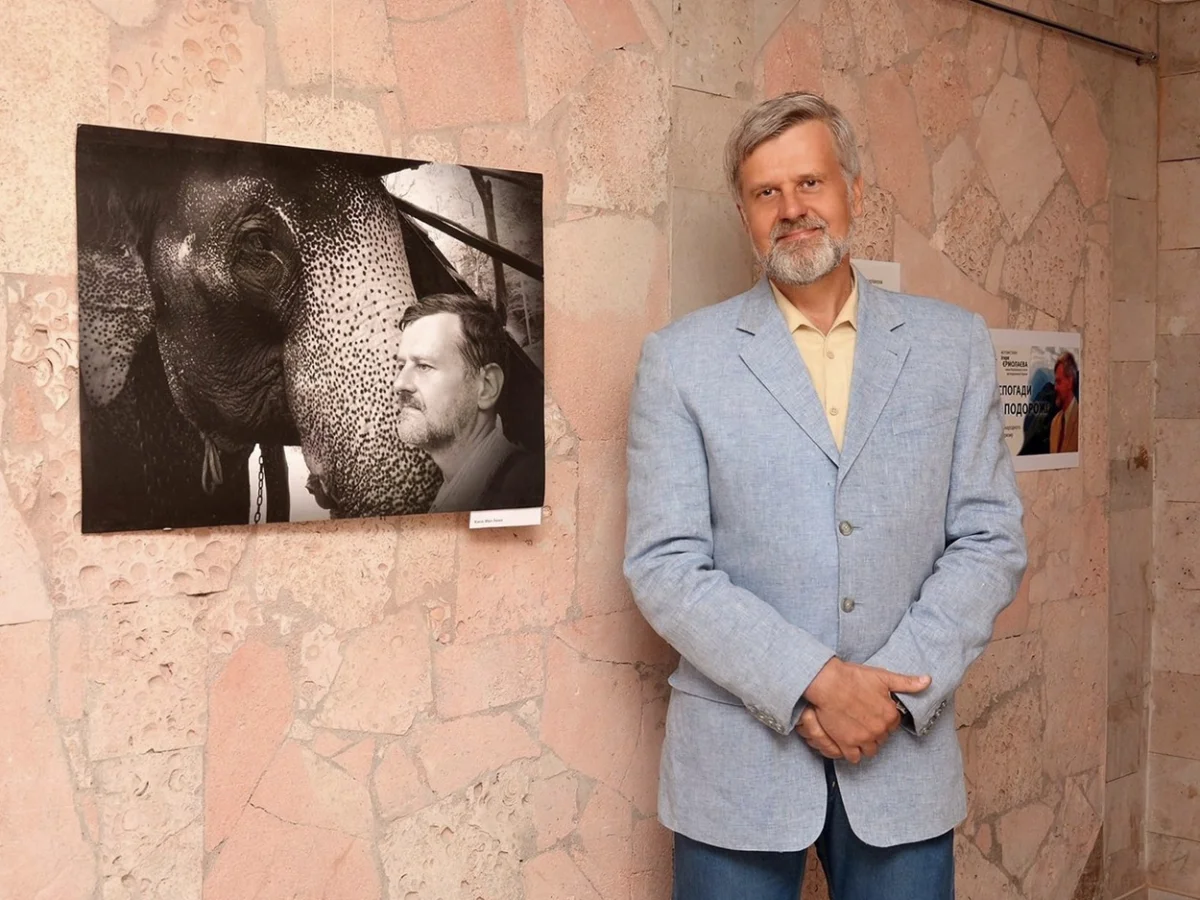
Since 2006, I have worked as a theater critic and photographer for Mykolaiv’s academic theaters. I have written theater reviews, covered festivals, photographed artists and supported young creative groups. I have also worked with young journalists and photographers, organized thematic evenings and tried to preserve cultural memory.
Yusuf İnan: Why did you not choose politics, given your experience and public profile?
Igor Yermolaev: I do not want to offend honest politicians, but perhaps I am too decent for that activity. Maybe this sounds naive, but I want to keep my soul as clean as possible before God. Politics is also a very difficult profession. It requires specific abilities and education.

People often say high-ranking politicians are fools. That is a mistake. Any politician at the level of mayor or higher is usually a very intelligent person. The question is how they use that intelligence.
Mykolaiv then and now
Yusuf İnan: What was Mykolaiv like when you were young?
Igor Yermolaev: I came to Mykolaiv from Riga when I was 13. Today it is fashionable to criticize everything from Soviet times, especially shortages of goods. But I also remember the good. There was no shortage of friendship, no shortage of selfless human relations.
I remember the pride and joy of citizens when new ships were launched from Mykolaiv’s shipyards. Their size and capabilities amazed people. Unfortunately, the former scale of shipbuilding in Mykolaiv will not return. The technical base and professional continuity have been lost, and there are also objective economic reasons.
Yusuf İnan: How should Mykolaiv’s story be told to the world?
Igor Yermolaev: With historical objectivity. Without it, it is impossible to present the rich history of Mykolaiv and Ukraine. Photography can help preserve that story. For me, documenting the city is not only art; it is also testimony and preservation of memory.
For more than 10 years, group photo exhibitions dedicated to our city and its people have been held in the Mykolaiv Academic Art Drama Theater. I personally held 14 large solo exhibitions.
Travel as a way of understanding the world
Yusuf İnan: You have traveled extensively. Which countries impressed you most?
Igor Yermolaev: I have visited 72 countries, many of them several times. I learned to travel for incredibly little money. The architecture and nature of Italy, Turkey, Portugal, Nepal and Peru impressed me most. But I found something good and interesting in every country.
My favorite country for travel is Turkey. Good people I met there contributed greatly to that feeling. I often say at my creative evenings: “Hurry to see the world — it is more beautiful than any dream.”
I also love traveling across Ukraine. From 1999 to 2022, I visited small towns and villages in 15 Ukrainian regions as part of my independent journalistic project Pearls of Ukraine. I believe those photographs may become a basis for future restoration of historical, architectural and natural sites.
War, photography and Ukraine’s future
Yusuf İnan: Did you expect Russia’s full-scale invasion before February 24, 2022?
Igor Yermolaev: Almost no one in our country believed until the last moment that a full-scale war would begin, including the president. Many people understood, however, that the events of 2014 were only the beginning. Back then, the question was when the war would begin. Now the question is when it will end.
I am not a politician, so it is difficult for me to analyze military events. A great deal of information is kept classified for objective reasons. Apart from a few people at the highest levels of the country’s leadership, no one can answer these questions with real certainty. As an ordinary citizen, all I want is for the long-awaited peace to come.
Yusuf İnan: How has the role of photography changed since the invasion?
Igor Yermolaev: It has become especially important to document war crimes and the terrible consequences of the barbaric bombing of peaceful cities. These photographs may later be used as evidence in courts and tribunals. It is important that the military and police understand the work of accredited photojournalists.
Yusuf İnan: What kind of future do you hope for Ukraine and Mykolaiv?
Igor Yermolaev: I hope for peace, reconstruction and dignity. Ukraine must preserve its memory and rebuild its cities not only physically, but also spiritually and culturally. Mykolaiv has suffered, but it has also shown resilience.
As for me, I will continue to bring joy through my articles, photographs and videos as long as my eyes can see and my hands can hold a camera.
Yusuf İnan
www.wisenewspress.com
Yusuf İnan is a journalist and author. He serves as Editor-in-Chief of WiseNewsPress.com, SehitlerOlmez.com, and YerelGundem.com, and specializes in strategic and political analysis of Turkish and global affairs.
What's Your Reaction?
 Like
0
Like
0
 Dislike
0
Dislike
0
 Love
0
Love
0
 Funny
0
Funny
0
 Wow
0
Wow
0
 Sad
0
Sad
0
 Angry
0
Angry
0

Editor | Wise News Press — Delivering accurate, timely global news with integrity, insight, and editorial responsibility.














Comments (0)