


Baku highlights Turkey-Azerbaijan ties and Turkic unity
Turkey’s Ambassador to Baku Birol Akgün said the post-2020 Turkey-Azerbaijan partnership has created new momentum for Turkic world integration.


By Yusuf İnan | Wise News Press
BAKU, AZERBAIJAN — Turkey’s Ambassador to Baku, Prof. Dr. Birol Akgün, said the strong brotherhood between Turkey and Azerbaijan after 2020 has created a new momentum for integration across the Turkic world.
According to Star columnist Betül Soysal Bozdoğan, who shared her impressions after a visit to Baku, the relationship between Turkey and Azerbaijan goes far beyond diplomacy, trade and official declarations. It is rooted in history, language, religion, culture and a shared sense of national memory.
“One nation, two states” in daily life
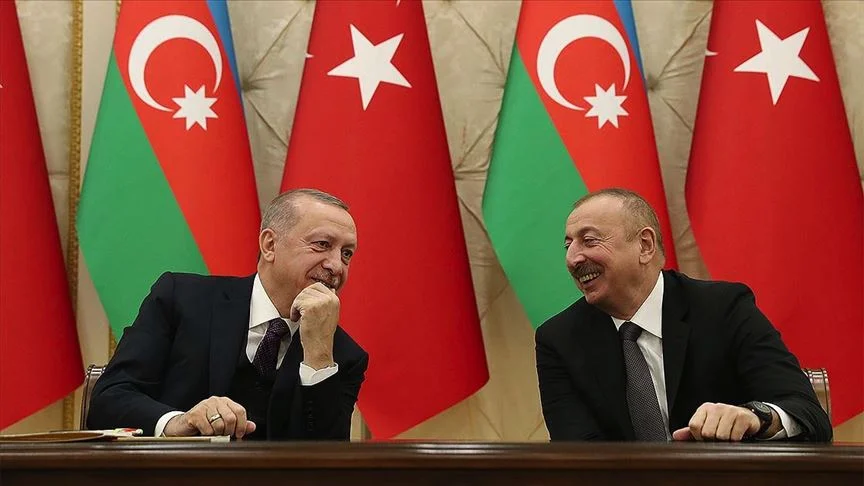
The phrase “one nation, two states” has long been used to describe the close relationship between Turkey and Azerbaijan. In Baku and especially in the Karabakh region, Turkish and Azerbaijani flags are often seen side by side, reflecting the emotional and political bond between the two countries.
Bozdoğan wrote that Azerbaijan does not feel like a foreign country for visitors from Turkey. Instead, it can feel like another region of Turkey because of the shared language, common cultural codes and strong public sympathy toward Turkish people.
The two peoples belong to the Oghuz branch of the Turkic world and share many linguistic, religious and cultural characteristics. This common identity continues to shape the way both societies see each other.


Education, tourism and trade strengthen ties
The interaction between Turkey and Azerbaijan is expanding across multiple fields.


Bozdoğan noted that about 50,000 Azerbaijani students are studying at universities in Turkey. This educational mobility has become one of the strongest social bridges between the two countries, creating a new generation familiar with both societies.
Tourism is another important area. Around 830,000 Azerbaijanis visit Turkey every year, while approximately 450,000 people from Turkey travel to Azerbaijan. These figures show that the relationship is not limited to state-level diplomacy but is also deeply rooted in people-to-people contact.
Economic relations are also strong. Around 4,000 Turkish companies are operating in Azerbaijan, while many well-known Turkish brands are visible in Azerbaijani shopping malls, streets and commercial centers.
This commercial presence makes Turkey’s influence easy to observe in Baku’s daily life.
Baku reflects several historical influences
Azerbaijan’s location and history mean that several regional influences can be felt in the country.
Bozdoğan described Azerbaijan as a place where Turkish, Russian and Iranian influences are visible in different ways. Turkey’s current influence can be seen through language, brands and popular culture. Iran’s historical and religious influence is visible through the presence of Shia mosques. Russia’s legacy can still be traced through social habits and the long Soviet past.
However, Bozdoğan emphasized that the most striking feature of Azerbaijan is the warmth of its people. She described Azerbaijanis as sincere, helpful, nationally conscious and highly interested in Turkey.
She also wrote that the sense of human warmth she experienced in Baku reminded her of Anatolia. In her observations, everyday conversations with taxi drivers and local residents quickly turned into meaningful exchanges, showing the depth of sympathy toward Turkey.
Public order and urban life draw attention
Bozdoğan also highlighted two aspects of daily urban life in Baku that attracted her attention.
The first was the absence of stray dogs on the streets. She described this as a sign of an organized urban environment where animals are kept in shelters rather than left uncontrolled in public spaces.
The second was the cleanliness of streets and public areas. According to her observations, throwing cigarette butts on the ground is prohibited and punished with a fine of 300 manats. Smoking in historical, cultural and educational areas, as well as at bus stops, is also prohibited and carries a fine of 30 manats.
She noted that these rules are monitored, including by plainclothes police, and that citizens are also sensitive about reporting violations.
Another feature that drew her attention in Baku was the presence of oil wells across the city. Oil remains one of Azerbaijan’s most important sources of wealth and has played a major role in attracting international attention to the country throughout modern history.
Ambassador Akgün points to new momentum
During her visit, Bozdoğan also met Turkey’s Ambassador to Baku, Prof. Dr. Birol Akgün.
Akgün said the strong Turkey-Azerbaijan partnership that developed after 2020 has triggered a new momentum for the broader integration of the Turkic world.
He pointed to the Shusha Declaration, signed in June 2021, as one of the most important milestones in the new era of bilateral relations. The declaration raised cooperation between Turkey and Azerbaijan to a higher strategic level.
Akgün also emphasized that the founding agreement of the Organization of Turkic States was concluded in Istanbul in November 2021. He said a structure that previously had a more cultural character gained the status of an international organization in 2021.
According to Akgün, this transformation created new opportunities for high-level consultations in economic, trade and cultural fields, as well as cooperation in military and security areas.
Organization of Turkic States gains importance
The Organization of Turkic States has become more visible in recent years as geopolitical and economic balances shift across Eurasia.
Akgün said the informal summit of the leaders of the Organization of Turkic States would be held on May 14-15 in Turkistan, Kazakhstan. He noted that the organization meets twice a year and helps Turkic countries understand each other’s capacities more closely.
The growing importance of the Middle Corridor is another major factor in this process. Turkey, the Caucasus and Central Asia are gaining strategic value as an economic and trade route at a time when global supply chains and transport corridors are being redefined.
Akgün said this process is also helping the Turkic world deepen its cooperation on the basis of historical, cultural, linguistic and religious commonalities.
For Turkey, this solidarity line among Turkic states is increasingly seen as one of the geopolitical pillars of its multidimensional foreign policy.
Karabakh created a shared memory
The 44-day Karabakh war in 2020 remains one of the most important turning points in Turkey-Azerbaijan relations.
Turkey’s support for Azerbaijan during that period strengthened public gratitude and political trust in Azerbaijan. The visibility of Turkish flags next to Azerbaijani flags in Karabakh and other parts of the country is seen as a symbol of this shared memory.
Bozdoğan wrote that this atmosphere reflects not only political cooperation but also a deeper emotional bond between the two societies.
For Azerbaijan, the post-Karabakh period has strengthened the idea that Turkey is not just an ally but a brother country. For Turkey, Azerbaijan has become one of the central pillars of its policy toward the Caucasus and the wider Turkic world.
Warning against disinformation
The growing strength of Turkey-Azerbaijan relations also brings information risks.
Bozdoğan warned that some reports and social media narratives may be deliberately designed to damage relations between the two countries. She emphasized that disinformation and the activities of malicious third countries should be watched carefully.
In this context, protecting the Turkey-Azerbaijan relationship is not only a diplomatic responsibility. It also requires accurate public information, careful media language and awareness of attempts to manipulate public opinion.
Akgün’s remarks also suggest that intellectuals, journalists and cultural figures from Turkic countries should visit one another more often, learn from each other and combine their capacities.
Turkic solidarity becomes a strategic opening
Akgün’s assessment points to a broader strategic reality.
As the world system is being reshaped and regional crises create new uncertainties, the solidarity among Turkic states is becoming more important for Turkey’s foreign policy.
This solidarity is not limited to official summits or diplomatic statements. It includes education, culture, trade, public diplomacy, security cooperation and shared historical identity.
The Turkey-Azerbaijan partnership has become a reference point for this wider process. After Karabakh, the relationship between Ankara and Baku has moved from traditional brotherhood rhetoric to a more institutional and strategic framework.
For the Turkic world, this may mark the beginning of a more connected era in which common identity is supported by concrete political, economic and security cooperation.
What's Your Reaction?
 Like
0
Like
0
 Dislike
0
Dislike
0
 Love
0
Love
0
 Funny
0
Funny
0
 Wow
0
Wow
0
 Sad
0
Sad
0
 Angry
0
Angry
0

Editor | Wise News Press — Delivering accurate, timely global news with integrity, insight, and editorial responsibility.















Comments (0)