



From Philadelphia Internship to the Frontline: A Ukrainian Medic’s Choice
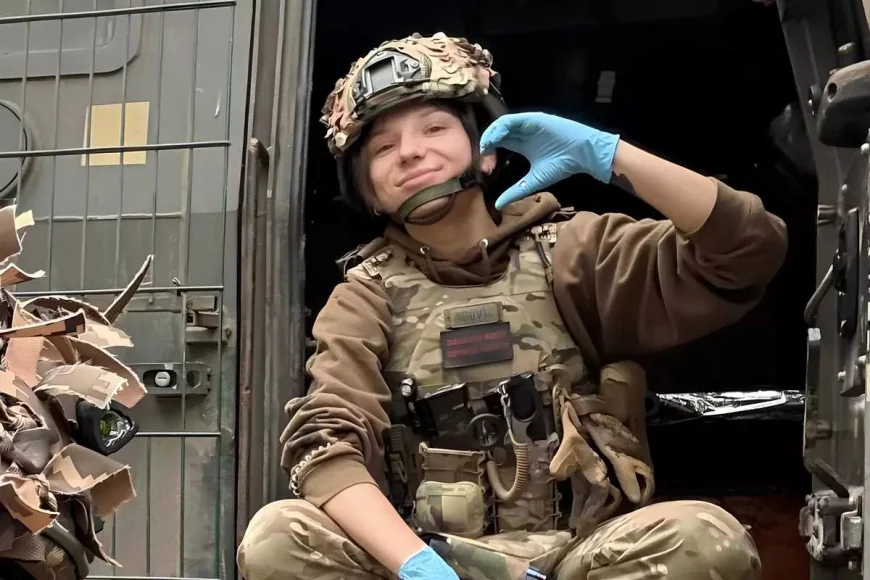
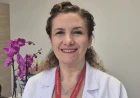
Viktoriia Shlapak rejected a career in the US to become a combat medic with the elite 95th Air Assault Brigade, serving in the fiercest zones from Donetsk to Kursk.


By Yusuf İnan | Wise News Press
KYIV, UKRAINE — On the morning of February 24, 2022, as the first Russian missiles struck Ukrainian cities, Viktoriia Shlapak was safe in Scotland, staring at an email that represented a golden ticket to a different life. It was a confirmation of a prestigious year-long internship in Philadelphia, USA. The path before her was clear: a stable career, safety in the West, and a comfortable future.
Instead, she closed the email and packed a bag for home. Today, Viktoriia is a combat medic in the evacuation group of the legendary 95th Air Assault Brigade. She has traded the boardrooms of the US for the mud of Donetsk and the burning roads of the Kursk region, where survival is measured in seconds and the price of hesitation is death.
Her story is not just one of patriotism, but of a profound professional transformation—from a translator of military manuals to a practitioner of life-saving medicine in the back of speeding evacuation vehicles.
The decision that changed everything
Viktoriia’s journey to the front lines began in the United Kingdom, where she was working as a translator on military bases. Having studied at a British university, she was embedded in the training ecosystem, translating for British instructors and officers from partner countries. Her work ranged from basic training courses to high-level operational planning for senior officers.



"I remained a civilian, but I was effectively working for the military," Viktoriia recalls. "I started with basic training courses, then worked on marine coordination courses, and ended my translation career on programs for senior officers."
However, the full-scale invasion shattered the distance between her and the war. The offer to move to Philadelphia, received on the very day the world changed, suddenly lost all meaning.
"In one moment, that opportunity ceased to matter. Career and plans faded into the background, everything disappeared from my thoughts. The only thing I wanted to think about was how to be useful to Ukraine right now," she explains.



Initially, her work as a translator felt like "brakes," holding her back from the direct action she craved. While she knew she was useful in the UK, the urge to be physically present with the defenders grew impossible to ignore. She realized she wanted to be beside the soldiers, not just a voice in their earpieces during training.
Joining the 95th Air Assault Brigade
Choosing a unit was a calculated decision based on her previous experience. During her time in Britain, Viktoriia had worked extensively with Ukraine's Air Assault Forces (DSHV). Their professionalism and resilience commanded her respect.
"I decided to choose one of the most powerful brigades," she says. "I weighed what was most necessary at the moment and made a maximally rational decision."

Despite not having a medical degree, Viktoriia possessed a unique asset: deep theoretical knowledge of tactical medicine acquired by translating for top-tier medical instructors. She understood the protocols of TCCC (Tactical Combat Casualty Care) better than many recruits. Combined with her desire to be effective, the role of a medevac medic was the logical choice.
First impressions and skepticism
The transition from the classroom to the combat zone was abrupt. Viktoriia remembers her first day in the unit with crystal clarity. She was dropped off at a position in the dead of night, surrounded by darkness, heavy machinery, and exhausted soldiers who had just returned from missions.
The reception was far from warm. In the hyper-masculine, high-stress environment of an assault brigade, a newcomer—especially a woman arriving from the safety of the UK—was viewed with suspicion.

"The first thing I heard was not a greeting, but a question: 'Why did you come here? What gestalts are you trying to close?'" she recalls.
The soldiers, hardened by battle, questioned her motives. Was she there for adrenaline? For a personal quest? However, respect on the frontline is earned through action, not words. As the team began to work together, processing casualties and saving lives, the skepticism evaporated. They quickly became a cohesive mechanism.
The hell of the Kursk direction
Viktoriia has seen war from many angles, from the entrenched positions of the Donetsk region to the dynamic and chaotic forest belts of "zero" positions. However, the recent operations in the Kursk direction stand out for their sheer intensity.
The logistics of evacuation in this sector were nightmarish. The roads were under constant surveillance and fire. "Every third car that drove out burned down under shelling," Viktoriia notes.
The volume of casualties was overwhelming. Unlike the slower days of positional warfare, the Kursk offensive required a relentless pace. "We didn't count the number of evacuated; no one in my circle did. But there was a period where we were taking out a lot of soldiers. We had 5-6 sorties a day, and 5 to 8 people per sortie."
The injuries ranged from minor shrapnel wounds to critical trauma. Triage had to be performed instantly. The medics had to decide in split seconds who needed immediate stabilization and who could wait, all while the vehicle navigated terrain that was being actively targeted by the enemy.
A race against death on the "Road of Fire"
One evacuation mission remains etched in Viktoriia’s memory as a testament to both the horror and the luck of war. Her team was tasked with evacuating casualties via the only available route—a road everyone knew was constantly shelled and controlled by enemy drones.
"We were carrying eight wounded at once," she says. The vehicle was packed beyond capacity. As they sped down the dangerous corridor, they encountered another group of wounded soldiers on the roadside. Their evacuation vehicle had been hit and destroyed.
Despite the risk, Viktoriia’s team stopped. They picked up the survivors from the other brigade, cramming them into the already full vehicle. "I remember this happy coincidence of circumstances," she says modestly. In a situation where stopping often means death, they managed to save everyone.
The psychology of the wounded
Inside the evacuation vehicle, amidst the smell of blood and diesel, the conversations reveal the human side of the soldiers. Viktoriia observes that regardless of rank or experience, the wounded always talk about the same things: their families.
"It's always the closest people. Children, wives, loved ones," she says. They also show a profound loyalty to their unit, constantly asking, "How is Serha? How are the others?" worrying more about the comrades left behind than their own injuries.
Paradoxically, seasoned fighters often fear the medical procedures more than the enemy fire. Viktoriia frequently has to calm soldiers who are terrified of catheters or injections.
"It happens that a fighter with a serious injury reacts to the needle more strongly than to his trauma itself," she notes with a smile. These moments often lead to banter among the wounded, with comrades poking fun at each other’s fear of needles, lightening the mood and helping them cope with the pain.
However, the hardest part of the job for Viktoriia is not the blood or the danger, but the feeling of powerlessness. Modern warfare is dominated by drones, and there are times when the air is so thick with enemy UAVs that evacuation is impossible.
"When you know there is a wounded person there, but it is impossible to approach... That is the scariest thing. When there is a chance, but no possibility," she admits.
"Vika, I believe in you"
Amidst the chaos, there are moments of profound connection that sustain the medics. Viktoriia recounts a story about a driver who had previously helped their unit by delivering wounded soldiers on a quad bike.
One day, the roles were reversed. The driver had been hit by a drone drop and was brought to Viktoriia’s vehicle as a patient. He was a large man, an amputee, and had suffered significant blood loss.
"He needed intravenous access established immediately," Viktoriia explains. The vehicle was moving, the lighting was poor, and the soldier’s veins were collapsed due to blood loss. The pressure was immense.
Recognizing her struggle, the wounded soldier looked at her, smiled, and said, "Vika, I believe in you, come on."
"I didn't even recognize him at first," she admits. "Then I realized—he was the one who used to bring us wounded." That moment of trust and encouragement from a dying man gave her the strength to succeed.
A future built on service
When asked what keeps her going when the exhaustion sets in, Viktoriia’s answer is simple. She thinks about the alternative—the life in Philadelphia she left behind. "Every time, I don't like that alternative. Because it would be a betrayal of myself. And I want to be honest with myself."
Looking ahead to life after victory, Viktoriia does not see herself returning to the civilian world entirely. The war has forged a new identity. She envisions a future tied to military affairs—rebuilding the country, developing the army, and passing on the hard-won experience to Ukraine’s allies.
"I want to ensure that this scenario is not allowed in the future," she concludes. "So that everything lost was not in vain."
Viktoriia Shlapak’s story is a powerful reminder that the defenders of Ukraine are not just those born into the military, but everyday people—translators, students, professionals—who made the impossible choice to leave comfort behind and stand between their country and destruction.
What's Your Reaction?
 Like
0
Like
0
 Dislike
0
Dislike
0
 Love
0
Love
0
 Funny
0
Funny
0
 Wow
0
Wow
0
 Sad
0
Sad
0
 Angry
0
Angry
0

Editor | Wise News Press — Delivering accurate, timely global news with integrity, insight, and editorial responsibility.













Comments (0)