



Saint Nicholas could bridge Turkey and Ukraine’s memory
Saint Nicholas, born in ancient Lycia in today’s Turkey and reflected in Mykolaiv’s name, offers Ankara and Kyiv a powerful cultural diplomacy opportunity.




By Yusuf İnan
Journalist | Political & Strategic Analyst
ANKARA, TURKEY | MYKOLAIV, UKRAINE — Saint Nicholas, whose name is deeply connected with Ukraine’s southern city of Mykolaiv, was born in ancient Lycia in today’s Turkey, offering Ankara and Kyiv a meaningful cultural bridge that has not yet been fully explored.
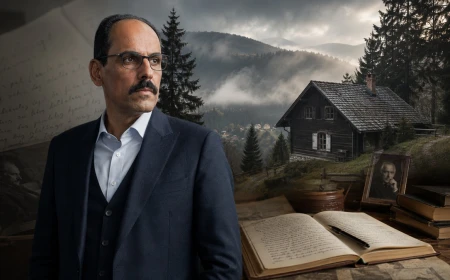
The historical connection was highlighted to Wise News Press by Igor Yermolaev, a journalist, photographer and cultural writer from Mykolaiv. Yermolaev’s reminder points to a wider opportunity: Saint Nicholas is not only a major figure in Christian tradition, but also a powerful symbol in Ukrainian spiritual memory, public culture and city identity.
Anatolia behind Mykolaiv’s name
Mykolaiv is one of Ukraine’s most strategically important southern cities. Known for its shipbuilding tradition, port identity and resilience during Russia’s full-scale war, the city has often appeared in global headlines because of military and geopolitical developments.
Yet behind the city’s name lies a deeper spiritual and cultural story.



Mykolaiv’s name is associated with Saint Nicholas, one of the most beloved saints in the Christian world and a protector of sailors, travelers, children and the poor. This symbolic connection is especially meaningful for a city whose identity has long been tied to ships, rivers, the Black Sea region and maritime life.
Yermolaev argues that this connection deserves greater attention in Turkey-Ukraine relations. The fact that Saint Nicholas was born and served in lands that are now part of Turkey creates a natural cultural link between Anatolia and Ukrainian memory.
This is not only a religious detail. It is a historical bridge.


Saint Nicholas and his Turkish roots
According to traditional accounts, Saint Nicholas was born around 270 CE in Patara, an ancient city in Lycia, located in the region of today’s southwestern Turkey. He later became bishop of Myra, which is associated with the modern district of Demre in Antalya.

For much of the world, Saint Nicholas is remembered through later traditions connected with generosity, protection and care for children. In the Orthodox Christian world, including Ukraine, he remains a deeply respected spiritual figure. In Ukraine, he is known as Sviatyi Mykolai and continues to hold a special place in family life, children’s culture and religious memory.
Turkey has often presented Saint Nicholas through the lens of tourism, Demre, the historic church and the global Santa Claus tradition. But this legacy has a wider meaning. Saint Nicholas is one of the strongest examples of Anatolia’s multi-layered religious and cultural history.
He belongs to a geography that shaped Greek, Roman, Byzantine, Christian, Turkish and Islamic histories across centuries. For that reason, the Saint Nicholas heritage can speak not only to tourists, but also to diplomats, cultural institutions, faith communities and societies searching for shared values.
Why Ukraine matters in this story
For Ukraine, Saint Nicholas is not a distant historical figure. He is part of living cultural memory.
In Ukrainian society, Saint Nicholas represents kindness, mercy, protection and hope. For children, his name is associated with gifts, goodness and moral imagination. For families, he is a figure of care. For religious communities, he is a saint of compassion. For Mykolaiv, his name is part of the city’s identity.
This makes the connection with Turkey especially important.

During war, symbols of protection, mercy and hope become more powerful. Ukrainian cities have suffered destruction, displacement and trauma. Mykolaiv, in particular, has endured repeated attacks and serious hardship. In such a context, the spiritual meaning of Saint Nicholas can be transformed into a message of solidarity and human connection.
Yermolaev’s contribution is valuable because it comes from Mykolaiv itself. As a journalist and cultural observer of the city, he understands that Mykolaiv is not only a military or strategic point on the map. It is a city of memory, people, culture and meaning.
A cultural diplomacy opportunity for Turkey
Turkey’s Ministry of Foreign Affairs and Ministry of Culture and Tourism could jointly develop a cultural diplomacy initiative around the Saint Nicholas legacy.
Such an initiative would not need to be political in a narrow sense. On the contrary, its strength would come from culture, history and shared memory.
Ankara could support an international program linking Patara, Demre and Mykolaiv. This program could include conferences, exhibitions, academic panels, documentary projects, photo exhibitions, children’s events and cultural exchanges.

The program could bring together Turkish and Ukrainian historians, theologians, archaeologists, journalists, artists, local officials and cultural institutions. It could also involve Mykolaiv-based cultural figures such as Igor Yermolaev, whose work documents the memory and identity of the city.
This kind of initiative would show that Turkey’s relationship with Ukraine is not limited to defense industry, trade, diplomacy, grain corridors or Black Sea security. It also has a human, cultural and spiritual dimension.
Demre and Mykolaiv could form a cultural line
One practical step could be the creation of a symbolic Demre-Mykolaiv cultural line.
Demre is one of the most important places associated with the memory of Saint Nicholas. Mykolaiv is one of the most important Ukrainian cities whose name carries that spiritual association. Linking these two places could create a strong platform for city diplomacy.

A program such as “Saint Nicholas Days of Peace and Mercy” could be organized between Turkey and Ukraine. One part could take place in Demre, another in Mykolaiv. The themes could include protection of children, support for war-affected families, preservation of cultural heritage, maritime history, interfaith dialogue and Black Sea solidarity.
This would not be only a symbolic gesture. It could create real social and cultural value.
For Ukrainian children affected by war, Saint Nicholas already represents kindness and hope. For Turkey, Demre and Patara represent historical depth and cultural hospitality. Bringing these meanings together could create a powerful humanitarian message.
A message for the Black Sea region
Turkey and Ukraine already share several strategic interests. They cooperate on Black Sea security, defense industry, trade, humanitarian issues and the future of Crimea. Turkey also has a special connection to the Crimean Tatars, whose history remains central to the Ukrainian struggle for sovereignty.
But cultural diplomacy can reach places that security diplomacy cannot.

Saint Nicholas offers a language of compassion rather than confrontation. In a Black Sea region shaped by war, energy crises, migration and geopolitical rivalry, such symbols matter. They help societies remember that history is not only made of borders, armies and treaties. It is also made of names, saints, cities, children, rituals and shared stories.
A Turkey-Ukraine initiative based on Saint Nicholas could send a message to the wider world: the Black Sea can also be a region of shared memory, cultural respect and human solidarity.
What message could Turkey send globally?
Through Saint Nicholas, Turkey could deliver three important messages to the world.
First, it could underline Anatolia’s role as a homeland of diverse religious and cultural traditions. Many figures central to Christian history lived, traveled, preached or served in today’s Turkey. Saint Nicholas is one of the most widely recognized among them.
Second, Turkey could present itself not only as a geopolitical actor, but also as a country capable of building bridges between civilizations. In an age of polarization, cultural diplomacy based on shared heritage can create trust.
Third, Turkey could show that its solidarity with Ukraine is not only strategic. It is also rooted in a deeper moral and historical understanding. When Ukrainians look at Saint Nicholas, they see a figure of mercy and protection. When Turks look at Patara and Demre, they see Anatolia’s historical richness. These two views can meet.
This message would also resonate in Europe and North America, where Saint Nicholas is widely known. Turkey’s careful and respectful ownership of this heritage could strengthen its public diplomacy and cultural image.
A gesture of friendship to Ukraine
For Ukrainians, especially the people of Mykolaiv, such an initiative would carry emotional value.
It would say: the name and memory that are important to your city are also respected in Turkey. The spiritual figure who lives in your cultural imagination came from lands that are today part of Turkey. Our histories are more connected than many people realize.
This is a warm and human message. It does not require political pressure. It does not divide. It does not compete with Ukrainian identity. Instead, it honors it.
In the future reconstruction of Ukraine, cultural restoration will matter as much as physical rebuilding. Cities need roads, schools and hospitals, but they also need memory, dignity and identity. Mykolaiv’s link to Saint Nicholas could become part of that restoration.
A late but powerful opportunity
The Saint Nicholas heritage remains an underused field in Turkey-Ukraine relations.
It brings together diplomacy, tourism, history, religion, children’s culture, humanitarian work, city diplomacy and Black Sea identity. Few symbols offer such a wide field of action.
Igor Yermolaev’s reminder from Mykolaiv opens an important window. It shows how a single historical detail can become the basis of a larger cultural strategy.
If Ankara develops this theme carefully, respectfully and inclusively, it could strengthen Turkey’s cultural diplomacy and add new depth to its relationship with Ukraine.
Saint Nicholas, born in Anatolia and remembered in Mykolaiv, could become more than a figure of the past. In today’s wounded Black Sea region, his name could become a bridge of peace, mercy and shared memory.
Yusuf İnan
www.wisenewspress.com
Yusuf İnan is a journalist and author. He serves as Editor-in-Chief of WiseNewsPress.com, SehitlerOlmez.com, and YerelGundem.com, and specializes in strategic and political analysis of Turkish and global affairs.
What's Your Reaction?
 Like
0
Like
0
 Dislike
0
Dislike
0
 Love
0
Love
0
 Funny
0
Funny
0
 Wow
0
Wow
0
 Sad
0
Sad
0
 Angry
0
Angry
0

Editor | Wise News Press — Delivering accurate, timely global news with integrity, insight, and editorial responsibility.









Comments (0)