



Turkey Stands with Ukraine, But Turkish Citizens in Ukraine Are Left Alone!
Yusuf Inan writes about Turkey’s support for Ukraine and the documented bureaucratic difficulties he faced as a Turkish father in Mykolaiv.
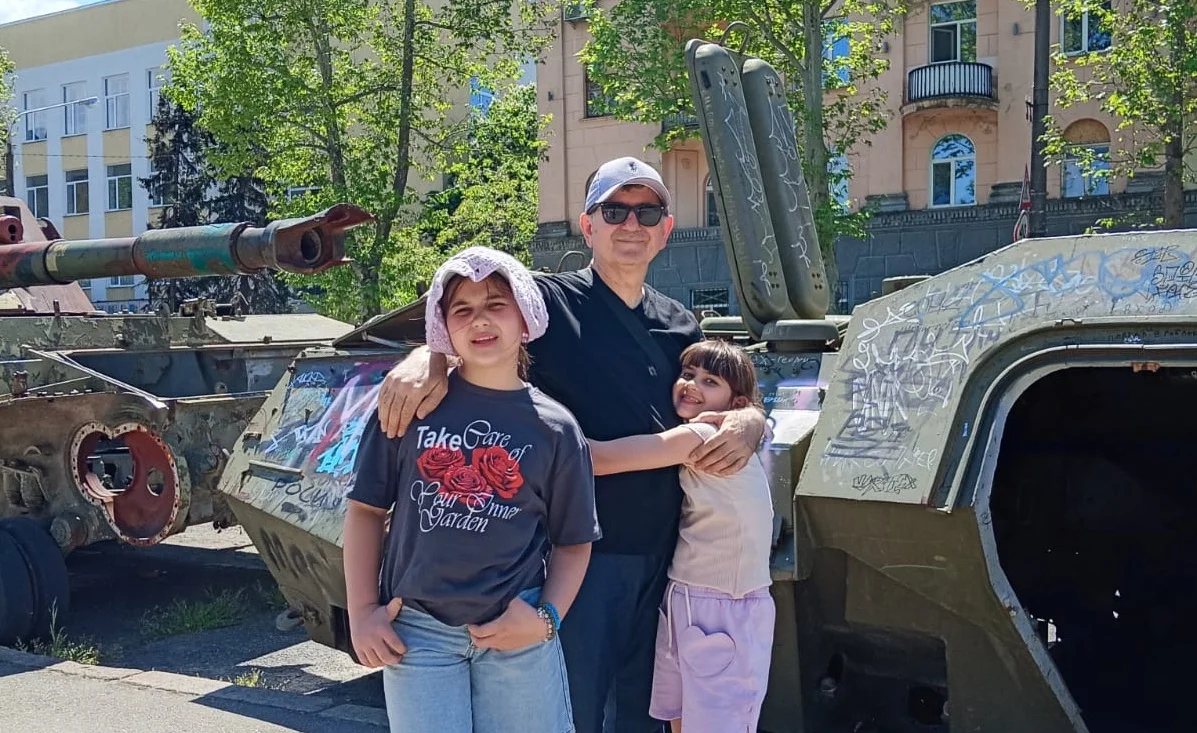


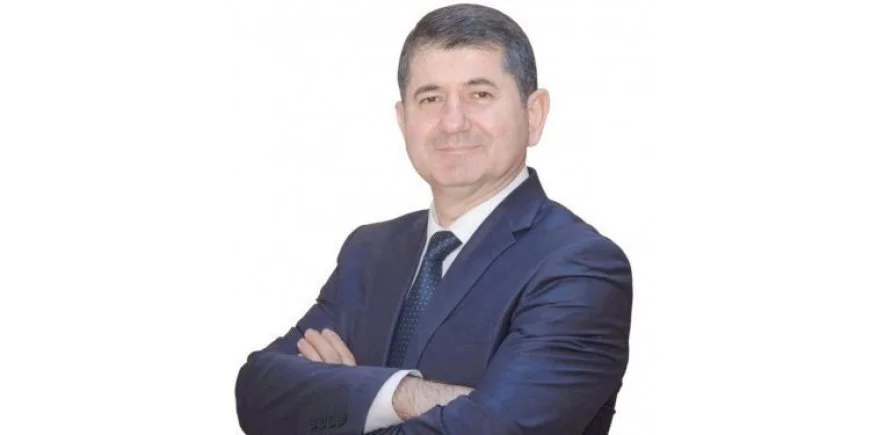
By Yusuf Inan | Wise News Press
Journalist | Political and Strategic Analyst
MYKOLAIV, Ukraine — Writing this column is not easy. This is not merely a matter of bureaucracy. It is the story of a father trying to stay beside his children in the middle of a war, and of a Turkish citizen who, in a country he considered friendly, faced painful, humiliating and documented treatment.
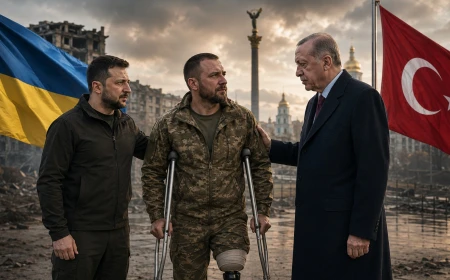
Turkey has stood with Ukraine since the first day of Russia’s invasion. The Turkish people felt the pain of Ukrainians as their own. Turkish President Recep Tayyip Erdoğan supported Ukraine through diplomatic channels, humanitarian aid, prisoner exchange efforts and the search for peace. First Lady Emine Erdoğan mobilized Turkish institutions to help Ukrainian children affected by the war. Turkey opened its doors to Ukrainian orphans, women, families and people whose lives were destroyed by war.

Turkey’s support for Ukraine has not been limited to diplomacy and humanitarian aid. The historic role of the Istanbul-based Ecumenical Patriarchate in the process through which the Orthodox Church of Ukraine moved away from religious dependence on Moscow is also an important sign of the spiritual connection between the two countries.


But the painful truth is this: citizens of the Republic of Turkey in Ukraine do not always feel that this friendship is returned.
Turkey stood beside Ukraine
Turkey did not merely speak about supporting Ukraine. It provided humanitarian aid, conducted diplomacy and opened its doors to Ukrainians during the hardest moments of the war. Turkish society sincerely shared the grief caused by the destruction in Ukraine, the fate of orphaned children, homeless families and parents who lost loved ones.
The position of the Turkish state and the Turkish people has been clear: Ukraine’s territorial integrity must be protected, the Ukrainian people must not be left alone, and victims of war must be supported.


From drones and diplomatic mediation to humanitarian aid and support for children, Turkey has taken responsibility for Ukraine. For that reason, indifference, dismissive behavior or the artificial complication of procedures against Turkish citizens in some Ukrainian institutions cannot be seen as only a personal problem. It is an issue that damages the spirit of friendship between the two countries.
A father who does not want to leave his children in war
This is not an abstract story. It is not speculation, and it is not an emotional exaggeration. These are documented circumstances that I faced as a father, a journalist and a citizen of Turkey in Ukraine.
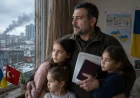
My children live in Ukraine during a war. I wanted to take them to a safe country — Turkey. But the permission procedures turned into a difficult and exhausting process. My children are half Ukrainian and half Turkish. One part of their life belongs to Ukraine; the other belongs to Turkey. I wanted to take them out of the war, but the doors did not open easily.

If I cannot take my children out, I want to stay beside them. If we must face danger, I want to be with my children. Is this not the most natural right of a father?
But then another ordeal began: residence permits, documents, criminal record certificates, approvals, translations, new papers, another office, another official, another procedure. A human matter turned into an exhausting bureaucratic maze.
Bureaucracy that forgets the human being
In Mykolaiv, my procedure was delayed for weeks, and then I was directed to another office. Although my documents had already been prepared, new papers were requested. Official documents had already been translated, yet new versions and new Ukrainian translations were demanded again.
When the process seemed ready to move forward, another requirement appeared: my Turkish criminal record certificate was not considered enough. I was also asked to provide a certificate showing that I had no criminal record in Ukraine.

But Ukraine is at war. Obtaining such documents is not easy in every city. According to the explanations given, this certificate could be obtained only through Kyiv or Lviv. For a person in Mykolaiv during wartime, this alone becomes a serious obstacle.
My lawyer submitted an official request. The institution acknowledged that, under Ukrainian law, the document should be issued, but said it could not be provided because of wartime conditions. Then I was told that an application had to be made in person at a ministry office. When the lawyer went to that office, new stages began: working days, queues, waiting periods and additional procedures.
In the end, a human issue turned into an almost impossible race to collect documents within 90 days.
Ukraine should be thanking, not building walls
Here I want to ask a simple and painful question: is it fair to treat this way a person who has helped Ukraine for years?
This is a person who, through Fond İnan / www.fondinan.com, helped hundreds of thousands of people in Ukraine: pensioners, the poor, widows, orphans, families of fallen soldiers, veterans and organizations for people with disabilities. This is a person who distributed fresh meat, bread, rice, sugar, flour, pasta and sunflower oil, and built a bridge of love between Turkey and Ukraine.

This is also a journalist who spoke with the families of Ukrainian soldiers killed in the war, recorded their pain, memory and dignity, and published their stories in multiple languages so the world could hear about the sacrifice of Ukrainian heroes.
For such work, for such support, for such service to the memory of fallen Ukrainian soldiers, the state should not place obstacles before him. It should offer gratitude. Perhaps even an award. Because this is not a person who came to ask for privilege. This is a journalist and a father who helped the Ukrainian people and now asks only one thing: not to be separated from his children in the middle of a war.
Despite this, the words of some officials — “If you do not bring this document, you will leave the country” — deeply wound a person. The issue is not only a residence permit. The issue is how state institutions treat a father who does not want to leave his children in a country at war.
Some Ukrainian officials themselves admitted: “This is not the position of our state; this is a personal creation of obstacles,” and even apologized. But apologies are not enough. If this is truly not state policy, then the state must correct such mistakes.
President Zelenskyy and the Ukrainian people should know this
President Volodymyr Zelenskyy should know about such cases. Turkey is not merely a diplomatic partner for Ukraine. Turkey is a country that stood beside the Ukrainian people during the war, opened doors to children, provided humanitarian aid, played a role in prisoner exchanges and defended Ukraine’s territorial integrity internationally.

For that reason, Ukrainian state institutions are expected to treat Turkish citizens with greater care, respect and constructiveness.
Of course, every state has security concerns, migration laws and document procedures. Nobody is asking Ukraine to violate its own laws. But humiliating or artificially complicated treatment of a father whose children are in Ukraine during the war is unacceptable — especially when that person follows the official path and has documents confirming every stage of his applications.
The judgment belongs to President Volodymyr Zelenskyy and to the Ukrainian people.
Ankara must also see its citizen
This column is not only a message to Kyiv. It is also a message to Ankara.
Turkish President Recep Tayyip Erdoğan, First Lady Emine Erdoğan and Foreign Minister Hakan Fidan should know how citizens of the Republic of Turkey are treated in some cases in Ukraine. Turkey helps the Ukrainian people, but Turkish citizens must not be left alone in Ukraine either.
If a father leaves his home, his work and his newspaper in Turkey and comes to Ukraine to be beside his children during the war, the bureaucratic difficulties he faces should become a matter of diplomatic attention.
Turkish-Ukrainian friendship is valuable. But that friendship must not remain only in presidential speeches, diplomatic meetings and humanitarian campaigns. It must also be felt in consulates, migration offices, police departments, border crossings and local state institutions.
Friendship requires mutual respect
The pain of the Ukrainian people is also our pain. Turkey must continue to support Ukraine’s independence and territorial integrity. But at the same time, the Ukrainian state must treat citizens of Turkey in a way that reflects the spirit of friendship between the two countries.
If a father trying to protect his children in the middle of a war is told, “Bring this document within 90 days, or you will leave your children and return,” then there is a deep gap between humanity and bureaucracy.
This column is not a call for hostility. On the contrary, it is a painful warning made to protect friendship.
Turkey stood beside Ukraine. Now Ukrainian state institutions must also treat Turkish citizens with fairness, humanity and respect.
Yusuf Inan
Yusuf Inan is a journalist and writer. He serves as Editor-in-Chief of UAPresa.com, WiseNewsPress.com, SehitlerOlmez.com and YerelGundem.com, and specializes in strategic and political analysis of Turkish and global affairs.
What's Your Reaction?
 Like
0
Like
0
 Dislike
0
Dislike
0
 Love
0
Love
0
 Funny
0
Funny
0
 Wow
0
Wow
0
 Sad
0
Sad
0
 Angry
0
Angry
0

Editor | Wise News Press — Delivering accurate, timely global news with integrity, insight, and editorial responsibility.










Comments (0)