



Kyiv on alert as Russia and Belarus hold nuclear drills
Russia and Belarus held joint nuclear drills as Kyiv warned that Moscow may be preparing new operations through Belarus.


By Ahmet Taş | Wise News Press
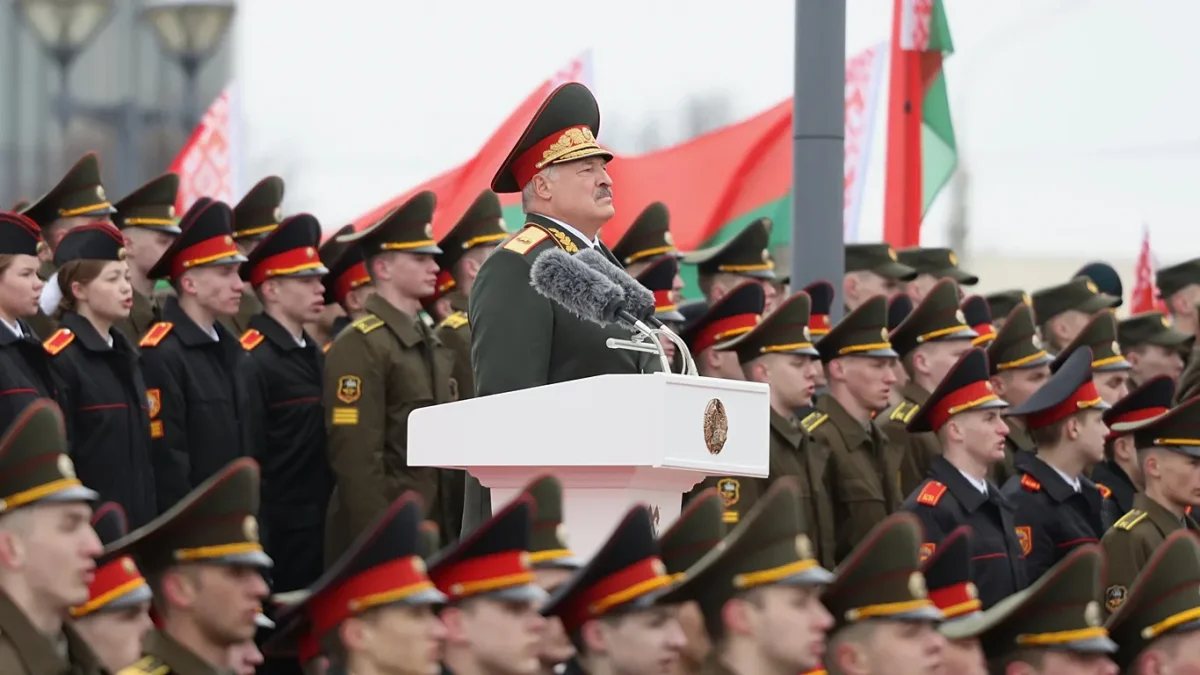
ANKARA, Turkey — Russia and Belarus held joint nuclear-related drills as Kyiv warned that Moscow may be preparing new operations through Belarus against Ukraine or NATO’s eastern flank.
The exercises come at a time of rising tension between Russia and NATO, growing uncertainty over nuclear arms control with Washington, and renewed Ukrainian concern that Belarusian territory could again be used as a launchpad for Russian military action.
Belarus announces nuclear-related training
Belarus’ Defense Ministry said the drills would include practical steps linked to the transportation of nuclear munitions and preparations for their possible combat use in coordination with Russia.
According to Minsk, air force and missile units are taking part in the exercise. Belarusian officials described the drills as planned and said they were not directed against third countries or regional security.
That explanation is unlikely to ease concerns in Kyiv and other European capitals. Belarus played a key role in the early phase of Russia’s full-scale invasion of Ukraine in 2022, when Russian forces used Belarusian territory to advance toward northern Ukraine and the Kyiv region.


Kyiv strengthens its northern border
Ukrainian President Volodymyr Zelenskyy last week ordered reinforcements for units stationed near the Belarusian border. He warned that Moscow may again be considering operations from Belarusian territory.
After meeting officials from the General Staff, military intelligence, foreign intelligence and the Security Service of Ukraine, Zelenskyy said Russia was assessing possible plans involving Belarus in both southern and northern directions.
According to Zelenskyy, such plans could target the Chernihiv-Kyiv axis in Ukraine or even one of the NATO countries bordering Belarus. His remarks show that Kyiv views the northern border not only as a Ukrainian defense issue, but also as part of a wider regional security risk.


Kremlin rejects Ukrainian claims
The Kremlin dismissed Zelenskyy’s warnings as an attempt to further inflame tensions. Moscow says its military activities with Belarus are defensive in nature.
However, Russia’s repeated use of nuclear rhetoric throughout the war has made such assurances difficult for Ukraine and NATO allies to accept at face value. President Vladimir Putin has repeatedly referred to Russia’s nuclear capabilities, especially during periods when Western military support for Ukraine has expanded.
For that reason, the Russia-Belarus drills are being viewed not only as a military exercise, but also as a political signal aimed at Ukraine and the West.
Oreshnik deployment raised tensions
Tensions increased further after Russia deployed its new nuclear-capable hypersonic Oreshnik missile system in Belarus last year. The move intensified security concerns across NATO’s eastern flank.
Belarus’ geography makes the issue especially sensitive. The country borders Ukraine, Poland, Lithuania and Latvia. Any Russian military capability deployed there has direct implications for both Kyiv and NATO.
Minsk insists that its military activity is not aimed at third countries. But because Belarus was previously used as a staging ground for Russia’s attack on Ukraine, its statements are being treated with caution.
Sarmat test adds to nuclear anxiety
Russia also recently tested the Sarmat intercontinental ballistic missile, a system capable of carrying nuclear warheads. The test came as the arms-control framework between Moscow and Washington continues to weaken.
The expiration of the New START treaty in February removed many of the remaining limits on the world’s two largest nuclear powers. That has increased concern over transparency, mutual verification and the risk of miscalculation.
The collapse of nuclear arms-control mechanisms affects not only U.S.-Russia relations, but also European security. Without reliable limits and communication channels, nuclear signaling becomes more dangerous and less predictable.
Belarus remains dependent on Moscow
Belarus has been ruled for more than three decades by Alexander Lukashenko, one of Putin’s closest allies. Politically, economically and militarily, Minsk remains heavily dependent on Moscow.
Although Belarus has not formally sent its own troops into Ukraine, its territory has been used by Russia during the war. That has made Belarus an important part of Moscow’s military posture, even without direct Belarusian combat participation.
Its involvement in nuclear-related drills reflects the military depth of this dependence. Minsk presents the exercises as sovereign defense planning, while Kyiv and Western governments increasingly see Belarus as an extension of Russia’s strategic military space.
NATO’s eastern flank watches closely
The drills are also being watched closely by NATO countries on the alliance’s eastern flank. Poland, Lithuania and Latvia have long viewed military activity in Belarus as a direct security concern.
If Moscow were to use Belarus to open a new northern front against Ukraine or increase pressure near NATO borders, the move could trigger a broader European security crisis.
That is why Kyiv’s alarm is not limited to Ukraine’s own defensive preparations. It also raises questions for NATO about deterrence, intelligence sharing and military readiness along the alliance’s eastern border.
Nuclear messaging overshadows the war
Russia has faced repeated military setbacks and high costs in its war against Ukraine. In that context, Moscow’s nuclear rhetoric is often seen as an attempt to deter the West from expanding military support for Kyiv.
The joint drills with Belarus fit into that wider pattern. Even if Moscow and Minsk describe the exercises as planned and non-threatening, training involving nuclear munitions sends a serious signal to neighboring states.
For Kyiv, the development is a reminder that the Belarusian direction remains an active security risk. Russia’s ability to use Belarusian territory for pressure, escalation or renewed operations has not disappeared.
The coming days will show whether the drills remain a limited signal or become part of a wider military posture along Ukraine’s northern border and NATO’s eastern flank.
What's Your Reaction?
 Like
0
Like
0
 Dislike
0
Dislike
0
 Love
0
Love
0
 Funny
0
Funny
0
 Wow
0
Wow
0
 Sad
0
Sad
0
 Angry
0
Angry
0

Editor | Wise News Press — Delivering accurate, timely global news with integrity, insight, and editorial responsibility.
















Comments (0)