


EU to Raise €90 Billion Joint Debt to Support Ukraine
European Union leaders have approved a €90 billion joint borrowing plan to cover Ukraine's military and budgetary needs, with debt issuance set to begin by April.
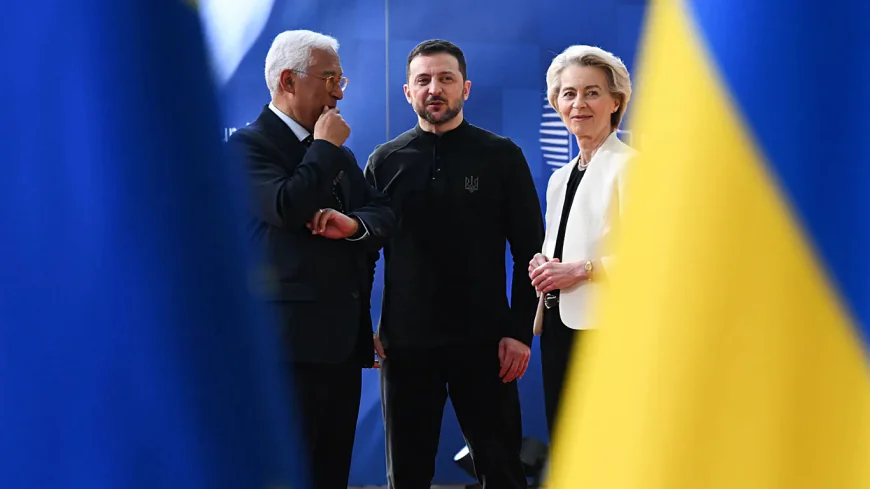


WISE NEWS PRESS / BRUSSELS, BELGIUM — DEC. 21, 2025
European Union leaders have officially approved "Plan B" to fund Ukraine’s military and budgetary requirements, opting to jointly borrow €90 billion from global financial markets. This strategic decision, reached during a high-stakes summit, moves away from the high-risk proposal of using frozen Russian assets directly for loans, favoring a more predictable bond-issuance strategy led by the European Commission.
The funds will be distributed gradually starting in April, providing Kyiv with a steady stream of financial support. While the principal debt is technically a loan to Ukraine, the EU budget will cover the interest rates—estimated at €3 billion annually—to avoid placing further strain on Ukraine's war-torn economy. This interest is expected to total approximately €20 billion in the next EU budget cycle (2028-2034), shared among member states based on their economic weight.
Exemptions and Enhanced Cooperation
The joint borrowing plan was made possible after Hungary, Slovakia, and the Czech Republic were granted formal exemptions from the program. In exchange for not vetoing the decision, these three nations will not bear any costs or financial responsibilities related to the €90 billion debt. The remaining 24 member states will move forward under the "enhanced cooperation" mechanism, assuming the financial risks and interest payments.
Anti-Corruption Conditions and "Made In Europe"
The disbursement of the €90 billion is strictly conditional. Ukraine is required to implement rigorous anti-corruption measures, specifically addressing recent transparency concerns in its energy sector. If Kyiv fails to maintain the independence of its anti-corruption institutions, the EU reserves the right to suspend payments.


Furthermore, the package includes "Made In Europe" criteria. These provisions ensure that the funds support both Ukrainian and European defense industries, allowing for purchases from outside the continent only when specific military equipment is unavailable within Europe.


The Role of Frozen Russian Assets
While the EU has opted for joint debt, the final communique notes that leaders reserve the right to use frozen Russian central bank assets to repay the debt in the future. This inclusion was seen as a measure to satisfy member states like Germany, which initially preferred using reparations as a funding source. President Volodymyr Zelensky hailed the agreement as a "significant victory," stating that it sends a clear signal to Russia that Ukraine’s resistance remains financially sustainable.
What's Your Reaction?
 Like
0
Like
0
 Dislike
0
Dislike
0
 Love
0
Love
0
 Funny
0
Funny
0
 Wow
0
Wow
0
 Sad
0
Sad
0
 Angry
0
Angry
0

Editor | Wise News Press — Delivering accurate, timely global news with integrity, insight, and editorial responsibility.
















Comments (0)