


Esotropia in children: Early diagnosis prevents vision loss
Op. Dr. Aziz Serkan Topaloğlu warns that early detection of esotropia is crucial to prevent permanent lazy eye and depth perception issues in children.


BY AHMET TAŞ | WISE NEWS PRESS
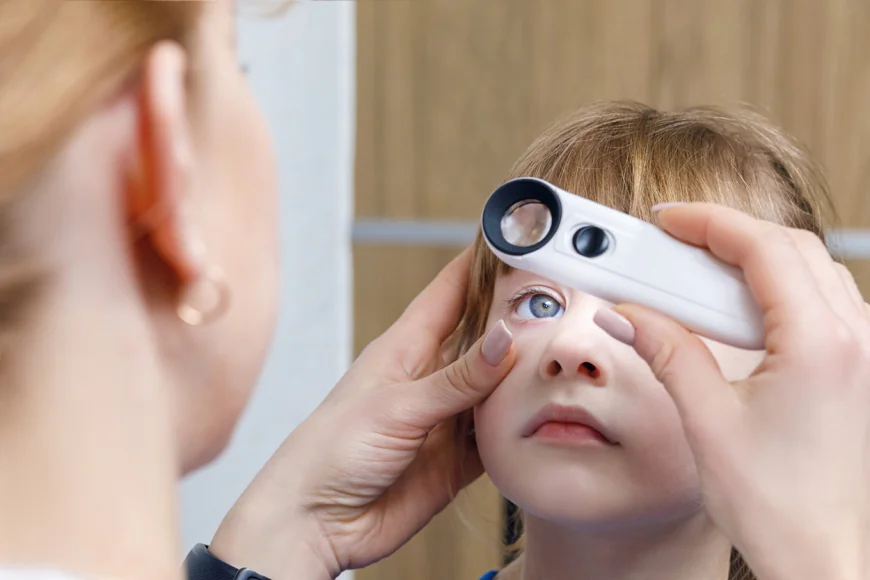
IZMIR, TURKIYE — Op. Dr. Aziz Serkan Topaloğlu, an Ophthalmology Specialist at Batıgöz Health Group, warned that esotropia—a common type of strabismus characterized by an inward misalignment of the eyes—can lead to permanent lazy eye and loss of depth perception if not diagnosed early in childhood.
Emerging typically during infancy or early childhood, esotropia directly impacts the healthy development of the visual system; experts emphasize that delayed intervention may result in irreversible damage to a child's ability to focus and process three-dimensional images.
Impact on the visual development
Esotropia occurs when the harmony between the eye muscles is disrupted, causing one or both eyes to turn inward. This misalignment prevents the eyes from focusing on the same point simultaneously, which hinders the development of binocular vision—the ability to see with both eyes together.
"Esotropia should not be perceived merely as a cosmetic issue," stated Op. Dr. Aziz Serkan Topaloğlu. He explained that when it appears during childhood, it affects the most critical stages of visual development. According to Topaloğlu, if left untreated, the brain may begin to ignore signals from the misaligned eye, leading to amblyopia (lazy eye) and a permanent loss of depth perception.


Varying types and symptoms
The clinical presentation of esotropia varies based on the time of onset and underlying causes. Infantile esotropia usually appears within the first few months of life, while accommodative esotropia is often associated with uncorrected farsightedness (hyperopia). Other forms include acquired esotropia, which develops later in childhood or adulthood, and intermittent esotropia, which may occur only under certain conditions before becoming permanent.


Topaloğlu noted that the specific type of inward turn directly influences the follow-up and treatment process. He emphasized that not every case of inward misalignment is the same, necessitating a detailed and individualized eye examination to determine the correct clinical path.
Warning signs for parents
Detecting eye misalignment in children is not always straightforward, as the turn may be subtle or inconsistent. However, there are key warning signs that parents should monitor. These include eyes appearing to look in different directions in photographs, the child constantly tilting their head to one side, a habit of squinting or closing one eye, and a noticeably short visual attention span.
"Inward eye turns that persist after the 6th month or become increasingly prominent must be evaluated by a specialist," Topaloğlu warned. He cautioned families against the "waiting for it to resolve on its own" approach, as delays can lead to much more difficult treatment scenarios in later years.
Diagnosis and treatment process
The diagnostic process for esotropia extends beyond simply observing the misalignment. Specialists conduct a thorough evaluation of the degree of the turn, whether it is constant or intermittent, the presence of refractive errors, and the overall impact on visual development. Measurements of visual acuity and the examination of binocular vision capacity are essential steps.
According to Topaloğlu, treatment plans must be tailored to the specific needs of the child. The primary goals are to align the eyes, support binocular vision, and prevent the development of a lazy eye. Depending on the case, treatment may involve the use of specialized glasses, patching therapy, orthoptic exercises, or surgical intervention when necessary.
Op. Dr. Aziz Serkan Topaloğlu concluded by stressing that childhood eye misalignments are manageable with early diagnosis and the right medical approach. He urged parents to take even small symptoms seriously and maintain regular eye check-ups to ensure a healthy visual future for their children.
What's Your Reaction?
 Like
0
Like
0
 Dislike
0
Dislike
0
 Love
0
Love
0
 Funny
0
Funny
0
 Wow
0
Wow
0
 Sad
0
Sad
0
 Angry
0
Angry
0

Editor | Wise News Press — Delivering accurate, timely global news with integrity, insight, and editorial responsibility.




















Comments (0)