



How High-Tech Weapons are Shaping the War in Ukraine
As the Ukraine conflict enters its fourth year, next-gen missiles like Flamingo and Oreshnik, along with AI-driven drones, are redefining battlefield tactics and strategic parity.



By Ahmet Taş | Wise News Press
KYIV, UKRAINE — As the fourth anniversary of Russia's invasion of Ukraine approaches, the deployment of experimental missiles like Flamingo and Oreshnik, combined with AI-powered unmanned systems, is radically shifting military dynamics on the ground.
With diplomatic efforts in Abu Dhabi ending in a stalemate, advanced weaponry has become the primary tool for breaking the deadlock. According to BBC World Service reports, both Kyiv and Moscow are escalating their technological race, moving beyond traditional artillery toward long-range precision strikes and robotic warfare.
Flamingo vs. Oreshnik: The missile race
Ukraine has achieved a significant breakthrough in domestic production with its "Flamingo" cruise missile. Capable of reaching targets 3,000 kilometers away at speeds of 900 km/h, the Flamingo allows Kyiv to strike deep into Russian territory without the restrictions often imposed on Western-supplied munitions.
In response, Russia has deployed the "Oreshnik," a ballistic missile capable of reaching speeds of up to 3 kilometers per second. First used in combat in late 2024 and again in Lviv in January 2026, the Oreshnik features MIRV (Multiple Independently Targetable Reentry Vehicle) warheads that split during descent, making interception nearly impossible for current air defense systems.
Air superiority: F-16 vs. Sukhoi
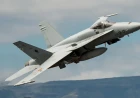
The arrival of F-16 fighter jets from NATO allies has provided the Ukrainian Air Force with a "smartphone-era" upgrade over their aging Soviet MiG-29s. These versatile jets have been instrumental in defense suppression and intercepting Russian cruise missiles, with one pilot reportedly downing six missiles in a single sortie in late 2025.


Meanwhile, the Russian Aerospace Forces continue to rely on the Sukhoi family—specifically the Su-30, Su-34, and Su-35. While the fifth-generation Su-57 remains in limited production, Russian jets utilizing long-range R-37 missiles continue to project significant power from outside the range of Ukrainian air defenses.
The rise of AI and autonomous drones
Ukraine is currently leading the global surge in unmanned systems, with an expected production of four million drones annually. From the "Spiderweb" operation that damaged strategic bombers deep inside Russia to the naval drones that have crippled the Black Sea Fleet, unmanned tech has become Ukraine's asymmetric answer to Russia's conventional size.
The next frontier is Artificial Intelligence. Both the Kremlin and Kyiv are developing autonomous targeting systems that allow drones to identify and strike targets even when satellite or radio links are jammed. As connectivity issues with providers like Starlink persist, the race for fully autonomous, self-navigating weaponry is intensifying on both sides of the front line.


What's Your Reaction?
 Like
0
Like
0
 Dislike
0
Dislike
0
 Love
0
Love
0
 Funny
0
Funny
0
 Wow
0
Wow
0
 Sad
0
Sad
0
 Angry
0
Angry
0

Editor | Wise News Press — Delivering accurate, timely global news with integrity, insight, and editorial responsibility.





















Comments (0)