


Iran war enters fifth day: Pezeshkian urges regional diplomacy
As the conflict escalates with heavy casualties and rising global energy prices, Iranian President Pezeshkian calls for diplomacy amid rising tensions.


By Ahmet Taş | Wise News Press
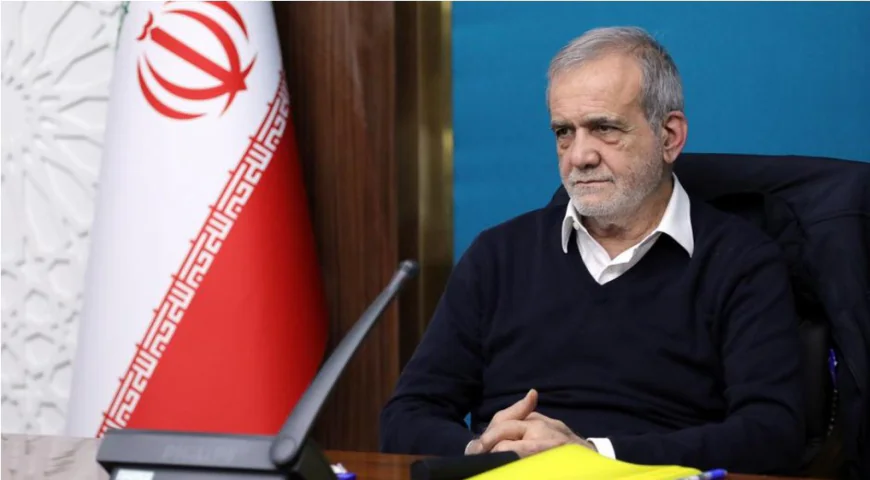
ISTANBUL, TURKEY — As the intense conflict between Iran and the US-Israeli alliance enters its fifth day, Iranian President Masoud Pezeshkian has issued a direct appeal to neighboring countries for diplomacy following a major ballistic missile incident involving Turkish airspace.
The scope of the war is rapidly expanding beyond bilateral military engagements, triggering severe disruptions in global energy supply chains, dragging allied Gulf nations into the crossfire, and prompting neighboring countries to prepare for worst-case scenarios, including mass migration waves. According to DW Türkçe's comprehensive coverage, the situation on the ground remains highly volatile, with both sides reporting massive casualties and structural damages. The diplomatic channels between Washington and Tehran appear to be completely severed, signaling a protracted and devastating conflict.
Turkish airspace breach and diplomatic fallout
The regional spillover of the conflict reached Turkish borders early in the campaign, raising alarms across the region. The Turkish Ministry of National Defense announced that a ballistic missile fired from Iran, which had crossed Iraqi and Syrian airspace, was intercepted and neutralized over the Eastern Mediterranean by NATO air and missile defense systems. Debris from the interceptor missile fell in an open area in the Dörtyol district of Hatay province, with no reported casualties or infrastructural damage.
Following the incident, Turkish Presidential Communications Director Burhanettin Duran stated that all necessary steps to defend Turkey's territory and airspace would be taken without hesitation. He emphasized that any hostile actions would be met with an appropriate and decisive response within the framework of international law. Diplomatic sources reported that Turkish Foreign Minister Hakan Fidan held an urgent phone call with his Iranian counterpart, Abbas Araghchi, conveying Ankara's strong reaction. Furthermore, the Iranian Ambassador to Ankara was summoned to the ministry and sternly warned against any recurrence of such airspace violations.


Pezeshkian's appeal amid escalating bombardments
In the shadow of the missile crisis and the escalating violence, Iranian President Masoud Pezeshkian released two separate messages addressed to the leaders of neighboring countries. In his official statements, Pezeshkian claimed that Tehran had continuously attempted to prevent the war through diplomatic channels but argued that "American-Zionist military aggression" left them with no choice but self-defense. He reiterated Iran's respect for the sovereignty of neighboring nations, suggesting that regional security and stability must be achieved through the joint efforts of local states rather than foreign intervention.


Despite the diplomatic rhetoric, the reality in the Iranian capital paints a starkly different picture. The scheduled state funeral for Iran's Supreme Leader Ayatollah Ali Khamenei, who was killed during the initial strikes on the first day of the war, has been indefinitely postponed. State television announced that the delay is due to the ongoing heavy bombardments by US and Israeli air forces over Tehran, with a new date to be announced later.
Conflicting claims of heavy military casualties
The information war is running parallel to the physical combat, with both sides releasing staggering casualty figures and claims of operational success. Ali Larijani, Secretary of Iran's Supreme National Security Council, claimed that more than 500 American soldiers have been killed since the war began. Larijani directly blamed US President Donald Trump and Israeli Prime Minister Benjamin Netanyahu for dragging the American public into an unfair war, warning that the allied forces would pay a heavy price for the assassination of Khamenei.
Conversely, the US Central Command (CENTCOM) reported that approximately 2,000 targets within Iran have been successfully struck since the outbreak of hostilities. CENTCOM stated that Iranian air defenses have been severely degraded, with hundreds of ballistic missiles, drone facilities, and launch pads effectively destroyed. The command also claimed a massive blow to naval capabilities, stating that the Iranian Navy lost 17 warships in less than 100 hours. Concurrently, the Israeli military reported conducting over 1,600 combat sorties and destroying nearly 300 rocket launch sites. Furthermore, the Israeli Air Force announced that an F-35 fighter jet successfully shot down an Iranian Russian-made YAK-130 training and combat aircraft over the skies of Tehran.
Regional spillover: Embassies, espionage, and naval warfare
The conflict's geographical footprint is expanding rapidly, transforming into a multi-front crisis. The Iranian military spokesperson threatened that if Israel strikes the Iranian embassy in Beirut, Tehran will consider all Israeli embassies worldwide as legitimate military targets. In Lebanon, Israeli airstrikes targeting Hezbollah strongholds have already resulted in over 50 deaths and 300 injuries, effectively dragging the neighboring country deeper into the war.
Intelligence and naval operations are also intensifying across the globe. Qatari authorities detained 10 individuals linked to Iran's Revolutionary Guards on charges of espionage and sabotage. Seven of the suspects were allegedly gathering intelligence, while three were involved in direct sabotage activities. Meanwhile, in a striking demonstration of the war's global reach, an Iranian naval vessel was attacked by an unidentified submarine off the coast of Sri Lanka. The Sri Lankan Navy reported that 78 sailors were injured and brought ashore, while 101 personnel remain missing following the deep-water engagement.
Global economic shockwaves and energy crisis
The geopolitical earthquake has severely disrupted global economic stability, particularly within energy markets. Iranian retaliatory strikes have targeted key oil and natural gas facilities in Saudi Arabia, the Kurdistan Region of Iraq, Qatar, and Israel, bringing vital production to a standstill in several international hubs. Furthermore, commercial shipping through the Strait of Hormuz—a critical maritime chokepoint handling roughly one-fifth of the world's daily oil shipments—has been heavily restricted.
These massive disruptions have placed immense upward pressure on global energy prices, affecting consumers worldwide. In Germany, the price of diesel fuel surpassed the €2 mark for the first time since September 2022, reaching €2.054 per liter. Similar price hikes are expected across European and developing markets as supply chains fracture. In Turkey, significant hikes in diesel and gasoline prices are anticipated immediately. US President Donald Trump has suggested that the American Navy might provide armed escorts for commercial vessels if maritime traffic does not normalize, though no official deployment for this specific mission has been initiated yet.
Ankara prepares for worst-case scenarios
Speaking on a live broadcast for TRT Haber, Turkish Foreign Minister Hakan Fidan sharply criticized Iran's strategic military decisions, particularly its broad attacks on Gulf nations that host US military personnel. Fidan noted that countries like Oman, Qatar, Kuwait, Bahrain, Saudi Arabia, and the United Arab Emirates had worked tirelessly until the very last hour to prevent the outbreak of war. "For Iran to bomb these nations indiscriminately is, in my opinion, an incredibly flawed strategy," Fidan stated, emphasizing that it alienates potential regional mediators.
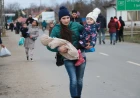
Addressing the domestic impact and national security, Fidan assured the public that Turkey is rigorously preparing for all potential outcomes through continuous inter-agency coordination meetings. Designating a potential mass migration wave as the absolute worst-case scenario, he emphasized that Turkey's border security infrastructure is highly robust. He highlighted the extensive, high-security border walls constructed along the Iranian frontier in recent years, a strategic move based heavily on the difficult lessons learned from the Syrian civil war and subsequent refugee crises.
What's Your Reaction?
 Like
0
Like
0
 Dislike
0
Dislike
0
 Love
0
Love
0
 Funny
0
Funny
0
 Wow
0
Wow
0
 Sad
0
Sad
0
 Angry
0
Angry
0

Editor | Wise News Press — Delivering accurate, timely global news with integrity, insight, and editorial responsibility.














Comments (0)