


Is Maduro’s extraction legal? International law experts divided
The capture of Nicolas Maduro by US forces has sparked intense debate over international law, sovereignty, and the use of the Ker-Frisbie doctrine in federal courts.


WISE NEWS PRESS / LONDON, UK
The apprehension and extraction of Venezuelan leader Nicolas Maduro by United States military forces have triggered a global legal debate regarding state sovereignty and the boundaries of international law.
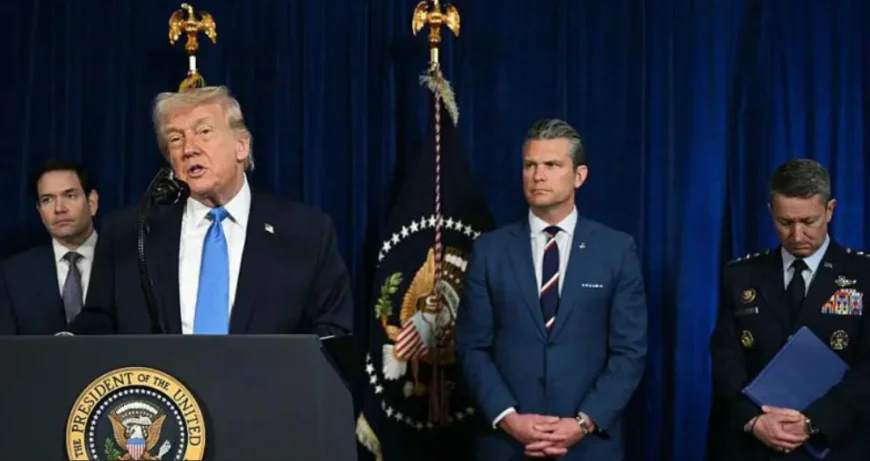
While the administration of President Donald Trump justifies the raid as a "law enforcement operation" to combat narco-terrorism, international law specialists remain skeptical. Experts argue that using military force for criminal prosecution—without United Nations Security Council authorization—challenges the established rules-based international order. As Maduro awaits trial in a New York federal court, the legality of the operation faces scrutiny from both constitutional and international legal frameworks.
The US "Law Enforcement" defense
Following the raid, US Secretary of State Marco Rubio and General Dan Caine framed the action as a step taken on behalf of the Department of Justice. By labeling Maduro a "fugitive from American justice," the administration sought to bypass the requirement for Congressional approval usually needed for an act of war. However, Jeremy Paul, a professor of constitutional law at Northeastern University, noted the paradox in the administration's stance: "You can't say it's a law enforcement operation and then turn around and say we have to run the country. That makes no sense."
Violations of international norms
Prof. Marc Weller of Chatham House emphasized that international law generally prohibits the use of force unless it is in response to an armed attack or authorized by the UN. According to Weller, the US goal of suppressing the drug trade or the claim that the Maduro government is a "criminal enterprise" does not provide a sufficient legal basis for military intervention. "Clearly, the US armed operation against Venezuela meets none of these requirements," he noted, adding that the raid creates a dangerous precedent for global conflict resolution.


Comparison with the Panama intervention
Analysts have drawn parallels to the 1989 removal of Manuel Noriega in Panama. In that case, Noriega was also transferred to the US on drug charges following military intervention. However, former diplomat John Feeley pointed out a key difference: in Panama, a local opposition was prepared to take over, leading to a swift democratic transition. President Trump's comment that "the US will govern Venezuela for a time" suggests that such a transition plan is not yet in place, raising concerns about a prolonged military presence.


The Ker-Frisbie Doctrine and the trial ahead
Despite the legal controversies surrounding his capture, experts predict the trial will proceed under the "Ker-Frisbie Doctrine." This legal principle holds that US courts have the authority to try a defendant regardless of how they were brought into the country—even in cases of abduction—provided they were not subjected to extreme torture. While the legal proceedings in New York may move forward, the long-term impact on the United Nations' ability to maintain international order remains a subject of intense concern for the global community.
Experts argue that drug trafficking allegations do not meet the international criteria for justifying a unilateral military operation.
What's Your Reaction?
 Like
0
Like
0
 Dislike
0
Dislike
0
 Love
0
Love
0
 Funny
0
Funny
0
 Wow
0
Wow
0
 Sad
0
Sad
0
 Angry
0
Angry
0

Editor | Wise News Press — Delivering accurate, timely global news with integrity, insight, and editorial responsibility.













Comments (0)