



NYT Issues Istanbul Quake Warning: City Is Effectively in the Crosshairs
A New York Times report, citing a study in Science, warns of a potential 7+ magnitude earthquake in Istanbul following recent tremors, sparking a fierce debate among Turkish seismologists regarding the fault's behavior.
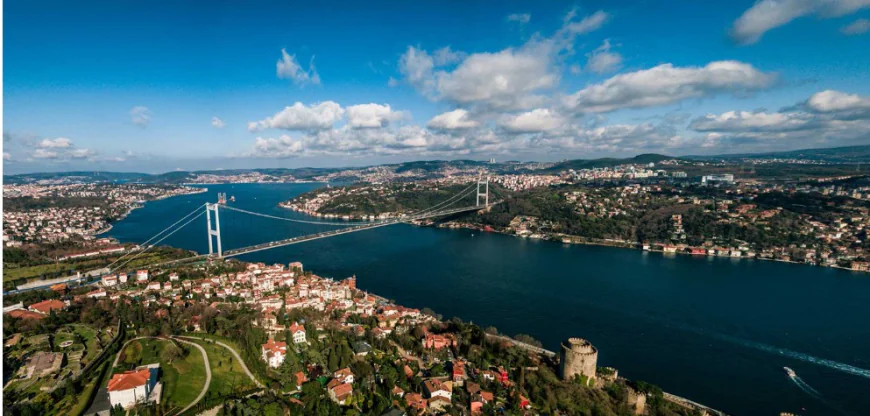


WISE NEWS PRESS / ISTANBUL, TURKEY — DEC. 14, 2025
The New York Times (NYT) has published a concerning analysis regarding seismic risks in Istanbul, citing a recent study in the journal Science that suggests the city could face "one of the worst humanitarian disasters in recent history."
The report highlights the 6.2 magnitude earthquake that struck off the coast of Silivri in April 2025 as a critical link in a chain of events. According to the study, tremors are progressively moving toward a "locked" 15–21 kilometer section of the fault line. Stephen Hicks, a seismologist at University College London, told the NYT, "Istanbul is effectively in the crosshairs."
'Danger has increased, not decreased'
The report has once again divided the Turkish scientific community. Prominent geologist Prof. Dr. Naci Görür reiterated his long-standing warnings, referencing historical seismic cycles in the Marmara Sea to assert that a major event is inevitable.
Supporting this view, Prof. Dr. Okan Tüysüz stated that the 6.2 magnitude quake and its aftershocks have not relieved the stress on the fault. "Scientific publications show that the danger within the Marmara Sea has increased rather than decreased," Tüysüz noted, validating the concerns raised by international researchers.
Counter-theory: Is the fault creeping?
However, not all experts agree with the "locked fault" hypothesis. Retired Geologist Prof. Dr. Osman Bektaş argued that the Science article fails to explain why the Silivri earthquake stopped where it did. Citing 2019 research by Japanese expert Uchida, Bektaş suggested the Main Marmara Fault exhibits "creep" characteristics—releasing energy slowly rather than storing it all for a massive break.


"The 6.2 earthquake destroyed the myth that the fault is completely locked and will rupture from end to end," Bektaş argued, suggesting the fault is more likely to produce quakes smaller than magnitude 7.
Paleoseismologist Dr. Ramazan Demirtaş also rejected the theory of "west-to-east seismic migration," stating that data from the last 26 years does not support a clear directional pattern or the imminent rupture models proposed in the report.


What's Your Reaction?
 Like
0
Like
0
 Dislike
0
Dislike
0
 Love
0
Love
0
 Funny
0
Funny
0
 Wow
0
Wow
0
 Sad
0
Sad
0
 Angry
0
Angry
0

Editor | Wise News Press — Delivering accurate, timely global news with integrity, insight, and editorial responsibility.


















Comments (0)