



Turkey proposes new energy routes bypassing Strait of Hormuz
Amid escalating Middle East conflicts and the closure of the Strait of Hormuz, Turkey has proposed three major pipeline projects to secure global energy supplies.


By Ahmet Taş | Wise News Press
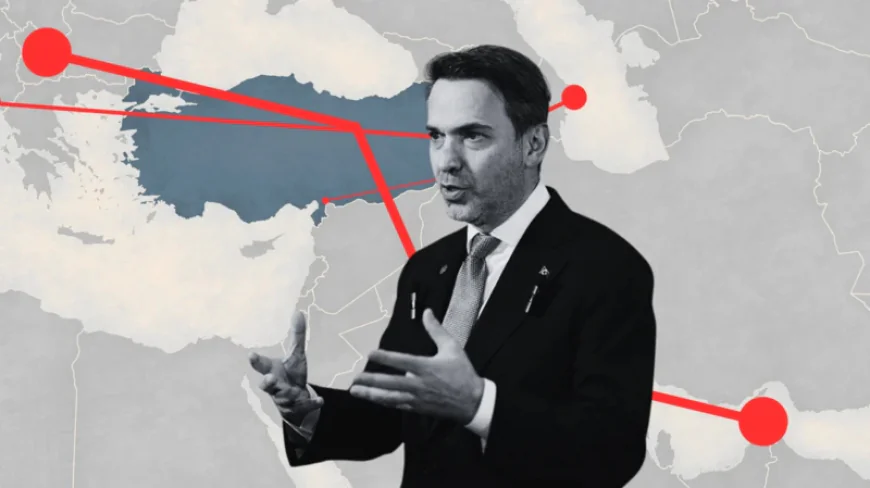
ANKARA, TURKEY — As geopolitical tensions escalate following recent military clashes between the United States, Israel, and Iran, Turkey has formally proposed three major alternative energy routes designed to bypass the blocked Strait of Hormuz and secure the flow of Middle Eastern oil and gas to European markets.
The closure of the Strait of Hormuz—a vital maritime artery for global energy trade—has triggered a sharp surge in global oil prices, pushing crude to nearly $120 per barrel. In response to this mounting crisis, Ankara's strategy centers on establishing direct overland pipeline connections from Iraq, Qatar, and Turkmenistan through Turkish territory. This ambitious diplomatic and infrastructural push aims to transform Turkey into the central energy hub linking Eastern resources with Western consumers, fundamentally reshaping the regional energy architecture in an era defined by conflict and supply chain vulnerability.
Diplomatic push for alternative routes
The urgency of creating new energy corridors was highlighted at the highest levels of the Turkish government. Speaking at the opening of the Antalya Diplomacy Forum on April 17, President Recep Tayyip Erdoğan emphasized that the current geopolitical climate necessitates an immediate reevaluation of how energy reaches international markets.
"It is evident that the war has accelerated the search for alternative routes to transport energy resources from neighboring geographies to international markets," President Erdoğan stated during his address. He further declared Turkey's readiness to cooperate with neighboring states through strategic connectivity initiatives, such as the Development Road project, to ensure the uninterrupted flow of critical resources.
Echoing the President's sentiments, Minister of Energy and Natural Resources Alparslan Bayraktar confirmed that the recent sequence of global crises has necessitated a "new energy architecture." Bayraktar outlined three specific pipeline projects that Ankara believes are commercially viable and technically necessary to alleviate the current global energy crisis.


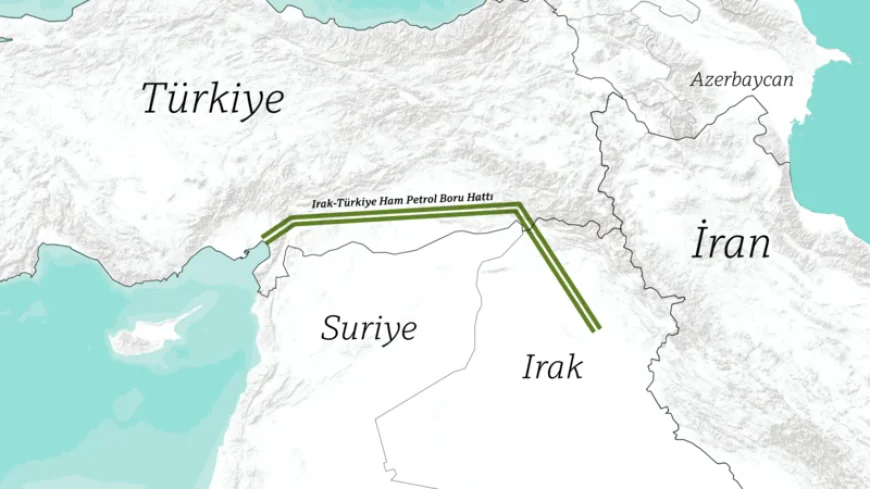
Extending the Kirkuk-Ceyhan pipeline to Basra
The first major proposal focuses on securing the flow of Iraqi crude oil. Iraq produces approximately 60 percent of its oil in the southern Basra region, a massive reserve basin that generated up to 3.3 million barrels per day prior to the current conflict. Currently, this oil heavily relies on maritime transport through the vulnerable Persian Gulf.
Minister Bayraktar proposed extending the existing Kirkuk-Ceyhan (Yumurtalık) crude oil pipeline directly down to the Basra region. The current pipeline, which has been operational since 1976, has a daily carrying capacity of roughly 1.5 million barrels. By extending this infrastructure southwards, Turkey argues that a significantly larger volume of Iraqi oil could be safely transported overland directly to the Mediterranean port of Ceyhan, completely bypassing the risks associated with the Strait of Hormuz.
Initial discussions regarding new infrastructural links between Turkey and Iraq took place between 2021 and 2022. Foreign Minister Hakan Fidan recently noted that Baghdad had previously expressed interest in a comprehensive "Development Road Project," which would include direct railway, pipeline, and fiber-optic connections from the Al Faw Port in Basra to the Turkish border.


However, political instability within Iraq has hindered the project's progression. The ongoing uncertainty regarding government formation in Baghdad, particularly the potential return of political figures closely aligned with Iran, poses significant challenges to finalizing these massive bilateral infrastructure agreements.
A direct gas pipeline from Qatar
The second critical component of Turkey's new energy vision involves Qatar, which holds over 10 percent of the world's natural gas reserves and ranks as the second-largest exporter of liquefied natural gas (LNG) globally. Qatar's current export model is heavily dependent on maritime shipping through the Strait of Hormuz, making its economy exceptionally vulnerable to regional blockades.
To mitigate this risk, Minister Bayraktar proposed the construction of a massive overland natural gas pipeline connecting Qatar directly to Turkey. Bayraktar described the project as "absolutely necessary," outlining a proposed route that would traverse Saudi Arabia, Jordan, and Syria before entering Turkish territory.
"It is a technically and commercially feasible project," Bayraktar asserted, noting that such an endeavor would significantly reduce the global energy crisis.
The political climate for such a project appears increasingly favorable. Turkey and Qatar have recently elevated their bilateral relations to an advanced strategic level. Furthermore, Turkey's recent efforts to establish a comprehensive four-way cooperation platform with Saudi Arabia, Egypt, and Pakistan suggest a warming of diplomatic ties across the proposed pipeline route. Foreign Minister Fidan revealed that initial talks for this pipeline occurred in 2008 but were suspended due to the Arab Spring. He emphasized that had the project been completed, the current closure of the Strait of Hormuz would have generated far fewer negative consequences for the global economy.
New overland pipelines could provide a secure route for Qatari and Turkmen gas to reach European consumers. (Photo: Agency/Wise News Press)
Unlocking Turkmenistan's gas reserves
The final pillar of Turkey's energy strategy looks eastward toward Turkmenistan, a nation possessing the world's fourth-largest natural gas reserves, estimated at nearly 50 trillion cubic meters. Currently, the vast majority of Turkmen gas is exported to China, while a smaller volume reaches Turkey via a complex "swap" arrangement through Iran.
Ankara's long-held objective is to facilitate the direct transport of Turkmen gas across the Caspian Sea to Azerbaijan. From there, the gas would be injected into the existing Trans-Anatolian Natural Gas Pipeline (TANAP), which already transports 10 billion cubic meters of Azerbaijani gas to Europe and 6 billion cubic meters to Turkey annually.
Despite an energy cooperation agreement signed between Turkey and Turkmenistan in 1998, the project has been stalled for decades. Disagreements among regional states regarding the legal status of the Caspian Sea and overlapping territorial claims have consistently derailed the construction of a trans-Caspian pipeline. However, Turkish officials remain optimistic that the current global energy squeeze may force the relevant parties to resolve their diplomatic differences and finally unlock Turkmenistan's vast reserves for the European market.
As global energy markets remain highly volatile, Turkey's proposed infrastructure projects represent a long-term strategic shift aimed at insulating the region from maritime choke points while solidifying Ankara's position as an indispensable energy transit hub.
What's Your Reaction?
 Like
0
Like
0
 Dislike
0
Dislike
0
 Love
0
Love
0
 Funny
0
Funny
0
 Wow
0
Wow
0
 Sad
0
Sad
0
 Angry
0
Angry
0

Editor | Wise News Press — Delivering accurate, timely global news with integrity, insight, and editorial responsibility.


















Comments (0)