



Russia’s 2027 military spending is set to hit $202 billion, documents show
Documents seen by Reuters suggest Russia plans to raise 2027 defense spending to 17.1 trillion rubles, deepening pressure on its budget and borrowing.


By Ahmet Taş | Wise News Press
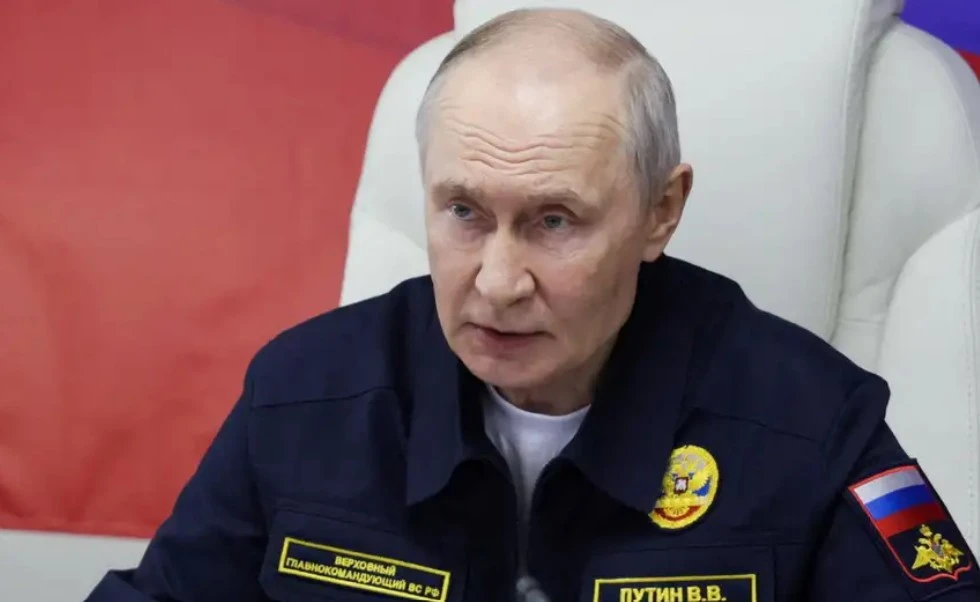
ANKARA, Türkiye — Russia is preparing to raise military spending to a record 17.1 trillion rubles in 2027, according to government documents seen by Reuters.
The projected figure, equivalent to about $202.58 billion, would mark a roughly 27% increase from the 13.5 trillion rubles initially budgeted and the highest level since Russia launched its full-scale invasion of Ukraine in 2022. The figures point to a deepening war economy in which defense priorities are increasingly shaping public finances, borrowing plans, tax policy and energy revenue forecasts.
Military spending reaches a wartime high
According to the documents reviewed by Reuters, Russia’s planned 2027 military spending would set a new wartime record. The increase suggests that Moscow is preparing for a prolonged conflict rather than a short-term budgetary adjustment.
The spending is expected to cover a wide range of military needs, including weapons production, ammunition, logistics, personnel costs, missile systems, air defense and operations linked to the war in Ukraine. While official budget lines provide a partial picture, several defense-related expenditures remain classified, making the real cost of the war difficult to measure.
Russia had planned to spend 12.1 trillion rubles on defense in 2026, but the actual amount is classified. That secrecy has become an important feature of wartime budgeting, as the Kremlin seeks to maintain military capacity while limiting public visibility over the full cost.


Three-year defense bill may reach 50 trillion rubles
The documents also indicate that Russia’s total military spending over the next three years could reach 50 trillion rubles. That scale shows how central the war has become to Russia’s medium-term fiscal planning.
Such spending may support parts of the defense industry in the short term, but it also redirects resources away from civilian priorities. Health, education, regional development, infrastructure and social programs may face growing pressure as military needs absorb a larger share of state funding.
The figures also suggest that Russia’s economy is being increasingly organized around defense production. That model can produce temporary industrial activity, but it may weaken long-term investment, consumer welfare and budget flexibility.


Budget deficit forecast doubles
The same documents show that Russia has sharply revised its 2026 budget deficit forecast. The deficit is now expected to reach 3.2% of gross domestic product, compared with an earlier estimate of 1.6%.
Total budget spending in 2026 is projected to rise by 13.2% to 48.6 trillion rubles, or 20.9% of GDP. The revision highlights the widening gap between wartime spending needs and available revenue.
A larger deficit means the government will need to rely more heavily on borrowing, reserves or tax increases. Each option carries economic costs. More borrowing can raise debt pressure, reserve use can weaken fiscal buffers, and tax increases can weigh on companies and households.
Oil and gas revenue outlook weakens
Energy income remains one of the most important sources of Russia’s federal budget. Yet the documents show that the government has lowered its forecast for oil and gas revenue in 2026 from 8.9 trillion rubles to 7.6 trillion rubles.
That downward revision is significant because energy exports have long helped Moscow finance state spending. Sanctions, price volatility, discounted sales, payment restrictions and changing export routes have made those revenues less predictable.
The combination of higher military spending and weaker energy revenue creates a difficult fiscal balance. It means Russia may need to finance the war through heavier domestic borrowing and additional revenue measures rather than relying mainly on oil and gas income.
Borrowing pressure is set to rise
Russia also plans to increase net borrowing this year by 26% to 5 trillion rubles, according to the documents. The government is also expected to use 459 billion rubles to help reduce the deficit.
In 2027, total borrowing is projected to rise by 43% to 7.7 trillion rubles. State debt is expected to climb to 21.7% of GDP, up from 19.9% in 2026. That would push debt above the 20% level Russian authorities have previously described as a safe threshold.
Although Russia’s public debt remains lower than that of many major economies, the direction of travel is important. Rising borrowing during a period of high defense spending and declining energy revenue points to mounting fiscal strain.
War economy raises long-term questions
Russia’s 2027 budget outlook shows that the war in Ukraine is not only a military campaign but also a structural economic commitment. Moscow is preparing to spend at record levels while accepting higher deficits, larger borrowing needs and weaker energy revenue assumptions.
For Ukraine, the numbers suggest that Russia is planning for a longer confrontation. For Europe and the United States, they may reinforce arguments that support for Kyiv must also be structured over the long term.
The central question is how sustainable Russia’s fiscal strategy will be if high military spending continues while energy income falls and borrowing expands. In the short term, the Kremlin can prioritize defense and absorb pressure through debt, taxes and reserves. Over time, however, a war-centered budget may narrow the government’s room for maneuver and increase the economic cost of continued aggression.
WiseNewsPress.com
What's Your Reaction?
 Like
0
Like
0
 Dislike
0
Dislike
0
 Love
0
Love
0
 Funny
0
Funny
0
 Wow
0
Wow
0
 Sad
0
Sad
0
 Angry
0
Angry
0

Ahmet Taş is a journalist, editor and Turkey Office Manager of the Wise News Press Media Group. He works across news, digital media and international publishing, focusing on accurate, responsible and accessible journalism. He contributes to the development of media projects that bring important political, social and global developments to a wider international audience.



















Comments (0)