



Russia election delivers no surprise, but Kremlin’s war signal matters
United Russia is set to keep its Duma dominance, but the Kremlin’s reading of the vote may shape future decisions on the Ukraine war.


By Ahmet Taş | Wise News Press
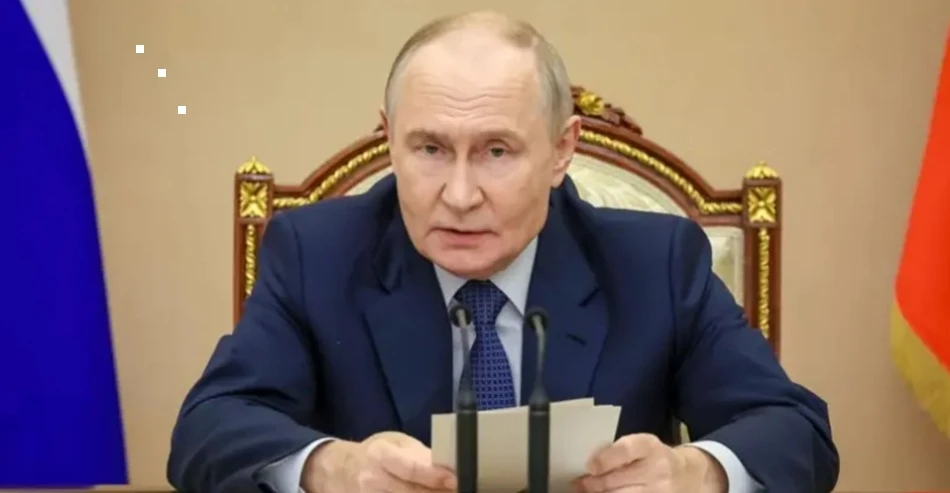
MOSCOW, RUSSIA — Russia’s latest election produced no major surprise, with the ruling United Russia party on course to retain its dominant position in the State Duma.
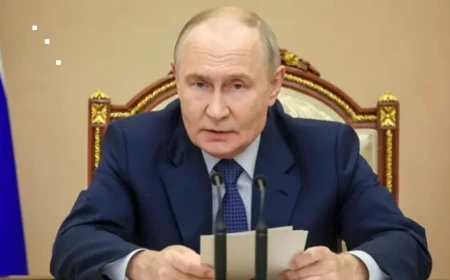
According to BBC Russia editor Steve Rosenberg’s reporting from Moscow, the result was widely expected in a political system tightly controlled by the Kremlin. The more important question is not who won, but how President Vladimir Putin’s administration will interpret the outcome as the war in Ukraine continues.
United Russia remains dominant
Preliminary results indicate that United Russia, the party backed by Putin, is set to preserve its constitutional majority in the 450-seat State Duma, the lower house of Russia’s parliament.
The result came after more than four and a half years of war against Ukraine, heavy military losses, economic pressure and fresh disruption from Ukrainian drone attacks on Russian oil facilities. Despite those pressures, no opposition force came close to challenging the ruling party’s parliamentary dominance.
A predictable result in a controlled system
Russia is often difficult to predict, but this vote was not one of those cases. The Kremlin’s control over political institutions, media space and candidate access meant that the outcome was broadly anticipated before ballots were counted.


The parties that crossed the 5 percent threshold and entered the new Duma were already represented in the previous parliament. They also supported the Kremlin’s line on the war, officially described in Russia as a “special military operation.”
Anti-war Yabloko kept out
One notable case was Yabloko, the only anti-war political party initially allowed to take part in the election. That permission did not last.
Shortly after its party list was registered, Russia’s Supreme Court removed Yabloko from the ballot. The decision was widely seen as a sign that the Kremlin did not want an anti-war message to gain too much public visibility.


Yabloko leader Nikolai Rybakov said he was not surprised that the new Duma would look strongly pro-Kremlin. He argued that if all parties allowed to run support Putin’s policies, the result can hardly be different.
Opposition candidates faced pressure
Although Yabloko was removed from the party list, around 100 of its candidates continued to run in single-member districts as independents. Preliminary results showed that none won a seat.
Rybakov said some candidates who should have taken part were in prison, others were blocked from running, and some election observers were unable to monitor the vote because of registration issues.
Those claims underline a broader criticism of Russian elections: the formal voting process continues, but meaningful political competition remains heavily restricted.
Ukraine war shaped the background
The final day of voting came after a major Ukrainian drone attack on the Moscow region. Three people were reported killed in the region, while an oil refinery in the capital was also hit.
Near a polling station close to the refinery, voters appeared less shocked than resigned. As Russia’s war against Ukraine moves deeper into its fifth year, residents around Moscow have become more accustomed to the possibility that the war can reach areas far from the front line.
One voter told the BBC that people in Donbas, Bryansk and Belgorod experience such threats regularly and continue with daily life.
What will the Kremlin claim from the vote?
The Kremlin is likely to present the result as evidence that most Russians remain united behind Putin. That interpretation could be used to legitimize future decisions related to the war.
The central question is what those decisions will be. Putin recently rejected the possibility of a new wave of mobilization, saying there was no scenario requiring it “today.”
But public concern over another call-up has not disappeared. In Russia, the word “today” leaves room for anxiety about what may happen tomorrow.
The real test begins after the election
The election result itself was predictable. What follows is less certain.
At minimum, the Kremlin is expected to frame the vote as a popular mandate to continue the war. Whether that leads to new mobilization measures, intensified military policy or tighter domestic controls will be the issue to watch in the weeks ahead.
WiseNewsPress.com
What's Your Reaction?
 Like
0
Like
0
 Dislike
0
Dislike
0
 Love
0
Love
0
 Funny
0
Funny
0
 Wow
0
Wow
0
 Sad
0
Sad
0
 Angry
0
Angry
0

Ahmet Taş is a journalist, editor and Turkey Office Manager of the Wise News Press Media Group. He works across news, digital media and international publishing, focusing on accurate, responsible and accessible journalism. He contributes to the development of media projects that bring important political, social and global developments to a wider international audience.










Comments (0)