



Ukraine's wartime schools: Mykolaiv trains workers for future recovery
In the final part, Alla Velikhovska discusses vocational education, reconstruction, international support, Turkey and the future of Mykolaiv schools.


By Yusuf Inan | Wise News Press
MYKOLAIV, Ukraine — In the final part of this interview, Alla Velikhovska says Mykolaiv region is already preparing for recovery by adapting vocational education, training skilled workers and building partnerships that can support Ukraine’s reconstruction after the war.
The conversation moves from schools, shelters and learning losses to a wider question: who will rebuild the region when the fighting ends, and how should the education system prepare young people and adults for that task?
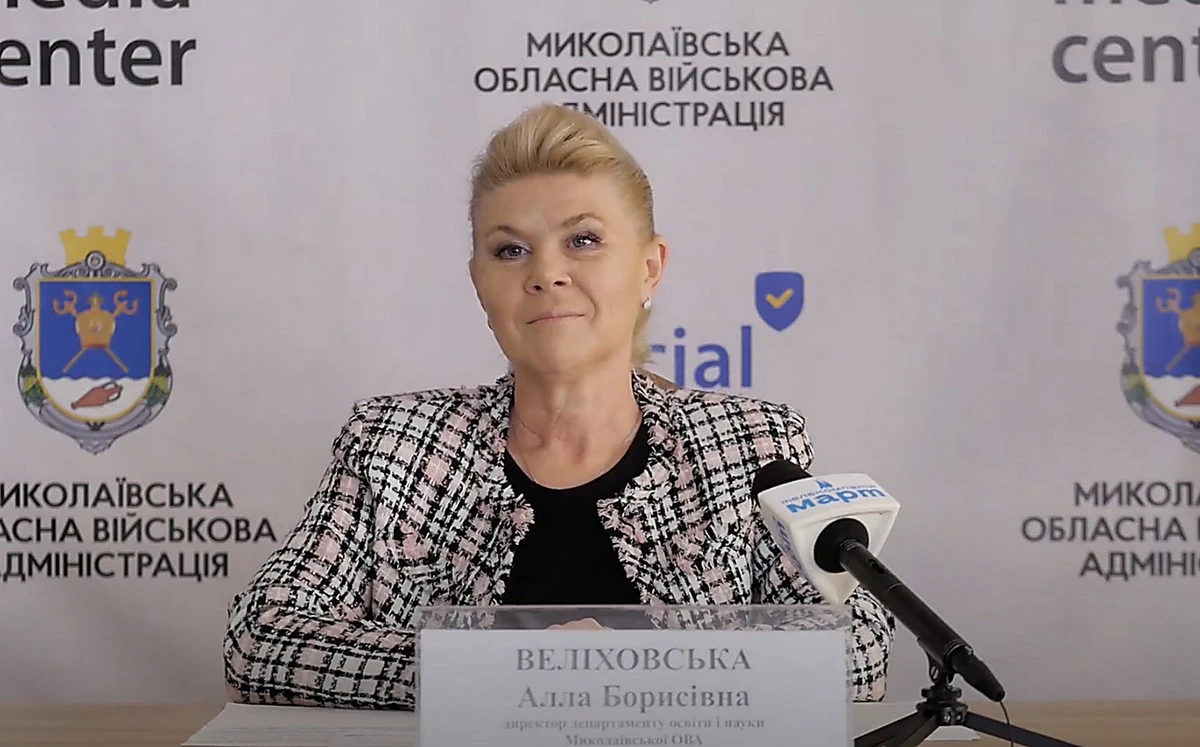
Velikhovska, director of the Department of Education and Science of the Mykolaiv Regional Military Administration, spoke to Wise News Press about professions needed for recovery, cooperation between schools, vocational institutions, universities and employers, international support, possible educational partnerships with Turkey, and her own path from mathematics teacher to regional education leader.
Professions needed for reconstruction
Yusuf Inan: Which professions will be most needed in Mykolaiv region during reconstruction, and is the system of vocational and professional pre-higher education already adapting its programs to these needs?


Alla Velikhovska: Unfortunately, it is impossible to return to children those years of childhood that passed under air raid alerts. Although the war continues, we do not stop dreaming about the future of Mykolaiv region. Infrastructure and educational institutions will have to be rebuilt. Conditions must be created for businesses to return. Learning losses will need to be overcome.
Together with charitable organizations, we have begun updating and modernizing the professional and technical base of institutions.
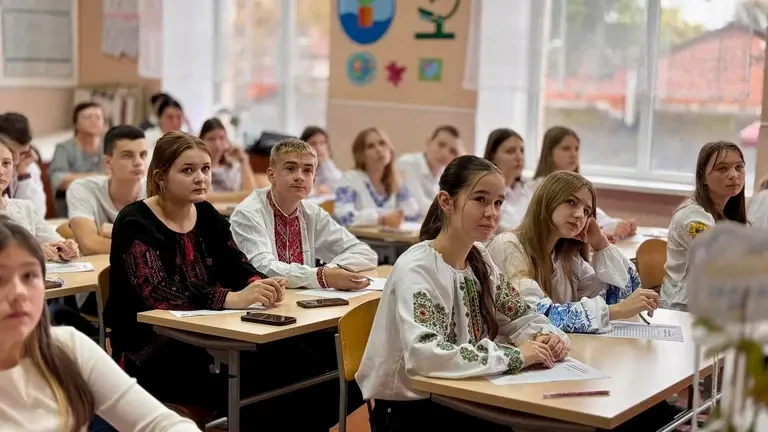
In 2026, 24 vocational education institutions are training qualified workers. Since September 1, 2022, all vocational schools in the region have operated in a blended format. We understood that theory could be studied remotely, but practical skills can only be formed in person. That is how our model emerged. Institutions located in the north of the region worked in person. Where it was dangerous, students first studied theory remotely, then took buses with their instructors to training workshops in the north of the region to master the skills of their future profession.


As of September 1, 2026, the educational process is conducted in person in seven vocational institutions, in blended format in 14 institutions and remotely in two. A total of 8,912 students are covered by vocational education.
In 2025, 2,892 qualified workers graduated. The implementation rate of the regional order for the training of workers in vocational education institutions of Mykolaiv region is 79%.
There are 15 training and practical centers in Mykolaiv region, created with state subvention and co-financing. They operate in areas including agriculture, sewing production, electrical engineering, mechanical engineering, catering, services and industrial production.
With the support of the United Nations Development Programme in Ukraine, under the Recovery and Peacebuilding Programme financed by the European Union, short-term courses are conducted in vocational institutions of Mykolaiv region, including for adults, to obtain partial professional qualifications in professions that are in demand on the labor market. Sixty-two percent of participants were employed.
In the second quarter of 2026, vocational institutions trained 186 adults, 84 more than in the first quarter.
Two vocational institutions are implementing dual education programs in the professions of seamstress and electric-gas welder.
We understand that the most in-demand professions will include builder, car mechanic, agricultural worker, cook, electric welder and others. Our region will definitely need a large number of qualified workers.
School, vocational college, university and employer
Yusuf Inan: At the end of August, you took part in a discussion on the development of vocational education and the training of qualified personnel together with Mykolaiv National Agrarian University and the heads of vocational institutions. What changes would you like to see in cooperation between school, vocational education, university and employer?
Alla Velikhovska: First of all, qualitative changes. This means that everyone should do their own work well.
The school should teach the subjects of the basic component and create conditions for pupils to make an early and conscious career choice. It is very important that children understand their future choice.
Vocational education helps a person become a qualified worker whose qualification fully meets the needs of the postwar economy. We understand that such training must be modern, in modern workshops and using new technologies. Not only school graduates will study there, but also adults who want to change their profession.
In the 2026 academic year, 20% more applications were submitted to higher education institutions than in previous years. First, this increase is due to the recognition of Ukrainian education. Second, more and more graduates from Kherson region expressed a desire to study in person.
Throughout the years of war, Mykolaiv region has become a second home for residents of the neighboring region. We held many events together, introduced them to the work of higher education institutions, provided shelter for displaced people in dormitories, and university teachers helped overcome learning losses in university classrooms. That is why many chose institutions in Mykolaiv region. It is close to home, the learning is in person, and decent living and food conditions also played a role. As for air raid alerts, graduates from Kherson region are used to them.
The fourth component is employers. Given that we currently lack both working hands and educated minds, every manager is interested in employees. Therefore, the task of the department is to unite all these components into one whole.
We are working on creating supervisory boards, holding festivals and skills competitions together with employers, and inviting them to the opening of new training and professional centers.
Short-term courses for partial competencies are very popular in the region. Donors help cover the financial costs of organizing such courses at our vocational schools. They finance consumables, payment for instructors’ working hours, preparation of workplaces and meals for each participant. What is interesting is that the department develops the program together with the employer.
For example, the management of Oblenergo has requirements for training its workers. The institution develops a program for this, according to which the training is focused on the operations that the workers will perform at their workplace. Two weeks are allocated for this. At the certificate ceremony, the employer comes and invites everyone to work at the company.
Such courses have been completed by painters, plasterers, bakers, electricians, solar energy specialists, seamstresses, office workers and plumbers. The first group of women tractor drivers also studied in Mykolaiv region. We trained them for six months. At that time, we made an unprecedented decision to train them at a vocational school that had been under occupation at the beginning of the war and had half-destroyed buildings. We really wanted to support the team.
They studied theory in an ordinary school building, while the agricultural enterprise that ordered the training provided its own areas for practical training. The fields around were mined. That is how we trained the women, giving them not only practical experience but also psychological support after occupation.
If at first it was very difficult to persuade the director of a vocational school to organize such courses, today these institutions themselves suggest that stakeholders contact them for staff training. For them, it is beneficial: new workshops with modern equipment, support for instructors, funds for institutional development and, most importantly, people. The regional economy receives modern workers who help at least partially cover the shortage of labor.
People often ask me: what if someone does not want to go to the company after completing such a course? Of course, such cases exist, and they are not isolated. This is not slavery.
I can give examples. Women who trained as bakers joined together after the course. They applied to the employment service for a grant, received it and opened their own bakery shop. I recently visited them. They are satisfied, the business is in demand among residents of nearby buildings, and taxes from their business fill the local budget.
Another example: an entire family of three came to study as painters and plasterers. After the course, they opened their own private business. Now they do repair work in Voznesensk. They say they are satisfied and are waiting for welding courses because they want to add a welder to their team.
Another interesting example is women who studied to become office managers. The main group consisted of mothers with small children. They brought their children with them. The institution provided a room for the little ones, and the participants took turns spending two to three hours with the children, then caught up on learning with the teachers. Everyone was satisfied.
International support and what Mykolaiv needs most
Yusuf Inan: Mykolaiv region actively cooperates with UNICEF and other international partners. What assistance does the region need most now: shelters, equipment, digital devices, psychological programs, teacher training or reconstruction of buildings?
Alla Velikhovska: It is difficult for me to choose just one thing. Without shelters, no educational institution can work in person.
Ukraine has proved that Ukrainians are an educated nation. We learn very quickly, strive for the new and preserve traditions. Many things were destroyed, looted or became outdated during hostilities. There will definitely be no return to the old. Therefore, young people must be taught on modern equipment.
The situation with digital devices has partly improved, but refugees from combat zones continue to arrive. They have only themselves. The Red Cross, charitable organizations and communities provide them with everything necessary, but children need to study, including remotely. Such families may have one laptop, but there are two or three children in the family, and parents may also need a computer. Educational centers built by UNICEF and charitable organizations partially solve the situation. When schools were not working, they were almost the only warm and comfortable classrooms where there were always many visitors.
Psychological programs are definitely needed. After the trials that war forced Mykolaiv residents to go through, we will need psychological help for a long time, both adults and children. Panic attacks, aggression and apathy, stuttering and dyslexia, disrupted socialization, bullying, chronic lack of sleep, anemia and other consequences of war are only part of the list.
We understand that learning losses are large and disproportionate. Teachers must be prepared to work under new conditions and with “new” children. Imagine how different the level of preparation, psychological state and health of children in schools will be. Teachers must be prepared for this.
And of course, the restoration of buildings is needed. A school, like a church, has always been a very important building in every community. After bombings, residents ran to the school. They did not save their own buildings first; they restored the school.
In one village, at the very beginning of the full-scale invasion, an enemy aerial bomb destroyed the school. Three years later, donors built a temporary educational space there, only for four classes. You should have seen the joy of the children. They all brought indoor shoes to the institution because they wanted to preserve it in its original condition. Even now, after two school years, the institution looks like new.
Educational partnership with Turkey
Yusuf Inan: Wise News Press also works for an international audience. Do you see potential for concrete educational partnerships between Mykolaiv region and Turkey, between schools, universities, communities, foundations or educational organizations? Which projects would be useful for the region?
Alla Velikhovska: Unfortunately, I have never been to that country because during all five years of war I have not had a vacation at all. But I know and respect the people of Turkey. Our countries have a centuries-old shared history.
There is a saying in Ukraine: “In dark times, bright people become visible.” Mykolaiv region will never forget Turkey’s help, especially at the very beginning of the hot phase of the war. When the enemy stood on the outskirts of Mykolaiv city and street battles were beginning in the suburbs, Turkish Bayraktars helped stop huge columns of enemy equipment. Later came humanitarian aid: clothing, food and medicine.
We would like to continue developing educational cooperation with Turkey. We are interested in studying the experience of organizing the learning process in general secondary schools, vocational colleges and work with children with special educational needs. The experience of civic education and patriotic education is also interesting. Without doubt, we can learn a lot from Turkey in the field of environmental education for children and teenagers.
A teacher’s path into leadership
Yusuf Inan: You began as a mathematics teacher. When you make decisions today for the whole region, do you sometimes ask yourself a simple question: “How would this decision look through the eyes of a teacher in the classroom?” Which school experience still influences you most as a leader?
Alla Velikhovska: I have a strong biography in education.
I was a mathematics teacher. I love both the profession and the subject. What other subject teaches logic, systematization, combinatorics, proof and argumentation more?
I love school and children. At school, I learned to listen first to children and then to adults. I can persuade, reach people and explain in the language of the person I am speaking with. This helps me greatly in my work now.
Later, I began working with colleagues at the teacher professional development institute. I became interested in digital technologies and became a trainer in the Intel Teach to the Future program. For two years in a row, I was recognized as the best trainer in Ukraine. I conducted 52 week-long trainings for teachers, university lecturers and directors of postgraduate education institutes.
I became interested in science, defended my dissertation, worked as a lecturer and then as an associate professor at the Department of Natural and Mathematical Education.
Then, as a result of a competition, I headed the Department of Education and Science of the Mykolaiv Regional State Administration. I became the first woman in the region to lead this institution.
After the end of my first term, life took another turn, and I became an associate professor at the Department of Vocational Education at Mykolaiv National Agrarian University. I still work there part-time and teach students “Psychology of Management.” I like my students, my university and my work.
Then came another competition, a second term, and then war. I do not know whether I could have endured it if I had not gone through such a school. In the first days, it was necessary to organize the evacuation of children who were fully supported by the state. This happened during constant bombing, the advance of the enemy army and crowds of refugees. Decisions had to be made instantly, responsibility had to be taken, often at risk to life. And at home, I had my own family and a 90-year-old father.
Only 16 pupils from boarding institutions in our region were abducted by Russians. Today, thanks to the help of international organizations and the Government of Georgia, all the children are in Ukraine. They continue their studies in our institutions. This is a huge achievement of everyone who saved our children.
Every educator who has continued teaching and saving pupils in Mykolaiv region for all these five years is a true hero.
The future of Mykolaiv education
Yusuf Inan: How would you like to see the education system of Mykolaiv region five years after the end of the war? What should be restored, and what should not return to the prewar model?
Alla Velikhovska: As you can see, despite the war, Ukraine continues to implement education reforms. Sometimes this is a painful process, especially given the conditions in which we work today. However, we understand that thanks to these changes, we will only improve the quality of education and make all its levels more accessible.
I dream that our children will have a childhood. I dream that they will study in modern educational institutions, in new laboratories, using innovative methods. I dream that they will not be afraid of loud sounds and thunder.
It happened that our children were forced to evacuate to other countries where they continue their studies today. I have never heard of any serious differences. Young Ukrainians quickly learn the language, get along with peers, take part in school contests and competitions. We miss each of them, of course, and we are waiting for their return after the war and wish them a good destiny. We thank the countries that sheltered Ukrainian families.
Yusuf Inan: Finally, what would you like to say to the children, parents and teachers of Mykolaiv region who began another school year on September 1, 2026, under wartime conditions?
Alla Velikhovska: We are beginning a new school year. It will not be like the previous one, and it certainly will not be like the prewar one. Can one get used to war? That is a rhetorical question. Throughout our centuries-long history, we have fought for independence and the right to be Ukrainians. No one will ever turn an educated nation into slaves.
War is a competition of educational systems. The fact that Ukraine has been giving a worthy response to the aggressor for the fifth year shows that Ukrainian teachers taught their pupils correctly. Our soldiers quickly master the most modern weapons, and this shows that mathematics and physics teachers correctly taught formulas and laws of nature. Geography teachers correctly taught how to draw borders on outline maps and embedded in pupils’ minds the idea that those borders are inviolable. Physical education teachers trained endurance, formed a sense of team spirit and understanding of teamwork. Foreign language teachers taught communication with the whole world and respect for the languages of every country. History teachers taught love and pride for their country and respect for the historical heritage of all countries. The Ukrainian language has become the common language of resistance.
Therefore, we look to the future with confidence. Every Ukrainian will make his or her contribution to victory. We are not alone in this world.
Ukraine was, is and will be.
WiseNewsPress.com
What's Your Reaction?
 Like
0
Like
0
 Dislike
0
Dislike
0
 Love
0
Love
0
 Funny
0
Funny
0
 Wow
0
Wow
0
 Sad
0
Sad
0
 Angry
0
Angry
0
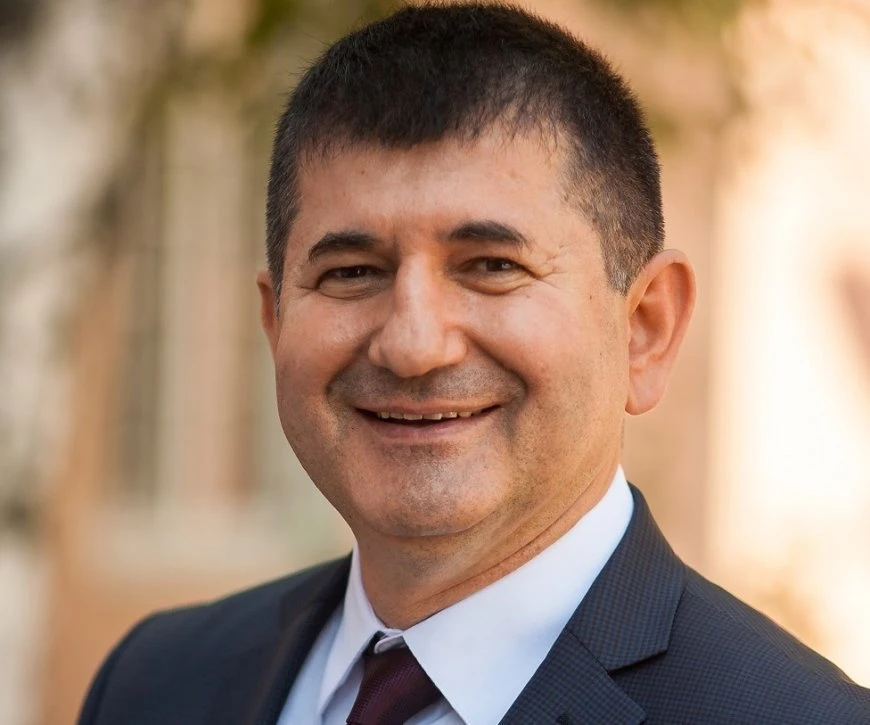
Yusuf İnan is a journalist, columnist, strategic analyst and head of the Wise News Press Media Group. His work focuses on international affairs, geopolitics, security and major social issues. Through his journalism, he promotes peace, dialogue, mutual understanding and responsible reporting while contributing to the development of international media projects.













Comments (0)