



Ukraine says air defenses downed ballistic missiles in night attack
Ukraine said its air defenses neutralized 109 Russian targets after a night assault involving ballistic missiles, a naval missile and 152 drones.


By Ahmet Taş | Wise News Press
ANKARA, TÜRKİYE — Ukraine said its air defenses intercepted ballistic missiles and other Russian targets overnight, as Moscow launched a broad attack involving missiles and more than 150 drones.
The overnight strike on 29 September again placed Ukraine’s air defense capacity at the center of the war. Ukrainian officials said Russian forces used a “Tsirkon/Oniks” anti-ship missile, two “Iskander-M/S-400” ballistic missiles and 152 drones, while air defense units neutralized 109 targets.
Ukraine reports interceptions of ballistic missiles
According to the Ukrainian Air Force, the attack began at around 18.00 on 28 September and continued through the night. The missiles were reportedly launched from Russia’s Kursk region, while drones approached from several directions, including Oryol, Millerovo, Kursk and Primorsko-Akhtarsk in Russia, as well as occupied areas of Donetsk and Crimea.
Ukraine said its air defense units shot down or suppressed one “Tsirkon/Oniks” missile, both ballistic missiles and 106 drones. The intercepted drones included Shahed-type UAVs, Gerbera drones and decoy systems known as Parodiya.
Despite the interceptions, Ukrainian officials reported impacts in 24 locations. Debris from intercepted targets or downed systems was also recorded in 16 locations.


Zelenskyy thanks air defense partners
President Volodymyr Zelenskyy said Ukrainian air defenses had achieved interceptions overnight, including ballistic missile targets. He thanked the United States and Norway for a NASAMS air defense system and an accompanying missile package.
Zelenskyy also expressed gratitude to France and Germany for recent support to Ukraine’s air defense, specifically through additional missiles. He said that amid Russia’s daily escalation, the protection of life must receive continuous support and that similar packages should continue to arrive.
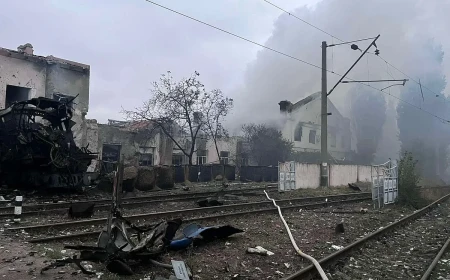
The Ukrainian leader said Kyiv suffered damage to the Kyiv-Pasazhyrskyi station depot, data and business centers, residential buildings and other civilian facilities. In the Odesa region, he said an educational institution, a dormitory and two foreign vessels were damaged.


Odesa region reports eight injured
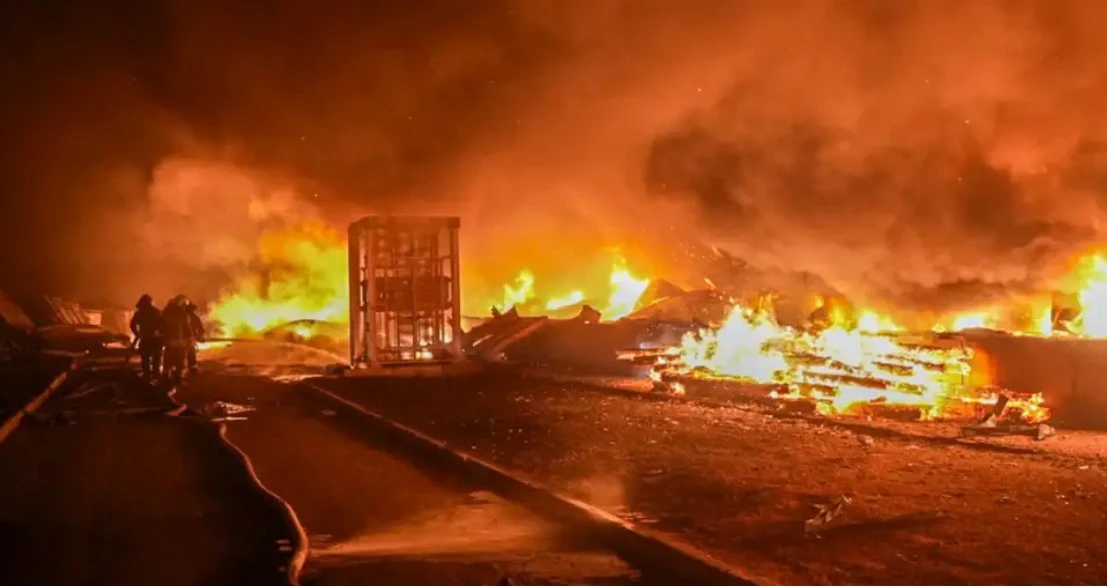
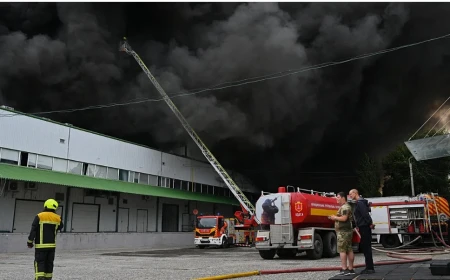
The Odesa region was among the areas most visibly affected by the attack. Regional authorities and emergency services reported that eight people were injured. The damaged sites included port infrastructure, a school facility, an animal shelter, a private home, warehouses, cars and trucks.
Emergency crews responded to fires in several places after the strike. Ukrainian emergency services said more than 190 rescuers were involved in eliminating the consequences of the attack.
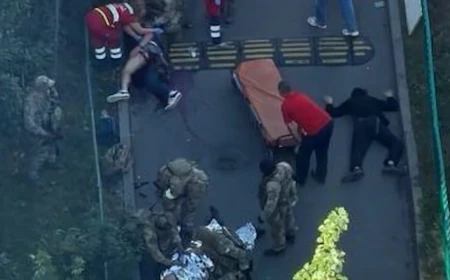
Prosecutors said the injured included five women aged between 36 and 68 and three men aged 33, 41 and 52. Six of the injured were hospitalized. Authorities also opened a pre-trial investigation into alleged war crimes related to the attack.
Civilian and energy sites were also hit
The attack was not limited to Kyiv and Odesa. According to Ukrainian officials, strikes and debris impacts were reported across several regions, including Kyiv, Dnipro, Kharkiv, Sumy, Donetsk, Zaporizhzhia, Zhytomyr, Volyn and Rivne.
Energy facilities, substations, civilian enterprises and residential buildings were among the affected sites. Ukrainian authorities have repeatedly warned that Russia is intensifying attacks on energy, transport and port infrastructure as winter approaches.
This pattern has made air defense not only a military issue but also a question of civilian survival. Electricity, heating, water supply, logistics and port operations all depend on infrastructure that has increasingly come under attack.
Jet-powered drones add pressure
One of the notable details in the latest assault was the number of jet-powered drones. Of the 152 drones reportedly launched, 82 were described as jet-powered Shahed-type systems.
These systems are faster than traditional propeller-driven drones and can be harder for mobile fire teams to intercept. Their use alongside ballistic missiles and other missile types forces Ukraine to rely on several defensive layers at once.
Ukrainian forces said aircraft, anti-aircraft missile units, electronic warfare teams, unmanned systems units and mobile fire groups were involved in repelling the attack. The combination shows how Ukraine’s defense increasingly depends on a mix of Western-supplied air defense systems, domestic capabilities and rapid battlefield adaptation.
Why NASAMS and missile supplies matter
NASAMS has become one of the important systems in Ukraine’s layered air defense network. It is used to protect cities, civilian infrastructure and critical sites from drones, cruise missiles and other aerial threats.
However, ballistic missiles pose a different challenge because of their speed and flight profile. Intercepting them requires advanced systems, high readiness and a steady supply of interceptor missiles.
That is why Ukraine continues to call for Patriot, NASAMS, IRIS-T and other air defense platforms, as well as ammunition for existing systems. Zelenskyy’s thanks to the United States, Norway, France and Germany underlined the importance of both systems and missile stocks.
The civilian cost continues to rise
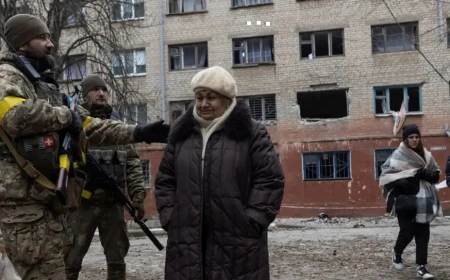
The 29 September attack again showed how the war is affecting civilian life far beyond the front line. In Odesa, an animal shelter, school facilities, a dormitory, warehouses, vehicles and port-related sites were damaged. In Kyiv, transportation and business infrastructure were hit.
Ukraine describes these attacks as part of a broader Russian strategy aimed at exhausting civilian life and weakening the country’s resilience. Russia regularly claims it targets military facilities, while Ukrainian authorities say civilian infrastructure continues to bear the cost of repeated missile and drone strikes.
For Ukraine, the latest interceptions were a sign that foreign support is producing real defensive results. For civilians, however, the scale of damage showed that every new attack still carries major risks, even when air defense succeeds in stopping many incoming targets.
WiseNewsPress.com
What's Your Reaction?
 Like
0
Like
0
 Dislike
0
Dislike
0
 Love
0
Love
0
 Funny
0
Funny
0
 Wow
0
Wow
0
 Sad
0
Sad
0
 Angry
0
Angry
0

Ahmet Taş is a journalist, editor and Turkey Office Manager of the Wise News Press Media Group. He works across news, digital media and international publishing, focusing on accurate, responsible and accessible journalism. He contributes to the development of media projects that bring important political, social and global developments to a wider international audience.
















Comments (0)