



Belarus begins four-day military drills near Poland and Lithuania
Belarus has begun four-day military drills near Poland and Lithuania, describing them as defensive without disclosing the number of troops involved.


By Ahmet Taş | Wise News Press
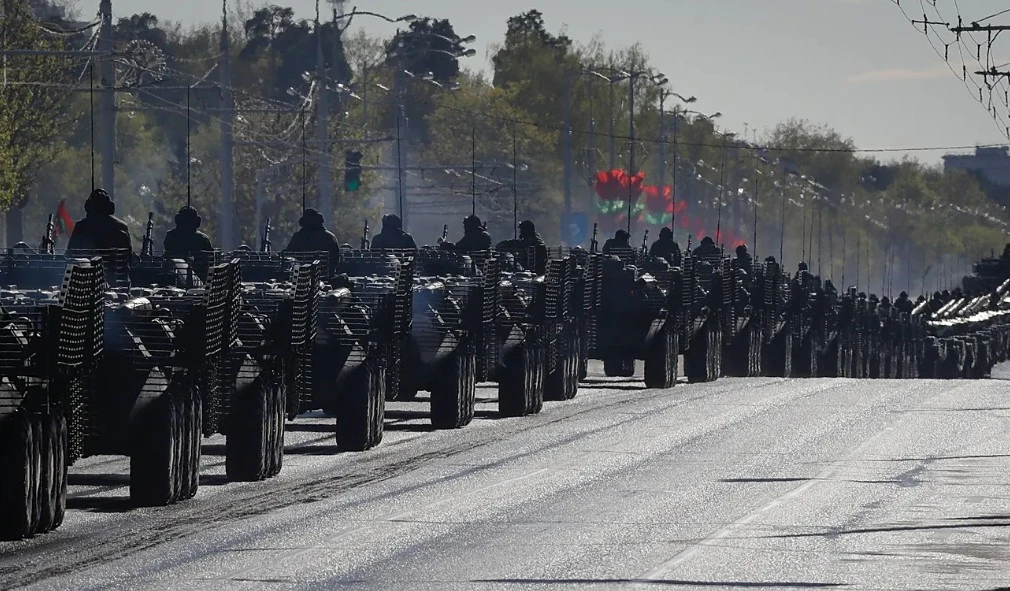
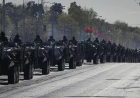
MINSK, BELARUS — Belarus has begun four-day military exercises near Poland and Lithuania involving mechanized units and tank battalions, with Minsk describing the drills as defensive while leaving the number of participating troops undisclosed.
According to Euronews, citing the Belarusian Defense Ministry, parts of the training are taking place near the Suwalki Gap, a strategically important land connection between NATO’s Baltic members and the rest of the alliance. The exercises cover border security, operations against sabotage and defenses against drones and light aircraft, against the backdrop of Russia’s continuing war in Ukraine.
Mechanized units train near NATO borders
The Belarusian Defense Ministry said the exercises involve mechanized formations and tank battalions carrying out different operational scenarios. Troops are practicing securing the border and responding to sabotage, alongside measures intended to protect against aerial threats.
The training program includes countering unmanned aerial vehicles and light aircraft, according to the ministry’s account reported by Euronews. The report did not provide a detailed inventory of the drone models, air-defense systems or military vehicles involved.
Among the locations identified is the Hoża training area near Lithuania. The Brzeski and Różański training grounds, approximately 15 km and 60 km from Poland respectively, are also being used, Euronews reported.


Those distances describe the proximity of the training sites to the border. The report contains no indication that Belarusian units have crossed into Polish or Lithuanian territory. The activity announced by Minsk is a military exercise on Belarusian territory, scheduled to last four days.
Why the Suwalki Gap matters
The location of some of the exercises places them near one of the most closely watched areas on NATO’s eastern flank. The Suwalki Gap lies along the border between Poland and Lithuania and provides the Baltic states with their land connection to other NATO countries.
The same border area separates Belarus from Russia’s Kaliningrad region on the Baltic Sea. Its geography therefore matters both for access to the Baltic states and for the movement of military reinforcements through allied territory.


Euronews described the Poland-Lithuania border as approximately 104 km long. That figure refers to the border itself, rather than the width of the corridor or the extent of the current Belarusian deployment. The training grounds named in the report are separate locations in western Belarus.
Despite Minsk’s emphasis on defense, the absence of an exact troop count leaves the scale of the exercise unclear. The reported information also does not specify where participating units will be stationed after training or whether any longer-term deployment near the border is planned.
Minsk cites military notification thresholds
The Belarusian Defense Ministry said the drills were defensive and argued that the numbers of troops and weapons involved remained below the thresholds requiring advance notification to other states under the 2011 Vienna Document.
Published by the Organization for Security and Co-operation in Europe, the document sets notification rules for specified military activities. For certain ground-force exercises under a single operational command, involving a divisional structure or at least two brigades or regiments, separate thresholds include 9,000 troops, 250 battle tanks or 500 armored combat vehicles.
The document generally requires at least 42 days’ notice for planned activities subject to notification. Separate provisions apply to exercises initiated without advance notice to the participating troops. Personnel numbers alone therefore do not determine whether every relevant notification condition has been met.
Because the current exercise’s exact personnel and equipment totals have not been published, the figures available in the report do not allow an independent assessment of Minsk’s statement that the relevant thresholds have not been reached.
Lukashenko reviews military readiness
Euronews reported that the border-area exercises form part of a broader effort to assess the readiness of Belarusian forces. Belarusian leader Alexander LUKASHENKO visited the Obuz-Lesnowski training ground near Baranovichi on September 11.
During the visit, Lukashenko said he wanted to review the functioning of the country’s entire security sector. His comments placed the military training within a wider examination of the state’s security institutions, rather than an assessment limited to a single unit or training location.
Belarus has conducted exercises near NATO borders before. Euronews cited the Slavic Brotherhood drills held in the Brest region in 2020 and the Zapad 21 exercise the following year. Russian troops have participated in joint training in Belarus on previous occasions.
That history does not establish Russian participation in the current four-day exercise. The report did not identify a confirmed Russian troop contingent or describe a joint command structure for these particular drills.
The Ukraine war shapes the security backdrop
Belarus’s close military relationship with Russia is central to the wider context. In February 2022, Minsk allowed Russian forces to use Belarusian territory and infrastructure for the full-scale invasion of Ukraine.
In an assessment of relations with Belarus dated August 28, 2024, NATO condemned Minsk for enabling Russia’s war. The alliance said the availability of Belarusian territory and infrastructure allowed Russian forces to continue attacking Ukraine and had implications for regional stability.
The same NATO assessment stated that practical civilian and military cooperation with Belarus had been suspended in November 2021, while dialogue could be maintained when necessary. This represents the alliance’s previously published position, rather than a newly issued response to the current exercise.
Euronews reported that Belarus had not sent its own armed forces into direct combat on Ukrainian territory. That distinction does not negate its provision of territory, infrastructure and logistical support to Russia. Direct deployment of national troops and support for another country’s military operations are separate aspects of Belarus’s involvement.
Ukraine alleges Belarusian support for drone operations
According to Euronews, Ukraine’s border guards said on Monday, September 14, that Russian forces were using relay stations in Belarus to help direct drones attacking targets in western Ukraine.
The allegation adds to questions about the role of Belarusian infrastructure in Russian drone attacks on Ukraine. However, the report did not provide the stations’ locations, technical specifications or detailed evidence allowing the claim to be independently verified.
It also did not establish a direct operational connection between the alleged use of relay stations and the exercises near Poland and Lithuania. The two developments concern Belarus’s military role but cannot, on the information provided, be treated as a single operation.
For the four-day exercise, the publicly reported details remain focused on training locations and general scenarios. The total number of troops, the equipment inventory and the arrangements for units after the drills remain undisclosed.
WiseNewsPress.com
What's Your Reaction?
 Like
0
Like
0
 Dislike
0
Dislike
0
 Love
0
Love
0
 Funny
0
Funny
0
 Wow
0
Wow
0
 Sad
0
Sad
0
 Angry
0
Angry
0

Ahmet Taş is a journalist, editor and Turkey Office Manager of the Wise News Press Media Group. He works across news, digital media and international publishing, focusing on accurate, responsible and accessible journalism. He contributes to the development of media projects that bring important political, social and global developments to a wider international audience.


















Comments (0)