



Ukraine’s wartime schools: Mykolaiv rebuilds learning under fire
Alla Velikhovska explains how Mykolaiv’s schools are reopening under wartime pressure, balancing shelters, safety, learning and psychological support.


By Yusuf İnan | Wise News Press
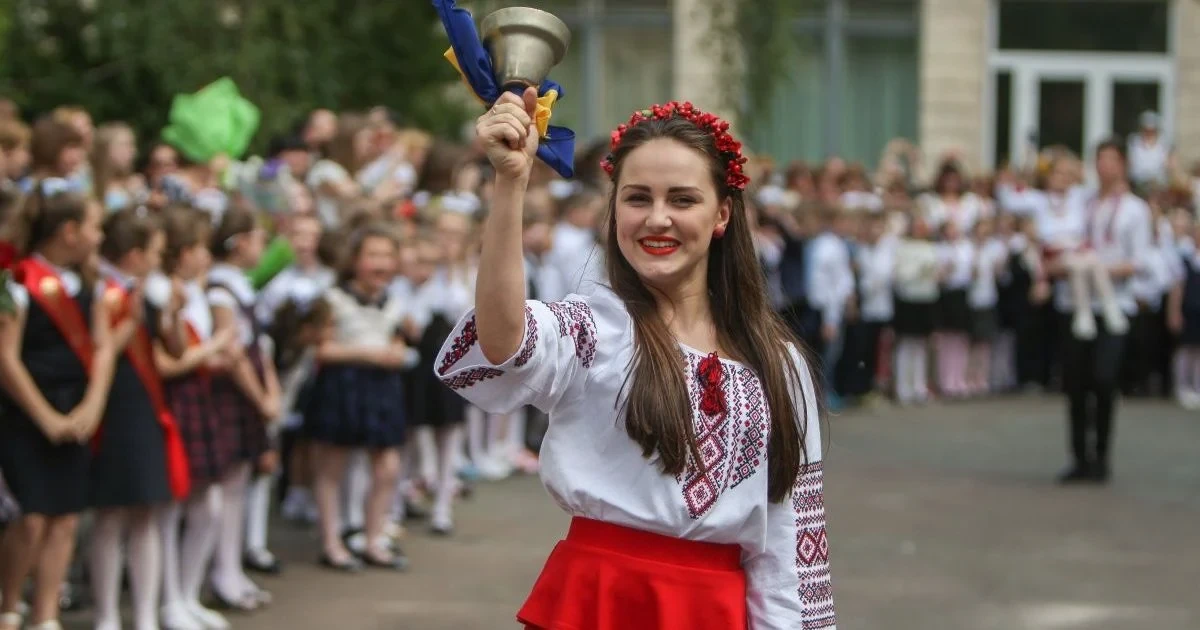
MYKOLAIV, Ukraine — In Ukraine’s southern Mykolaiv region, education has become a test of endurance: schools must teach, protect children, operate shelters, survive air alerts and preserve a sense of normal life under war.
In the first part of this interview, Alla Velikhovska, director of the Department of Education and Science of the Mykolaiv Regional Military Administration, speaks to Wise News Press about the new school year, safety rules, shelters, winter preparations and the psychological toll of war on children and teachers.
Mykolaiv is one of the Ukrainian regions most exposed to the consequences of Russia’s full-scale invasion. Parts of the region were occupied, several communities were on the front line, and schools continue to adapt their work to air raids, drone attacks, damaged infrastructure and the need to keep children connected to Ukrainian education.
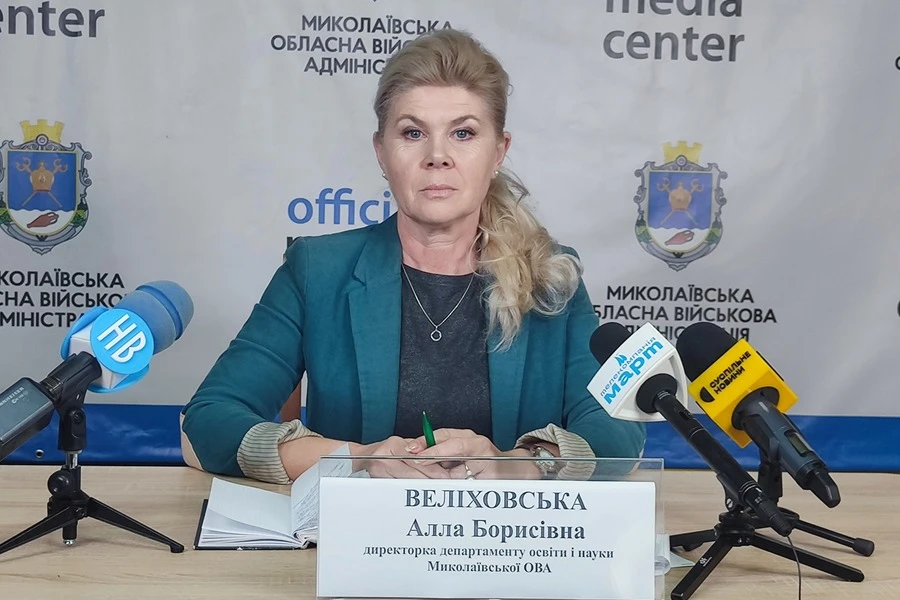
Who is Alla Velikhovska?
Alla Velikhovska is the director of the Department of Education and Science of the Mykolaiv Regional Military Administration. She is a candidate of pedagogical sciences and an associate professor. Her professional background includes work as a mathematics teacher, teacher trainer, university lecturer and education administrator.


During the war, her department has had to make decisions not only about curriculum and school management, but also about evacuations, shelters, psychological support, damaged educational buildings, school transport and the return of children to classrooms where security conditions allow.
Priorities for a new school year
Yusuf Inan: If you had to define the three main priorities for Mykolaiv region in the 2026/2027 school year, what would you put first, second and third?


Alla Velikhovska: Safe childhood, peaceful Ukrainian skies above our children’s heads, and quality education.
Yusuf Inan: In August, it was reported that 414 educational institutions were operating in the region and that the format of work would depend on the security situation and the readiness of shelters. What is the current distribution between in-person, blended and remote learning at the beginning of September, and do you expect it to change during the autumn?
Alla Velikhovska: There are 414 general secondary education institutions of different ownership forms in the region, including 380 municipal institutions and two private ones. To ensure access to education, 32 branches are also operating.
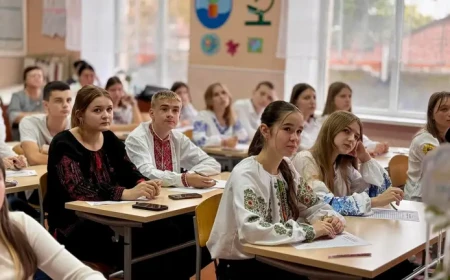
As of September 1, 2026, with the approval of district military administrations, educational services began in the following formats: 199 institutions, or 52%, started in-person learning; 142 institutions, or 37%, started blended learning; and 41 institutions, or 11%, started remote learning. In total, 75,236 pupils began studying in in-person or blended formats, while 13,564 pupils are studying remotely or individually. Schools located close to the front line switched to remote learning.
Unfortunately, the security situation has worsened. There are constant air raid alerts, drone attacks, missile terror, damage to critical infrastructure, reports of mined educational institutions, explosions and sleepless nights. This is far from a full list of what the aggressor country has prepared for us.
At the moment, some institutions that had planned to work in in-person or blended formats have had to switch to remote learning. Seventy-one institutions are currently teaching pupils remotely.
A regional education platform before September
Yusuf Inan: The August dialogue platform “Education of Mykolaiv Region: Resilience, Partnership, Development” ended literally on the eve of September 1. Which practical decisions and agreements from that platform do you consider most important for communities and schools in the region?
Alla Velikhovska: Over five days, thanks to the support of our partners from UNICEF, who made it possible to bring together educators from the region in a relatively safe place, we discussed the most important issues for us.
These included the safety of pupils during learning, hot meals for pupils in grades 1 through 11, quality education for all children, including children with special educational needs, support for gifted pupils, and training students of vocational institutions in professions needed for the postwar recovery of Mykolaiv region.
For us, such meetings are not formal events. They help communities compare their problems, share practical solutions and prepare for a school year that cannot be planned only by the calendar. In a frontline region, every school decision is also a security decision.
Shelters and the right to in-person learning
Yusuf Inan: What criteria are decisive for allowing in-person learning? Is it only the presence of a shelter, or also its capacity, distance, power supply, water supply and other factors?
Alla Velikhovska: First of all, I want to emphasize that without a shelter, an educational institution cannot receive pupils in person. Its capacity and the availability of all necessary communications for children during air alerts are determined by representatives of the State Emergency Service of Ukraine. After an inspection, an act is signed that gives permission to place a certain number of participants in the educational process there: pupils, teachers, school administration and others.
After that, the underground educational space is inspected by specialists from the State Service of Ukraine on Food Safety and Consumer Protection. They check air quality, drinking water, a place for a medical worker and the possibility of distributing food, because air alerts sometimes last up to eight hours a day. They also provide their conclusion.
Then the institution is inspected by representatives of the fire service, security police and other relevant bodies.
After the school receives all conclusions, the pedagogical council, taking into account the wishes of parents, decides whether learning will be in-person, blended or remote. A schedule is then prepared accordingly.
During martial law, family-based education and pedagogical patronage are also in place. But these are exceptional formats, mainly for children who are currently in temporarily occupied territories or cannot attend an institution for specific reasons, such as lack of transport links or illness.
If a school does not have its own shelter but can rent a safe space within 500 meters, it may also provide education in an in-person or blended format.
Where the region lacks educational spaces
Yusuf Inan: Where is the greatest shortage of educational spaces today: in Mykolaiv city, in de-occupied communities or in rural areas? What resources does the region lack most so that more children can return to their desks?
Alla Velikhovska: I would draw attention to the fact that Ukraine never planned to fight anyone, so it did not build shelters either in schools or in residential areas. Most school buildings were not designed with spaces that could be used as shelters during enemy attacks. In cities, schools were built for large numbers of pupils and therefore often had large basements, which later became shelters. In rural areas, this was generally not planned. The situation with kindergartens was even worse. Many had no basements at all.
Starting in 2014, when the hybrid war began, basement premises were cleared and unnecessary items were removed. But during peaceful life, it was very difficult to believe that in the 21st century, in the center of Europe, a neighboring state would unleash such a bloody war.
Educational institutions in Mykolaiv region currently use 723 protective facilities, 38 more than last year. This includes all educational institutions in the region: schools, kindergartens, vocational colleges, higher education institutions and others. Of these, 563, or 77.87%, are simple shelters, while 160, or 22.13%, are shelters and anti-radiation shelters.
Of the total number of protective facilities, 538, or 74.5%, are owned by educational institutions, while 185, or 25.5%, are provided under agreements with other entities.
In 2026, state subvention funds of 216.586 million hryvnias were allocated for the arrangement of shelters under 10 projects. In 2025, 142.9 million hryvnias were allocated for shelter projects in educational institutions, including 118.1 million hryvnias from the state budget and 24.8 million hryvnias from local budgets. The largest volume of work was carried out in rural territorial communities. Some projects are continuing and will be completed in 2026.
Winter, blackouts and survival experience
Yusuf Inan: How are schools preparing for the autumn and winter period: backup power, generators, energy storage systems, heating, water and communications? How ready is the system for long power outages?
Alla Velikhovska: Mykolaiv region has been close to the line of contact for the fifth year. Six communities in the region spent nine months under occupation, and six were areas of active hostilities. Everything there was destroyed. Even today, all drones and missiles that bring death and destruction to Ukraine constantly fly through our region. Therefore, strange as it may sound, we have gained some experience of survival in these terrible conditions.
I want to remind you that in April 2022, the aggressor country left a city of half a million people without water by destroying the pipeline. Without any water at all. For many years, it has continued to destroy infrastructure facilities in the region with one purpose: to create unbearable conditions for normal life for residents, including children, elderly people, pregnant women and everyone else.
Schools are preparing for winter with this experience in mind. Backup power, water supply, heating, communications and the ability to continue education during disruptions are no longer secondary technical questions. They are part of the region’s educational security.
Psychological support for children and teachers
Yusuf Inan: In conditions of constant air raid alerts and wartime stress, safety is not only about shelters. What system of psychological and psycho-emotional support exists for children and teachers, and does the region have enough practical psychologists?
Alla Velikhovska: After what the residents of Mykolaiv region have experienced and continue to experience, it is natural to understand that everyone needs psychological and psycho-emotional support.
I personally know many methods of psycho-emotional support because I teach psychology at a university. But when bombs explode near you, it is very difficult, and sometimes impossible, to use them. When you do not sleep for months because you work during the day and at night your city is shelled, the nervous system becomes exhausted. Returning to a “normal” state may take a very long time.
Both adults and children have problems. These include panic attacks that can be triggered by even a small noise. For example, a book falling from a desk can become a trigger for a child who has survived bombing. The sound of an aircraft can cause the same reaction as the sound of a shell bringing death.
Children who lived through occupation may have speech problems, stuttering, memory difficulties, dyslexia and other consequences. These are problems that can last for years.
That is why the help of psychologists from charitable organizations, including UNICEF, has become very important for us. Training sessions were organized for all teachers, and not just once. We started with the most common practices, and then each teaching team began requesting training aimed at the specific problems of their own school community. We did this before the beginning of the school year, and we will continue during the holidays.
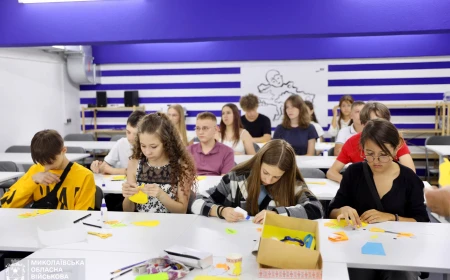
When children returned to learning, teachers began helping psychologists address pupils’ problems. We also organized training for parents and introduced them to methods of psychological support for children during air alerts. Recommendations were developed for parents on how to support their child psychologically in a shelter. Coloring books were especially helpful.
Unfortunately, as long as the war continues in Ukraine, this support will remain necessary. We also understand that there are children who, because of their very young age, do not yet come into the field of view of educators. But they are already traumatized by war. Today they are one or two years old, or even younger. They went through the horror of bombardments while still in their mother’s womb. They were born into this world under the roar of enemy attacks. It is hard to talk about, but this is our reality.
WiseNewsPress.com
What's Your Reaction?
 Like
0
Like
0
 Dislike
0
Dislike
0
 Love
0
Love
0
 Funny
0
Funny
0
 Wow
0
Wow
0
 Sad
0
Sad
0
 Angry
0
Angry
0
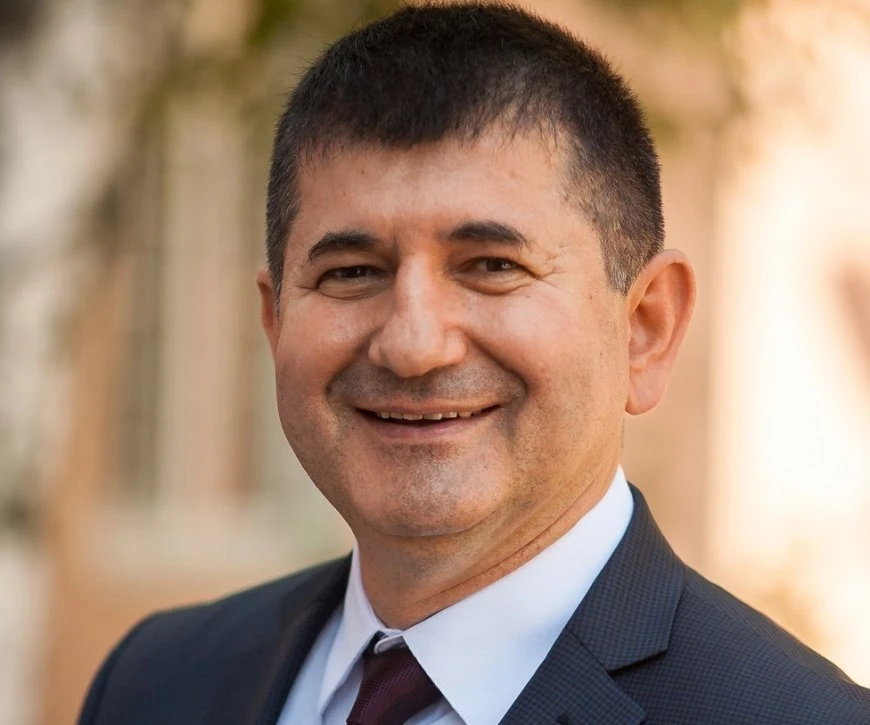
Yusuf İnan is a journalist, columnist, strategic analyst and head of the Wise News Press Media Group. His work focuses on international affairs, geopolitics, security and major social issues. Through his journalism, he promotes peace, dialogue, mutual understanding and responsible reporting while contributing to the development of international media projects.












Comments (0)