



Ukraine’s wartime schools: Mykolaiv keeps children connected to class
In part three, Alla Velikhovska discusses children abroad, inclusive education, rural schools, buses and hot meals in wartime Mykolaiv.


By Yusuf Inan | Wise News Press
MYKOLAIV, Ukraine — In the third part of this interview, Alla Velikhovska explains how Mykolaiv region is trying to keep Ukrainian children connected to school despite displacement, disability, rural isolation, transport risks and the daily realities of war.
For international readers, the Mykolaiv experience shows that wartime education is not only about classrooms and shelters. It is also about children who study abroad but need to remain linked to Ukraine, pupils with special educational needs, rural schools damaged by attacks, school buses that operate under drone threats and the basic dignity of hot meals during a long school day.
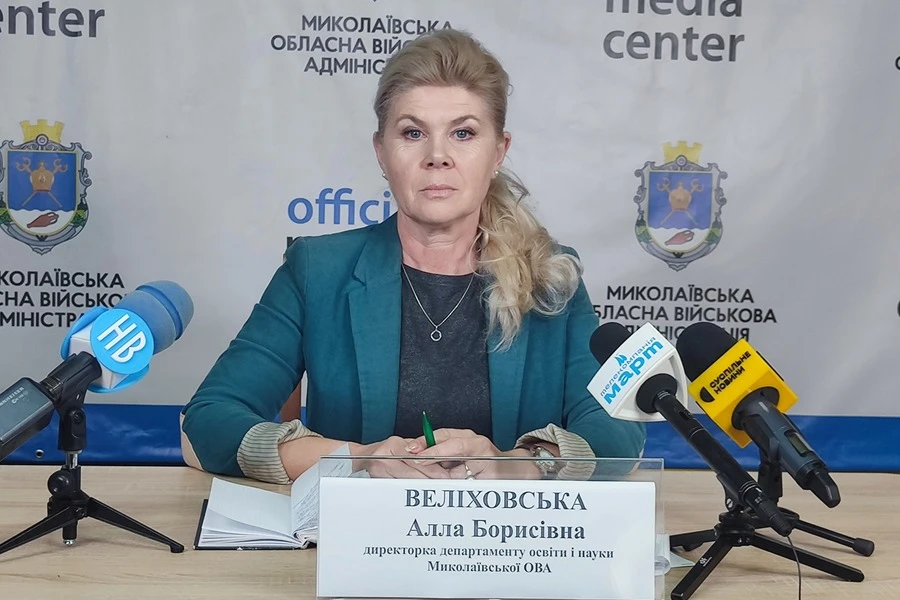
Velikhovska, director of the Department of Education and Science of the Mykolaiv Regional Military Administration, spoke to Wise News Press about how the region is trying to protect access to education for children in very different circumstances.
Children abroad and the Ukrainian school connection
Yusuf Inan: A significant number of children from Mykolaiv region have studied from abroad since 2022. What model do you consider optimal for maintaining their connection with the Ukrainian school system without creating excessive double pressure?


Alla Velikhovska: Every child who wants and is able to study in a Ukrainian school has that opportunity. For this, there are schools that work entirely remotely, and there are also remote classes attached to ordinary schools. This practice has existed since 2014.
However, understanding that most pupils abroad could not work fully because of significant time differences, the Ministry of Education and Science of Ukraine developed and proposed a new learning model.
Now children who study in other countries also have the opportunity to receive a Ukrainian certificate. A child studies fully in the educational institution of the country where he or she currently lives with parents. At the same time, the child is enrolled in a school in Ukraine and remotely studies the Ukrainian component: Ukrainian language and literature, history of Ukraine, geography of Ukraine, art and other subjects.


By agreement with other countries, grades in general school subjects such as mathematics, the language of the host country, physics or chemistry can be transferred to the Ukrainian certificate. As a result, after completing their studies in another country, these children may have two certificates: one from the country where they live and one from Ukraine.
Ukraine has not refused, and will never refuse, education to any of its citizens.
Returning children should not feel like strangers
Yusuf Inan: What should the education system do so that a child returning from abroad after one, two or three years does not feel like a stranger in his or her own school academically, linguistically or psychologically?
Alla Velikhovska: A mechanism has also been developed for such pupils to return to school.
As soon as parents contact an educational institution, their child is immediately enrolled. After that, the school clarifies what learning results the child had in the previous place of study. Agreements have already been concluded with many countries, not only European ones, on the recognition of grades obtained by the child in general school subjects.
An individual plan is then created for the child to overcome learning gaps. Teachers of the school work with the child additionally, provide consultations and help study topics that were missed. If help with the language of instruction is needed, a teacher assistant also helps the child better understand the teacher’s explanations and complete homework.
Training sessions were organized for school administrations on how to develop an individual learning trajectory for a child returning from abroad.
Teachers also receive training on creating a positive classroom climate, identifying bullying and recognizing signs of violence in the family.
Inclusive education during war
Yusuf Inan: How is continuous support for children with special educational needs ensured in the 2026/2027 school year, especially if they change communities, study remotely or return after displacement?
Alla Velikhovska: This school year, inclusive education in Mykolaiv region covers 2,225 children with special educational needs. In 318 inclusive groups in kindergartens, 607 children receive education. In 1,069 inclusive classes in schools, 1,618 pupils with special needs study.
Inclusive groups and classes for children with special educational needs have been created in 49 communities, or 93% of the region’s communities.
An inclusive class must be created at the request of parents in any educational institution within three days. Parents need only the relevant recommendations of the comprehensive assessment commission and an application from parents or legal representatives of the child. The comprehensive assessment is carried out free of charge in inclusive resource centers.
Based on the results, recommendations are provided indicating in which area the child has special educational needs, which correctional educational program would be most suitable and in which institution it can be provided. The child is enrolled in a regular class, a teacher assistant is appointed, and if the child needs physical assistance, there may also be a child assistant.
In addition to inclusive classes, special institutions and special classes or groups operate in the region. Ten special schools function in Mykolaiv region: eight for children with intellectual development disorders, one for children with hearing impairments and one for children with speech disorders. At the beginning of the 2026/2027 school year, 1,184 children studied in special schools, including 263 pupils who live and are maintained in boarding conditions.
In Mykolaiv city, there is also a special school for children with visual impairments. Mykolaiv Special School No. 6 provides educational services to children with hearing impairments. During an air raid alert, the school uses a specific algorithm for participants in the educational process.
In 124 special groups of preschool institutions, 1,453 children are educated. In 31 special classes of general secondary schools, 276 pupils study. Another 545 pupils with special educational needs receive education through pedagogical patronage. These include children in occupied territories, children undergoing long-term treatment, children with severe forms of cerebral palsy and others.
A total of 189 pupils with special educational needs remain abroad.
In vocational education institutions, persons with special educational needs study in special groups in professions such as plasterer, painter, seamstress, cook and confectioner. These groups operate under adapted educational programs, taking into account pupils’ psychophysical characteristics and the requirements of a safe and accessible learning environment.
As of September 1, 2026, the total number of learners in such special vocational groups was 85. We have established cooperation with some entrepreneurs who not only employ these graduates, but also provide additional material support and food packages for six months.
Despite martial law, education in Mykolaiv region ensures access to education for children with special educational needs, taking into account their needs and opportunities. The region has 28 inclusive resource centers employing 156 pedagogical workers. These centers support children with special educational needs aged two to 18 and help guarantee equal rights to quality preschool and school education.
During the full-scale war, three additional inclusive resource centers began operating in the region. Eleven communities participated in a UNICEF project and received equipment for mobile centers. Thanks to this, assistance to children with special needs became possible even in remote parts of communities.
With the support of UNICEF, work has also been organized to improve the qualifications of teachers and specialists who teach children with special educational needs. Consultations, thematic meetings, seminars, webinars and master classes are held for them.
Rural schools, damaged communities and transport risks
Yusuf Inan: You have repeatedly emphasized the importance of in-person learning, especially in rural areas. What are the main barriers for rural schools in Mykolaiv region today: shelters, transport, staff, small numbers of pupils or funding?
Alla Velikhovska: Everything you listed is relevant. But one must understand the specific features of Mykolaiv region.
Part of the territory was under occupation for nine months, and part of one community still remains occupied. Six communities were on the line of fire, where all educational institutions and not only educational institutions were destroyed. Some communities remain close to the combat zone.
In Mykolaiv region, 24 kindergartens and 16 schools have been completely destroyed, and 286 educational institutions have been damaged. Recovery requires funds and peaceful life. Here we face a circle: to rebuild, funds are needed; for funds, taxes are needed; taxes are provided by businesses. At the moment, many enterprises have relocated to western Ukraine because of hostilities and pay taxes there. For business to return, the population must return. For the population to return, infrastructure must be restored, schools and kindergartens must be built, and people must be provided with jobs. But for this, communities need tax revenues. So we return to the starting point.
Another feature is that our region is a transit area for thousands of residents of other regions whom the neighboring aggressor state has “liberated” from housing and peaceful life. Some settle here and begin to live here; others evacuate further.
Currently, 6,038 internally displaced pupils are being raised, taught and educated in the region’s educational institutions.
War is exactly what prevents us from living peacefully. Drone attacks from the south pass through our region. In fact, up to 90% of all enemy drones are shot down over our region. We are shelled with missiles and artillery from the north and east. More than half of the region is usually within the bombardment zone. In these communities, because of danger, children cannot always be transported to a school in another village and therefore remain in remote learning.
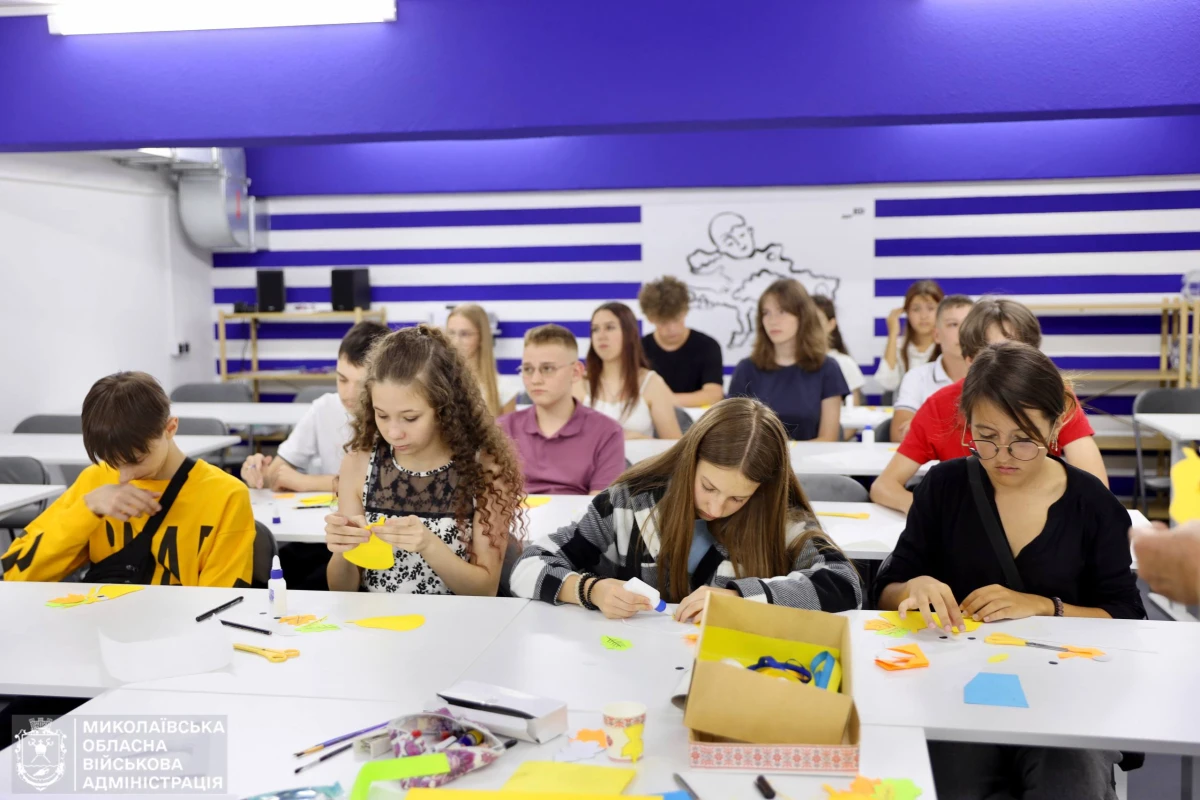
Charitable organizations have built temporary educational spaces for us. They usually have three or four classrooms. This makes it possible to organize blended learning for pupils. It is especially important for first graders and graduating classes.
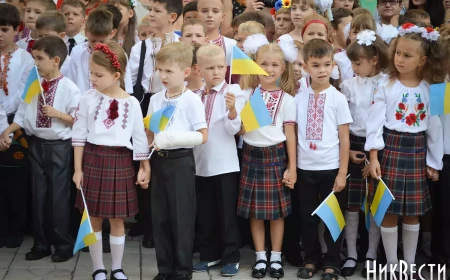
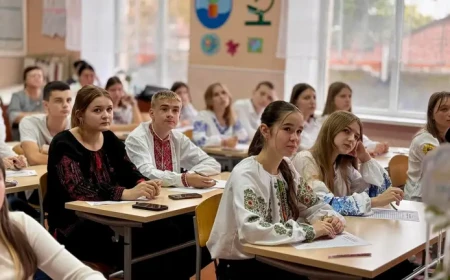
We were sincerely happy to see how eagerly children returned to learning at desks and how much excitement there was in their eyes. Parents often could not hold back tears when they saw their children’s joy and their touching attitude toward everything in the school: new desks, chairs, boards, ramps, water purification systems, heating, new computers and a 3D printer.
UNICEF also gave every child in liberated communities a blue backpack with many school supplies. When the children received them, they forgot about lessons, ceremonies and the presence of adults. They began looking at bright notebooks, colored pencils, trying different pens and drawing in albums. Adults will remember that touching moment for the rest of their lives. War tried to steal our children’s childhood. But it did not succeed.
School buses and hot meals
Yusuf Inan: In 2026, the region received new school buses, while communities also report a shortage of drivers. Is pupil transportation a systemic problem today, and how is it planned to solve it?
Alla Velikhovska: Educational institutions in the region actually have 315 school buses, including 31 special buses for transporting children in wheelchairs.
In 2025, 40 school buses were purchased, including one specially equipped with places for transporting people with reduced mobility, accompanying persons and wheelchairs. The total cost was 147.831 million hryvnias.
In 2026, for the public investment project on barrier-free access to quality education through school buses, 33.739 million hryvnias in subvention funding was allocated. As of the current date, tenders have been announced for the purchase of 12 special buses with a total value of 52 million hryvnias.
In total, during the years of Russia’s armed aggression, the region’s school bus fleet has increased by 135 vehicles. Of these, 83 school buses were purchased with targeted subvention funds under co-financing conditions with local budgets, and 52 buses were received from international foundations.
But the enemy does not stop destroying civilian transport, including school buses.
There is a problem with school bus drivers, and it also has a geographical imbalance. The closer a community is to the line of contact, the fewer drivers there are. Those who remain are often of retirement age.
Yusuf Inan: The new school year requires hot meals for children who stay at school for more than four hours. Are all communities ready to meet this requirement, and where do the greatest difficulties remain: kitchens, staff, funding or logistics?
Alla Velikhovska: All communities understand how important it is to provide children with hot meals. The state allocates enough money for this, directed toward purchasing quality products or covering 70% of catering costs. Free hot meals are provided in 309 general secondary education institutions and 22 branches for 71,411 pupils, including 25,047 pupils in grades 1 to 4 and 46,364 pupils in grades 5 to 11.
In 2026, current repairs of food blocks were carried out in nine institutions using local budgets and charitable funds. Technological and refrigeration equipment was purchased for food blocks in 38 general secondary education institutions. Communities are also carrying out modernization work in nine school canteens and food blocks using state budget subvention funds.
Within the framework of the World Food Programme of the United Nations, 80 general secondary education institutions in the region are receiving technological equipment for food blocks.
Mykolaiv region is also implementing measures to train qualified workers in the professions of cook and school cook. The Novoodesa Vocational College provides training for school cooks on the implementation of diverse, balanced and high-quality nutrition in educational institutions.
In 2025, 19 school cooks completed training. In 2026, under short-term courses for partial professional qualifications within the UNDP framework, with financial support from the Government of Denmark, 15 cooks from territorial communities of Mykolaiv region completed free training, and another 15 are completing training in October 2026.
Under a memorandum of cooperation signed between the Ministry of Education and Science of Ukraine, the World Food Programme and the National Association of Public Catering, 100 cooks from food blocks of general secondary schools in Mykolaiv region began the first stage of online training.
To promote healthy eating among pupils, educational institutions in Mykolaiv region are holding a month of healthy nutrition. During this period, pupils learn about the basics of a balanced diet, drinking regime, food hygiene, food safety and the harmful effects of fast food and sugar.
WiseNewsPress.com
What's Your Reaction?
 Like
0
Like
0
 Dislike
0
Dislike
0
 Love
0
Love
0
 Funny
0
Funny
0
 Wow
0
Wow
0
 Sad
0
Sad
0
 Angry
0
Angry
0
Yusuf İnan is a journalist, columnist, strategic analyst and head of the Wise News Press Media Group. His work focuses on international affairs, geopolitics, security and major social issues. Through his journalism, he promotes peace, dialogue, mutual understanding and responsible reporting while contributing to the development of international media projects.










Comments (0)