



Russia plans seven “super prisons” as inmate numbers fall amid war
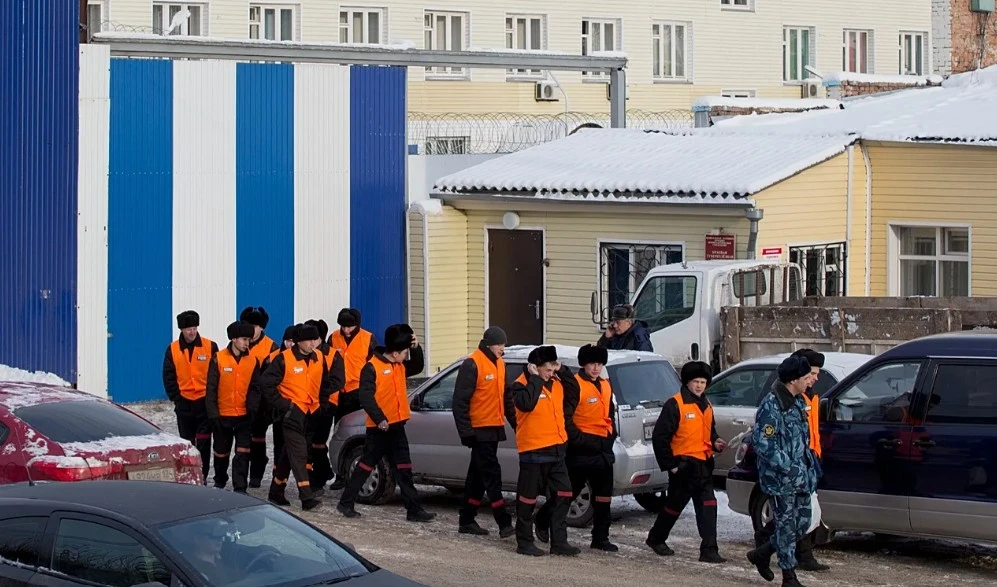
Russia plans seven large prison complexes by 2035, even as its prison population has fallen nearly 40% amid wartime recruitment.


By Ahmet Taş | Wise News Press
ANKARA, Türkiye — Russia plans to build seven large prison complexes by 2035, despite a sharp fall in inmate numbers linked in part to recruitment for the war in Ukraine.
According to reporting by Euronews Russian, the plan is part of changes to a federal program for developing Russia’s prison system. The new complexes, described by Russian journalists as “super prisons,” would combine pre-trial detention centers and penal colonies in large integrated facilities.
Seven large prison complexes planned
The planned complexes would hold more than 20,000 people in total, including 5,380 detainees and 15,120 convicted prisoners.
The facilities are expected to include not only prison units, but also courtrooms and offices for prosecutors, defense lawyers and public monitoring commissions. Russian authorities also plan to use extensive surveillance and security technologies inside the complexes.
The new sites are planned for the Kaluga, Astrakhan and Tyumen regions, Buryatia, Zabaykalsky Krai and the Russian-occupied Kherson region of Ukraine. The first complex is expected to open in Tatarstan by 2030.


Cost may exceed 230 billion rubles
Russian media reports suggest that a single complex could cost between 13 billion and 20 billion rubles, or roughly 134 million to 208 million euros.
The total cost of the program may exceed 230 billion rubles, equal to about 2.4 billion euros.
Russia’s Justice Ministry argues that concentrating detainees and convicted prisoners in large complexes could reduce prison system costs by 25% to 30%. Officials say savings would come from lower transport costs, fewer staffing needs and the ability to conduct more procedures within one facility.


The ministry also expects the investment to pay for itself within about 10 years.
Prison population has fallen sharply
The construction plan comes after a dramatic fall in Russia’s prison population.
At the end of 2021, around 465,000 people were held in Russian prisons and detention centers. By 2026, that number had fallen to about 282,000, a decline of nearly 40%.
Arkady Gostev, head of Russia’s Federal Penitentiary Service, said in May that the recruitment of prisoners as contract soldiers for the war in Ukraine played a major role in the decline.
The recruitment of inmates began in the summer of 2022, several months after Russia launched its full-scale invasion of Ukraine. In the first stage, the process was carried out through the Kremlin-linked Wagner Group. Later, recruitment was handled more directly by Russia’s Defense Ministry.
Remote prisons raise access concerns
Legal experts have criticized the plan, warning that large remote prison complexes could make it harder for relatives, lawyers and human rights monitors to reach inmates.
This concern is especially significant for facilities planned in distant regions such as Buryatia and Zabaykalsky Krai. Moving prisoners farther from major urban centers could reduce outside scrutiny and make regular family visits more difficult.
Critics also warn that if internal prison rules remain unchanged, or become more restrictive, large new complexes may not improve conditions. Instead, they could centralize existing problems behind more closed and technologically controlled systems.
Torture allegations remain a major issue
Russia’s prison system has long been criticized by international human rights organizations for conditions that fall below accepted standards.
A 2025 report by the UN Special Rapporteur on human rights in Russia said torture remained “systematic and widespread.” The report documented 258 torture cases from 2024 and 2025. Alleged methods included electric shocks, beatings and mock executions.
The UN Human Rights Council also called on Moscow in 2024 to make torture a separate criminal offense, strengthen investigations into reported cases and bring its legal system into line with the UN Convention against Torture. Russia rejected most of those recommendations.
Human Rights Watch reported in 2024 that Russian authorities tortured suspects detained in connection with the Crocus City Hall attack near Moscow and circulated recordings of the abuse.
European prison monitoring has ended
Russia formally withdrew from the European Convention for the Prevention of Torture in September 2025, after being expelled from the Council of Europe. That move ended inspection visits by European monitors to Russian detention facilities.
The Organization for Security and Co-operation in Europe has also reported overcrowding, unsanitary conditions, inadequate food and medical care, and forced labor in Russian detention centers.
The death of Russian opposition politician Alexei Navalny in February 2024 in a remote Arctic penal colony brought renewed international attention to prison conditions in Russia. Independent Russian media had described the facility where he was held as known for harsh conditions and allegations of abuse.
A prison policy shaped by war and control
Russia’s plan to build seven “super prisons” is therefore not only an infrastructure project. It sits at the intersection of war, penal policy, human rights concerns and state control.
The sharp fall in inmate numbers shows how deeply the war in Ukraine has affected the prison system. At the same time, the planned construction of large new complexes suggests that Moscow is preparing for a more centralized, security-heavy model of detention.
For human rights advocates, the key question is whether these facilities will improve transparency and standards, or make abuse harder to detect.
WiseNewsPress.com
What's Your Reaction?
 Like
0
Like
0
 Dislike
0
Dislike
0
 Love
0
Love
0
 Funny
0
Funny
0
 Wow
0
Wow
0
 Sad
0
Sad
0
 Angry
0
Angry
0

Ahmet Taş is a journalist, editor and Turkey Office Manager of the Wise News Press Media Group. He works across news, digital media and international publishing, focusing on accurate, responsible and accessible journalism. He contributes to the development of media projects that bring important political, social and global developments to a wider international audience.













Comments (0)