



How will 10 billion people be fed as the world keeps getting hotter?
Scientists in the Netherlands are testing crops against heat, drought, frost and salinity to develop varieties capable of feeding a hotter, more crowded world.


By Ahmet Taş | Wise News Press
WAGENINGEN, NETHERLANDS — Scientists in the Netherlands are testing thousands of plants against heat, drought, frost, humidity and salinity as they race to develop crops capable of producing enough food in a hotter and less predictable climate.
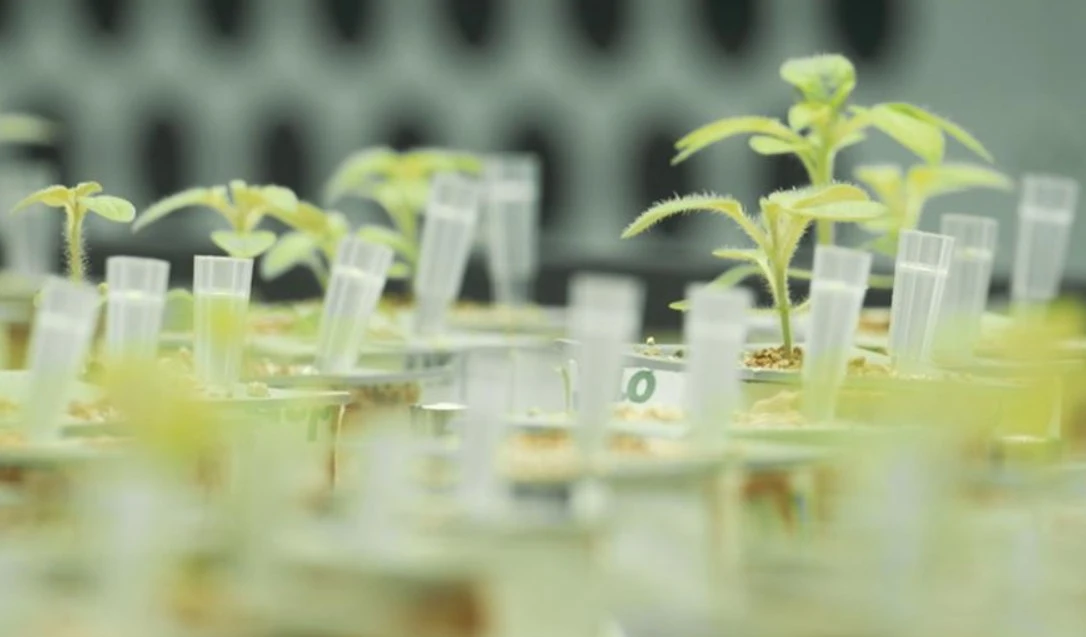
At Wageningen University, tomato seedlings and other plants are continuously monitored by cameras, sensors and automated systems designed to detect even subtle changes in color, temperature and photosynthesis. Researchers hope the resulting data will reveal genetic traits that allow crops to survive increasingly severe climate stresses.
The challenge is becoming more urgent as climate change disrupts the seasonal patterns on which farming has traditionally depended, while the global population is projected to approach 10 billion by mid-century, increasing pressure on food production.
Climate change is disrupting the foundations of agriculture
Agriculture has historically depended on a degree of predictability.
Farmers make planting and harvesting decisions around expected seasonal temperatures, rainfall and soil conditions. But rising global temperatures are making those patterns less reliable.


More frequent heat waves, longer and more intense droughts, heavy floods and other extreme events increasingly threaten crop production, according to the report. Farmers in parts of Germany warned of potential losses after temperatures rose sharply this summer, while cereal production losses have already been recorded in countries including France, Hungary and the United Kingdom.
At the same time, demand for agricultural production is increasing.
The projected rise in world population is one factor. Greater meat consumption also places additional pressure on farming because more grain is needed for animal feed. Demand for crops used in biofuels produced from plants and other organic material adds another layer of competition for agricultural land and output.


Researchers are therefore confronting two questions at once: how to produce more food and how to do so under increasingly difficult environmental conditions.
Wageningen has created a ‘gym for plants’
Inside Wageningen University's research facilities, scientists can recreate an unusually wide range of environmental stresses.
Rick van de Zedde, program manager at the Netherlands Plant Eco-phenotyping Centre, or NPEC, explained that researchers can change temperature, subject plants to heat stress, briefly freeze them to reproduce damaging night frosts and add salt to simulate salinity.
He described the facility as a kind of “gym for plants.”
Some experiments reproduce the heat and humidity found in India.
Rather than simply observing whether a plant survives, researchers monitor how individual varieties react to specific stresses and look for characteristics that could make agricultural crops more resilient to human-driven climate change.
The Netherlands has long been associated with agricultural innovation. Despite its relatively small land area, the country is described in the source report as the world's second-largest agricultural exporter by value after the United States. Wageningen is a major part of the research ecosystem behind that productivity.
High-tech phenotyping allows thousands of plants to be tested
A central element of the research is phenotyping — measuring observable characteristics of plants and comparing how different varieties react to environmental conditions.
Automated scales can record the weight of trees every three minutes for weeks, helping scientists determine how much water they require. Advanced scanners track leaf movements and other plant characteristics.
Plant breeders have selected desirable crops for thousands of years, but traditional observation and selection can be slow and labor-intensive.
Automation changes the scale.
Van de Zedde said older laboratory measurement methods limited the size of experiments, whereas researchers at NPEC can work with thousands of plants in a single experiment.
That larger data set makes it easier to compare varieties and identify which traits are consistently associated with surviving drought, high temperatures, salinity or other stresses.
Greenhouse results still have to survive the real world
Even the most sophisticated greenhouse cannot reproduce every environmental variable a crop will face outdoors.
Hailstorms, strong winds, changing soil temperatures and the interaction of numerous environmental stresses remain difficult to recreate perfectly in a laboratory.
For that reason, the research also moves into experimental fields near Wageningen University.
Researchers use mobile imaging equipment and GPS positioning systems to collect information from hundreds of crop varieties, including experimental barley fields. They then compare field performance with results from controlled greenhouse experiments.
The purpose is to determine whether the traits that appear beneficial in a laboratory actually help plants survive real agricultural conditions.
As Van de Zedde put it, the central issue is resilience: researchers effectively score plants according to how they respond to stress, identifying which cope successfully and which suffer damage.
DNA data can help breeders combine yield and resilience
Once scientists know which plants perform best under a particular stress, they can examine the DNA profiles associated with those characteristics.
That information can then guide conventional plant breeding.
For example, researchers may cross a high-yielding variety with another variety that performs particularly well during drought or extreme heat. The goal is to develop a new crop that combines productivity with climate resilience.
In that sense, researchers describe their work as a way of accelerating processes that have long existed in agriculture.
The ultimate objective is not merely to produce plants that survive a laboratory experiment, but to give farmers varieties capable of maintaining useful yields when weather conditions become increasingly volatile.
The Dutch government and plant-breeding companies financing the research will ultimately help determine which varieties move forward for further development.
The research is not primarily about genetically modified crops
High-tech agricultural laboratories can immediately raise public concerns about genetically modified organisms, or GMOs.
Alan Pauls, a doctoral researcher at Wageningen University's Laboratory of Genetics, said distrust remains particularly noticeable among some older people, who may associate bringing plants into laboratories with genetic modification.
But most of the Wageningen experiments described in the report do not rely on genetically modified plants.
Only around 5 percent of the experiments use genetically modified material. Most of the work focuses instead on phenotyping and selecting characteristics that already exist in plants, then using breeding to combine useful traits more quickly.
The European Union also regulates genetic modification tightly and requires extensive safety controls.
Pauls argues that the use of advanced technology should not automatically make food “artificial.” His broader point is about scale: traditional methods can still work, but the challenge is whether they can produce improvements quickly enough for a food system serving billions of people.
Feeding billions may depend on making crops adapt faster
The central challenge facing agricultural science is increasingly one of speed.
Climate conditions are changing while populations, food demand and competition for agricultural resources continue to grow. Crops bred for historically stable conditions may encounter heat, drought, flooding or unexpected frost more frequently during their productive lives.
Researchers at Wageningen are therefore attempting to shorten the time required to identify useful plant traits and incorporate them into future varieties.
Their work does not offer a single solution to global food security. Farming will continue to depend on water availability, soils, infrastructure, economics and agricultural policy as well as crop genetics.
But the experiments illustrate one direction in which food production is moving: using sensors, automated imaging, field testing and genetic information to identify plants capable of coping with stresses that may become increasingly common.
As the world grows hotter, the question is no longer simply how much food agriculture can produce. It is how quickly crops themselves can be adapted to the conditions in which future generations will have to grow that food.
WiseNewsPress.com
What's Your Reaction?
 Like
0
Like
0
 Dislike
0
Dislike
0
 Love
0
Love
0
 Funny
0
Funny
0
 Wow
0
Wow
0
 Sad
0
Sad
0
 Angry
0
Angry
0

Ahmet Taş is a journalist, editor and Turkey Office Manager of the Wise News Press Media Group. He works across news, digital media and international publishing, focusing on accurate, responsible and accessible journalism. He contributes to the development of media projects that bring important political, social and global developments to a wider international audience.

















Comments (0)