



Ukraine’s Wartime Education: Why Mykolaiv’s Experience Matters Now
An interview with Alla Velikhovska shows how Mykolaiv is reshaping wartime education around safety, teachers, children and reconstruction.


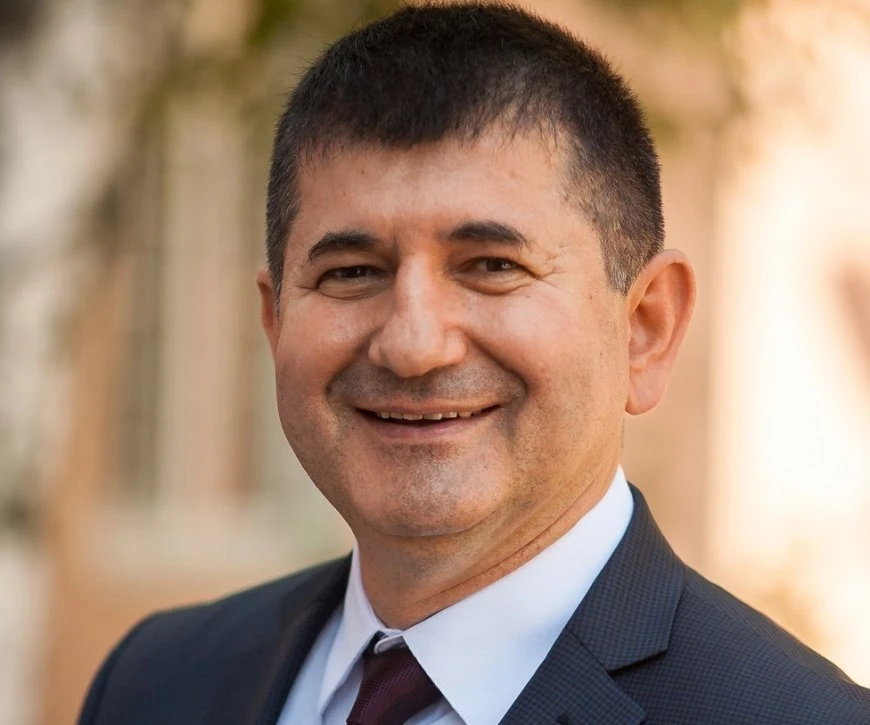
By Yusuf İnan | Wise News Press
Journalist and Author | Political and Strategic Analyst
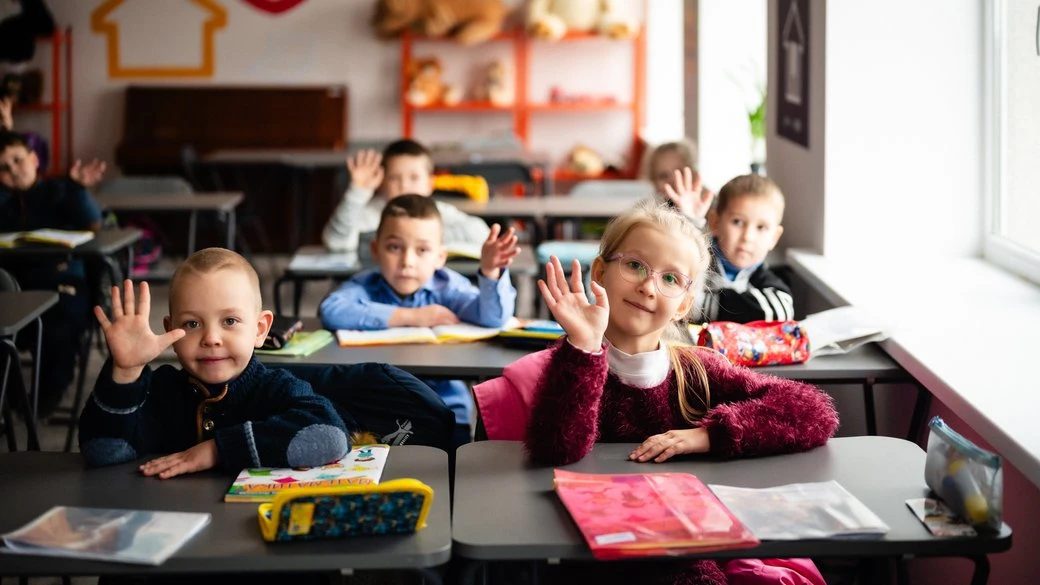
MYKOLAIV, Ukraine — The interview with Alla Velikhovska, director of the Department of Education and Science of the Mykolaiv Regional Military Administration, shows that education in wartime Ukraine is no longer only about schools, textbooks and timetables, but about the survival of children, communities and the state itself.
The conversation matters far beyond Mykolaiv. It offers a rare view into how a frontline region, marked by occupation, damaged infrastructure, constant air alerts, staff shortages and the displacement of thousands of children, is trying not merely to keep schools open, but to build a new model of education for a country at war.
School as a System of Resilience
The first conclusion from Velikhovska’s interview is clear: in a frontline region, a school is no longer just a building where children study. It has become a system of resilience.


When she names the three priorities for the new school year as safe childhood, peaceful Ukrainian skies and quality education, this is not ceremonial language. In Mykolaiv, these three goals can no longer be separated. Quality education is impossible without a shelter. In-person learning is impossible without a safe route to school. A child’s return to the classroom is impossible without psychological support, electricity, water, communications, transport and parental trust.
That is the central message of the interview. Ukrainian education in wartime has become a complex security system. Before the full-scale war, decisions about school formats were mostly administrative or pedagogical. Now every decision is also about safety, logistics, psychology, social stability and public responsibility.
According to Velikhovska, educational institutions in the region use hundreds of protective facilities. But the mere presence of a shelter does not automatically mean that pupils can return to classrooms. Capacity, air quality, drinking water, medical space, food distribution, distance from the school building and inspections by the relevant authorities all matter.


This shows that Ukraine’s school system no longer works according to a simple formula of “online” or “offline.” It works according to a formula of responsibility.
Learning Losses as a Long War Consequence
The second major theme of the interview is learning loss. Velikhovska does not treat it as a dry statistical category. She describes it as a new pedagogical reality.
Her statement that Ukraine now has “an entirely new generation” of children for whom teachers are developing methods every day is one of the most important observations in the whole interview.
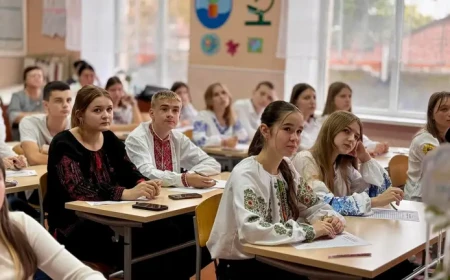
This is a precise diagnosis. Ukrainian schools are dealing with children who studied during evacuation, in basements, in foreign countries, during blackouts, under air raid sirens, after losing their homes or after experiencing occupation. For these children, simply “catching up with the curriculum” cannot be the only answer.
Velikhovska stresses that exact sciences suffer most because they require continuity. Mathematics, physics, chemistry and other science-related subjects do not tolerate long interruptions. If a child loses the basic links, the result is not only a gap in knowledge. It is often a feeling of helplessness in front of the subject.
But the problem is not only academic. Learning losses in wartime have a psychological dimension. Panic attacks, reactions to sudden noise, speech problems, memory difficulties, dyslexia and disrupted socialization are not side issues. They are part of the educational process because a child cannot learn outside his or her emotional condition.
This is why the Mykolaiv experience is important for all of Ukraine. It shows that educational recovery cannot be reduced to textbooks and exams. It requires psychologists, trained teachers, parental involvement, summer camps, individual learning plans, digital centers and long-term support.
Teachers as the Core of the System
One of the most powerful parts of the interview is Velikhovska’s account of teachers. There is no decorative pathos here. There are concrete stories of people who taught under occupation, searched for internet access in their yards, risked their lives for Ukrainian textbooks and gathered children after liberation even when their own homes were damaged and their own mental strength was exhausted.
These stories explain why the shortage of teachers in Mykolaiv is not just a staffing problem. It is a question of the region’s future.
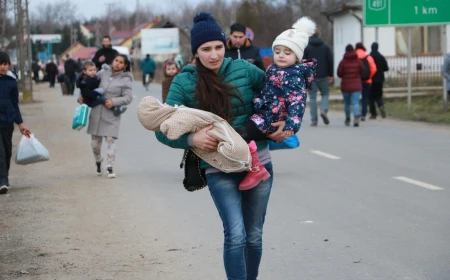
The war has pushed some teachers into evacuation, some into the army, some into long-term displacement. Fewer young people choose teaching as a profession. Frontline communities cannot always compete with better salaries, safer conditions or housing support elsewhere. Yet these are precisely the communities that need teachers most.
Velikhovska points to possible answers: community-level bonuses, service housing, flexible schedules, dual models of training, cooperation with universities and the involvement of students from other fields in teaching. But the deeper point is visible between the lines: the region needs not a temporary campaign, but a new social agreement with teachers.
After the war, Ukraine will rebuild not only bridges, homes and school buildings. It will have to rebuild the prestige of the profession without which no modern state can exist.
Children Abroad and the Right to Return
Another strategic issue is the situation of children who left Ukraine after 2022. Velikhovska describes a model in which a child can study in the school system of the host country while maintaining the Ukrainian component: Ukrainian language and literature, history of Ukraine, geography of Ukraine, art and other subjects connected to national education.
This is more than a technical model of dual enrollment. It is about the child’s connection to Ukraine.
For the state, it is important not to lose a generation that is temporarily outside its borders. For the child, it is important not to feel like a stranger after returning. For the school, it is important to have a mechanism of academic, linguistic and psychological adaptation.
In this context, the interview points in the right direction. A child’s return should not begin with bureaucracy, but with enrollment, support and an individual learning trajectory. If a child comes back after one, two or three years abroad, the school should not treat that child as a problem. It should treat him or her as a Ukrainian child who has lived through a difficult path and needs a bridge back.
That is one of the most important lessons for the whole country.
Inclusion as a Test of Humanity
The section on children with special educational needs shows that even during war, the education system cannot postpone inclusion until “better times.”
According to the figures cited by Velikhovska, more than 2,000 children with special educational needs are covered by inclusive education in Mykolaiv region. Inclusive groups and classes function in most communities. Inclusive resource centers, special schools, special groups in vocational education and pedagogical patronage remain part of the system.
This matters because war always creates the risk that the most vulnerable children will be the first to disappear from view. If transport is unavailable, a shelter is inaccessible, there is no assistant teacher, parents are exhausted and the community has limited resources, a child with special educational needs can quickly become invisible.
That is why inclusion during war is a test of the system’s humanity. If a region under constant threat continues to create inclusive classes, support resource centers, train specialists and find ways to reach children in remote communities, it means that education remains not only a service, but a right.
Vocational Education and Reconstruction
The final part of the interview moves from today’s schools to tomorrow’s economy. Velikhovska speaks directly about the need for builders, mechanics, agricultural workers, cooks, welders and other skilled workers.
This is a crucial point. Ukraine often discusses reconstruction in the language of major projects, donor conferences and international funding. But every reconstruction begins with people who can repair, build, cook, weld, operate machinery, install networks and maintain infrastructure.
Mykolaiv is already adapting vocational education to this reality. Vocational schools continue to function, practical training centers are being modernized, short-term courses are offered for adults and cooperation with employers is expanding. The examples are striking: women trained as tractor drivers, bakers who opened a small bakery, families who completed construction-related courses and started working independently.
This points to a change in the philosophy of vocational education. It is no longer a “second choice” after university. In the conditions of war and reconstruction, it is becoming one of the engines of regional survival.
The future recovery of Mykolaiv will not depend only on international assistance. It will depend on whether the region can prepare people for the work that reconstruction requires.
Education as a Form of Resistance
The full interview with Alla Velikhovska leads to one broad conclusion: education in Ukraine during the war has become a form of resistance.
When children continue learning after air raid sirens, that is resistance. When a teacher holds a lesson from occupied territory, that is resistance. When a community restores a school before restoring private homes, that is resistance. When a child abroad studies Ukrainian history, that is resistance. When a vocational college trains workers for reconstruction, that is resistance. When a school finds a way to support a child with special educational needs, that too is resistance.
In this sense, Mykolaiv is not speaking only about itself. It is speaking about a Ukraine that refused to put childhood on pause.
The strongest idea in Velikhovska’s interview is that education after the war will not simply return to the pre-war model. And despite all the pain, this may become a chance for transformation. Ukrainian schools will be different: safer, more flexible, more digital, more attentive to psychology, more open to inclusion and more connected to the needs of communities and the economy.
But this requires honesty. The war has not created temporary difficulties. It has created long-term challenges. They cannot be solved by one order, one budget line or one donor project. They require systematic policy, international support, trust in teachers, investment in shelters, vocational education, psychological assistance, transport and digital infrastructure.
Mykolaiv’s experience shows that even under bombardment, education can do more than survive. It can change. That is why this story matters not only for Ukraine, but for everyone who wants to understand how a society defends its future while defending its land.
Yusuf İnan
WiseNewsPress.com
Yusuf İnan is a journalist, author, and political and strategic analyst. He serves as editor-in-chief of UAPresa.com, WiseNewsPress.com, SehitlerOlmez.com, SiyasetinSesi.com and YerelGundem.com. His work focuses on strategic and political analysis concerning developments in Türkiye and around the world.
What's Your Reaction?
 Like
0
Like
0
 Dislike
0
Dislike
0
 Love
0
Love
0
 Funny
0
Funny
0
 Wow
0
Wow
0
 Sad
0
Sad
0
 Angry
0
Angry
0
Yusuf İnan is a journalist, columnist, strategic analyst and head of the Wise News Press Media Group. His work focuses on international affairs, geopolitics, security and major social issues. Through his journalism, he promotes peace, dialogue, mutual understanding and responsible reporting while contributing to the development of international media projects.










Comments (0)