



NATO says Russia’s sabotage campaign failed to weaken Ukraine support
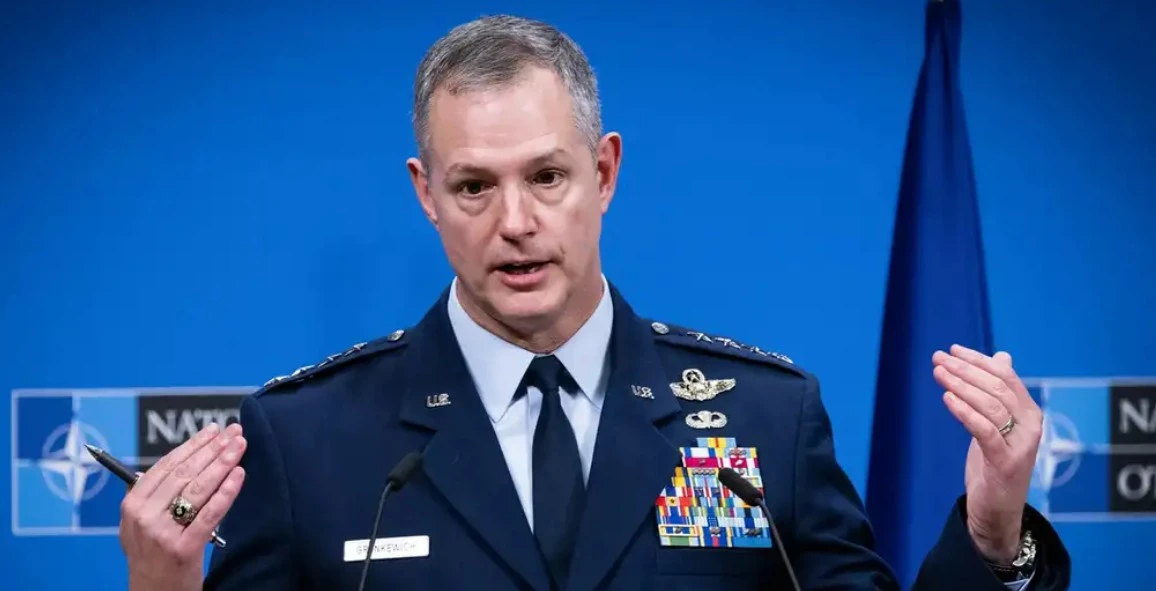
NATO commander Gen. Alexus Grynkewich said Russia’s sabotage and hybrid pressure in Europe have failed to weaken allied support for Ukraine.


By Ahmet Taş | Wise News Press
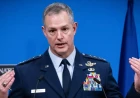
ANKARA, Türkiye — NATO’s top commander in Europe said Russia’s sabotage campaign across Europe has failed to weaken allied support for Ukraine, even as such operations grow more daring.
Gen. Alexus Grynkewich, NATO’s Supreme Allied Commander Europe, made the remarks while addressing members of the European Parliament’s security and defense committee on September 28. According to reports, Grynkewich said Russia’s hybrid activities were aimed at spreading fear, undermining public confidence and weakening Europe’s united backing for Ukraine.
NATO says the strategy is not working
Grynkewich said Russia’s sabotage efforts in European Union countries had not achieved their central objective: pushing Europe away from support for Ukraine.
He described the incidents as part of a broader attempt to intimidate European societies and erode political resolve. But according to the NATO commander, the campaign has not produced the result Moscow expected.
“These are clear examples of attempts to sow fear and undermine our united support for Ukraine. This is not working,” Grynkewich said.


Leipzig and Denmark incidents cited
The NATO commander pointed to recent incidents that have raised concern across Europe.
He referred to the discovery of an explosive-laden drone at Leipzig Airport in early August and an incident in mid-September in which a Russian frigate reportedly fired signal flares toward a Danish helicopter.
Such cases, Grynkewich suggested, show that hybrid threats are not limited to cyber operations or disinformation campaigns. They can also involve airports, airspace, maritime activity, critical infrastructure and civilian security.


Public attribution as a deterrent
Grynkewich argued that the best response to sabotage and destabilizing operations is to clearly identify and publicly attribute responsibility.
According to him, making such information public signals to state sponsors that their activities are known and raises the cost of future operations. He said direct attribution can also disrupt networks by showing that their methods are no longer effective.
For NATO, this approach is part of deterrence. The message is that covert pressure will not remain politically invisible and will not reduce support for Ukraine.
Ukraine support remains central
Russia’s hybrid pressure campaign is viewed as an effort to weaken the political, military and financial backing Ukraine receives from European countries.
Moscow has repeatedly tried to exploit public anxiety, security fears and political divisions in Europe. But Grynkewich’s assessment suggests that sabotage has not broken the strategic consensus around helping Kyiv.
He said countries facing hybrid attacks should respond by strengthening their commitment to Ukraine. That, he argued, would show Russia that its strategy is failing.
Eastern Sentry strengthens the eastern flank
Grynkewich also said NATO’s Eastern Sentry operation has improved security along the alliance’s eastern borders.
The operation, launched in September 2025 with participation from Denmark, France, the United Kingdom and Germany, was designed to reinforce NATO’s eastern flank. According to Grynkewich, Russia has become more cautious about drone crossings near the Baltic states and Poland since the mission began.
That assessment suggests NATO sees persistent military presence, surveillance and coordinated allied response as important tools against hybrid pressure.
Europe faces a broader security challenge
The NATO commander’s remarks underline a wider shift in Europe’s security environment.
Threats are no longer confined to conventional military fronts. Airports, energy facilities, maritime routes, border regions, communications networks and public opinion have all become part of the security landscape.
NATO’s message is that Russia’s attempt to create fear and weaken Ukraine support has not succeeded. The alliance is instead emphasizing resilience, public attribution, deterrence and continued backing for Kyiv.
For Europe, the challenge is not only to prevent sabotage, but also to deny Russia the political effect such operations are designed to create.
WiseNewsPress.com
What's Your Reaction?
 Like
0
Like
0
 Dislike
0
Dislike
0
 Love
0
Love
0
 Funny
0
Funny
0
 Wow
0
Wow
0
 Sad
0
Sad
0
 Angry
0
Angry
0

Ahmet Taş is a journalist, editor and Turkey Office Manager of the Wise News Press Media Group. He works across news, digital media and international publishing, focusing on accurate, responsible and accessible journalism. He contributes to the development of media projects that bring important political, social and global developments to a wider international audience.















Comments (0)