



Putin’s Ukraine gamble backfires as Russia loses and Kyiv grows stronger
Russia’s war has failed to subdue Ukraine, instead strengthening Kyiv’s army, deepening Turkish ties and reshaping the Turkic world.


By Yusuf İnan | Wise News Press
Journalist and Author | Political and Strategic Analyst
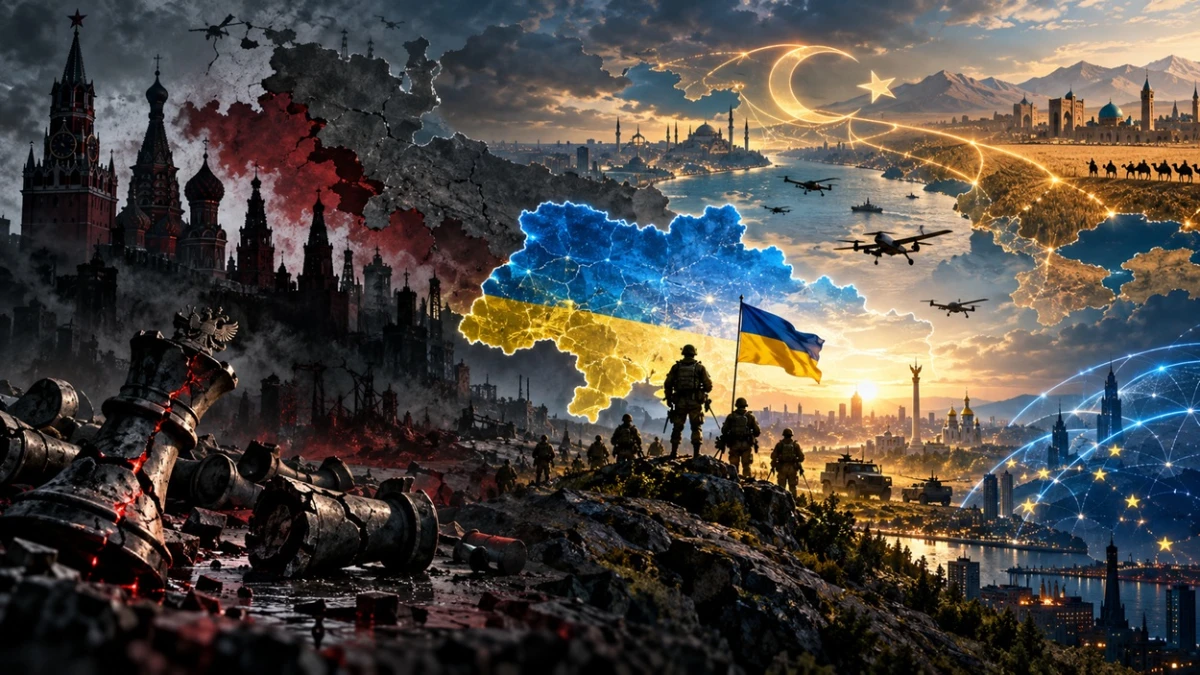
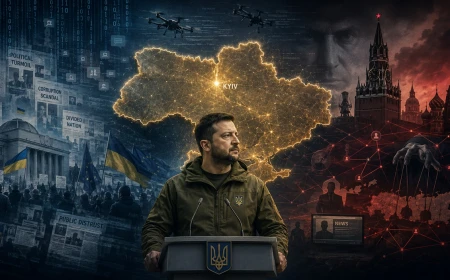
KYIV, Ukraine — Russia’s war in Ukraine has not delivered the control Moscow expected; instead, it has trained Ukraine’s army, strengthened Kyiv’s national identity and opened more space for Turkey and the Turkic world.
For years, the Kremlin treated Ukraine as a natural sphere of influence, almost as if it were a Russian province rather than a sovereign country with its own history, identity and political will. Moscow relied on old family ties, a shared Soviet past, cultural proximity and the assumption that Ukraine could never fully break away from Russia’s orbit.
That assumption has collapsed. Over the past 12 years, almost every major Russian move has produced the opposite of what Moscow wanted. Russia tried to pull Ukraine closer through pressure; it pushed Kyiv toward the West, Turkey and the Turkic world. Russia tried to weaken the Ukrainian army; it helped turn it into one of the most experienced fighting forces in Europe. Russia objected to NATO’s proximity; it brought NATO closer to its own borders. Russia occupied Crimea expecting strategic gain; it awakened a deeper Ukrainian relationship with the Turkic and Islamic world.


Moscow’s miscalculation began with Yanukovych
Russia failed to keep Viktor Yanukovych, the Ukrainian president aligned with Moscow, in power. Yanukovych fled Ukraine and took refuge in Russia after the political rupture in Kyiv. That was not simply a change of government; it was one of the first major signs that Moscow’s old influence over Ukraine was beginning to break.
During the Yanukovych period, relations between Russian and Ukrainian people did not feel as broken as they do today. Families were connected. Trade, culture and daily life created a sense of closeness. Many people in Ukraine did not look at Russia as a completely foreign country, and Russia did not see Ukraine as fully separate from itself.
But Russia’s actions after 2014 shattered that relationship. The occupation of Crimea, the war in Donbas and the full-scale invasion of Ukraine destroyed bridges that had been built through family, culture and shared history. Russia did not merely lose political ground in Kyiv; it damaged the emotional connection between two peoples.


A similar pattern can be seen in Moscow’s wider regional posture. Russia presented itself as a power capable of protecting its allies and shaping regional outcomes. Yet the picture around figures such as Syria’s Bashar al-Assad, who came to symbolize Moscow’s costly dependency on embattled clients, has raised questions about Russia’s ability to preserve its influence beyond military pressure. Moscow sought a corridor of influence from the Black Sea to the Mediterranean. Today, that ambition appears more fragile than ever.
Crimea became a rupture, not a victory
Russia believed the occupation of Crimea would bring a major strategic gain. But Crimea is not just a peninsula. It carries deep meaning for Crimean Tatars, Turkey, the Black Sea region, the Turkic world and the wider Islamic world.
By occupying Crimea, Moscow damaged the possibility of building stronger bridges with Turkey and Muslim societies. Russia calculated that Crimea would give it leverage over Ukraine. In practice, it pushed Ukraine toward a renewed engagement with the Turkic world.
Nearly 12 years have passed, yet Crimea is still not recognized internationally as Russian territory. Moscow may control it militarily, but it has not gained legal, political or moral legitimacy. The occupation also alarmed former Soviet republics. Azerbaijan, Kazakhstan, Uzbekistan and other Turkic states saw more clearly that Russia was willing to redraw borders by force.
This is where Russia’s mistake became larger than Crimea itself. Moscow thought land would produce influence. Instead, the occupation of Crimea helped revive Ukraine’s ties with Turkey, the Turkic world and the Islamic world.
Russia trained the Ukrainian army it wanted to defeat
Vladimir Putin, often described as a former intelligence officer and geopolitical chess player, expected his Ukraine moves to produce submission. They did not. Russia has waged war in Ukraine for years, yet it has not established control over the country. Kyiv did not fall. The Ukrainian state did not collapse. The Ukrainian army did not disintegrate.
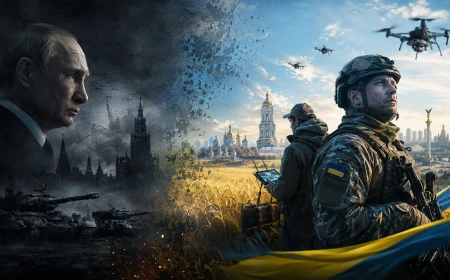
On the contrary, Russia effectively trained the Ukrainian army inside the harshest military school imaginable: war against Russia itself. The Ukrainian army of today is not the army of 10 years ago. It has stopped the Russian military, placed drone warfare at the center of its defense, absorbed Western technology and combined it with local innovation.
Russia once benefited from Ukraine’s brainpower. Ukrainian engineers, technicians, workers and specialists were part of a broader human network that Russia could use. Family ties also created invisible bridges between the two countries. The war has broken much of that structure. Russia can no longer draw on Ukraine’s human capital as it once did.
One tragic image captures the moral collapse of this war: the idea of a Russian pilot bombing the area of his own mother’s home in Mykolaiv and then falling with his aircraft. Whether read as a literal battlefield episode or as a symbol of this war’s cruelty, it shows how Russia’s invasion has torn even family bonds apart. A war launched in the name of “brotherly peoples” has reached a point where even kinship cannot carry its weight.
The NATO and Europe calculation turned upside down
One of Russia’s main objections to Ukraine was NATO. Moscow framed Ukraine’s possible NATO path as a security threat. Yet the war produced the opposite result. Finland and Sweden joined NATO, leaving Russia with a longer direct border with the alliance.
Russia tried to keep NATO away and brought it closer. It tried to separate Ukraine from the West and strengthened Ukrainian support for the West. It tried to use Europe’s energy dependence as a political tool, but today the same Europe is increasing defense spending, preparing more seriously for Russian threats and sending more support to Ukraine.
Now Moscow appears to be moving one step further, creating direct tension with European states. But if Russia could not achieve its goals in Ukraine, what would it gain from a direct confrontation with Europe? Most likely, more losses, more isolation and a deeper strategic decline.
The rhetoric heard from some pro-Russian media figures and commentators — “drop a nuclear bomb and end the war” — reflects not strength but desperation. What comes after nuclear blackmail? When a state repeatedly leans on nuclear threats, it is often a sign that its political and conventional military objectives are failing.
Putin blocked the path Gorbachev opened
Mikhail Gorbachev’s historic decision created a path for Russia to stop carrying the burden of the Soviet empire. By letting go of the Soviet republics, Russia had a chance to rebuild its power in a more sustainable way. Putin has blocked that path.
Moscow returned to imperial reflexes. It treated the former Soviet space not as a community of independent states, but as a backyard to be controlled. This approach did not make Russia stronger. It created fear, distance and a search for alternatives among neighboring peoples.
Today Russia faces a Ukrainian army and a Ukrainian society that have largely overcome the fear of war. If peace is delayed, Ukraine will suffer heavily. It will be battered, exhausted and wounded. But it will also become stronger. Every attack deepens Ukraine’s defensive reflex. Every occupation attempt gives Ukraine more allies. Russia’s strategy is, unintentionally, lifting Ukraine upward.
Turkey, Erdoğan and the Turkic world equation
Russia does not want Turkey to become an influential actor in Ukraine. It does not want Europe or NATO to become influential there either. Yet Russia itself occupies Ukrainian territory. This is Moscow’s central contradiction.
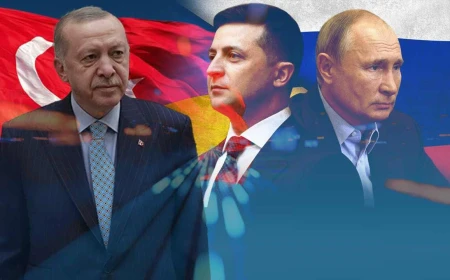
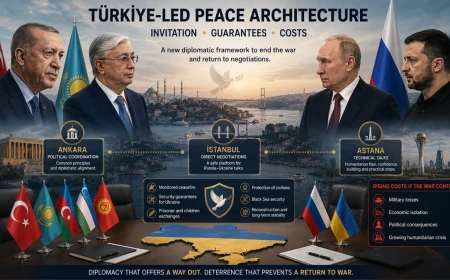
Turkey-Ukraine relations cannot be explained through diplomacy alone. Crimean Tatars, Black Sea security, defense industry cooperation, unmanned aerial vehicles, Turkic world connections and Turkish communities in Ukraine are all part of the natural foundation of this relationship. Putin does not want President Recep Tayyip Erdoğan to become more influential in Ukraine or across the Turkic world. Moscow has tried to limit that influence.
There are serious assessments that Russian intelligence has been able to manipulate certain dynamics inside Ukraine and that Moscow has sought to poison Turkey-Ukraine relations through strategic moves. The reported blocking of a Turkic world festival in Ukraine in 2018, which Erdoğan was expected to attend, can be read in this wider context. Moscow was uncomfortable with Turkey’s cultural and political visibility in Ukraine.
But Russia did not achieve its long-term goal. Erdoğan succeeded in bringing the Turkic world together through the Organization of Turkic States. Kazakh President Kassym-Jomart Tokayev’s message to Putin — that this war has become too much and that peace is the right path — carries symbolic importance. Similar peace-oriented language from Azerbaijan, Kazakhstan, Uzbekistan and other Turkic states shows that the Moscow-centered old order is loosening.
Russia may have blocked a festival that Erdoğan was expected to attend in Ukraine. Yet today it faces a much larger unraveling in its own geographic neighborhood. The rise of Turkey, the Organization of Turkic States and the wider Turkic world weakens Russia’s claim to be the sole decisive power in the former Soviet space.
Ukraine is moving closer to the Turkic and Islamic world
The occupation of Crimea revived Ukraine’s relations with the Turkic and Islamic world. It is no longer unrealistic to imagine Ukraine being strategically invited to meetings of the Organization of Turkic States in the future. Ukraine is already becoming more intertwined with the Turkic world in practical terms.
Azerbaijanis, Uzbeks and people from other Turkic communities are increasingly visible in Ukrainian markets and urban life. Fifteen or 20 years ago, many people in the region preferred Russia as a center of opportunity. Today, despite the war, the fact that many choose to remain in Ukraine should make Moscow stop and think.
People do not choose only on the basis of economic opportunity. They also look for trust, a sense of future and political direction. Russia’s war in Ukraine has pushed Ukraine closer to Turkey, the Turkic world and the West. Everything Moscow wanted to prevent has been accelerated by the war.
Ukraine’s real test is institutional transformation
Ukraine must not only fight on the battlefield; it must also transform its state institutions. One of Kyiv’s most important strategic tasks is to move its institutions out of the old Soviet culture and closer to European standards.
If Ukraine accelerates reforms in justice, public administration, transparency, anti-corruption, local government and defense industry management, it can emerge from this war not only as a surviving state, but as a modernized one. If it succeeds, it can become a much greater regional power.
Ukraine also matters for Europe. Europe needs serious human resources, military experience and societies capable of showing defensive will when necessary. Ukraine has acquired this experience under fire. It has also shown how new-generation weapons and drone technologies can overturn century-old assumptions in the global arms industry.
Low-cost but high-impact systems, fast adaptation and battlefield innovation have surprised the world. Ukraine is not merely defending itself; it is helping write a new chapter in the future of warfare.
Zelenskyy became the opportunity Putin underestimated
Volodymyr Zelenskyy became a genuine opportunity for Ukraine during this process. Putin underestimated him. He did not take him seriously enough. Yet Zelenskyy carried Ukraine’s voice to the world and persuaded many countries to stand with Kyiv.
Putin, by contrast, has lost not only Ukraine but also much of the sympathy once available to Russia among former Soviet peoples. Russia can still attack, destroy and prolong the war. But its strategic direction is wrong. A power moving in the wrong direction may believe each step brings it closer to its goal, while in reality it is moving farther away.
Even if Russia withdraws all its troops, including from Crimea and all occupied territories, it does not have to be seen as losing everything. On the contrary, such a withdrawal could be Moscow’s last rational way to stop larger losses. Russia’s real loss is not only territorial; it is directional.
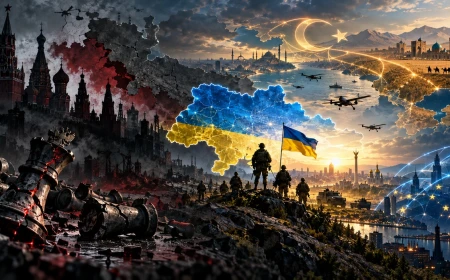
The picture is clear: Russia tried to weaken Ukraine and ended up training Ukraine’s army. It tried to prevent Turkey from becoming influential in Ukraine and made the Turkey-Ukraine line more meaningful. It tried to keep the Turkic world close to Moscow and pushed Turkic states toward a more independent voice. It tried to keep NATO away and brought NATO to its borders. It tried to make Europe dependent through energy and pushed Europe back into a security-centered posture.
Putin may find this hard to accept. But the reality produced by the war is becoming more visible: Russia is not winning in Ukraine; Ukraine, despite paying a heavy price, is growing stronger.
Yusuf İnan
WiseNewsPress.com
Yusuf İnan is a journalist, author, and political and strategic analyst. He serves as editor-in-chief of UAPresa.com, WiseNewsPress.com, SehitlerOlmez.com, SiyasetinSesi.com and YerelGundem.com. His work focuses on strategic and political analysis concerning developments in Türkiye and around the world.
What's Your Reaction?
 Like
0
Like
0
 Dislike
0
Dislike
0
 Love
0
Love
0
 Funny
0
Funny
0
 Wow
0
Wow
0
 Sad
0
Sad
0
 Angry
0
Angry
0
Yusuf İnan is a journalist, columnist, strategic analyst and head of the Wise News Press Media Group. His work focuses on international affairs, geopolitics, security and major social issues. Through his journalism, he promotes peace, dialogue, mutual understanding and responsible reporting while contributing to the development of international media projects.









Comments (0)