



Ukrainian refugees return home, shifting migration balance
Business Insider says about 1.7 million Ukrainian refugees returned home in 2025, placing Ukraine at the top of the global migration balance ranking.


By Ahmet Taş | Wise News Press
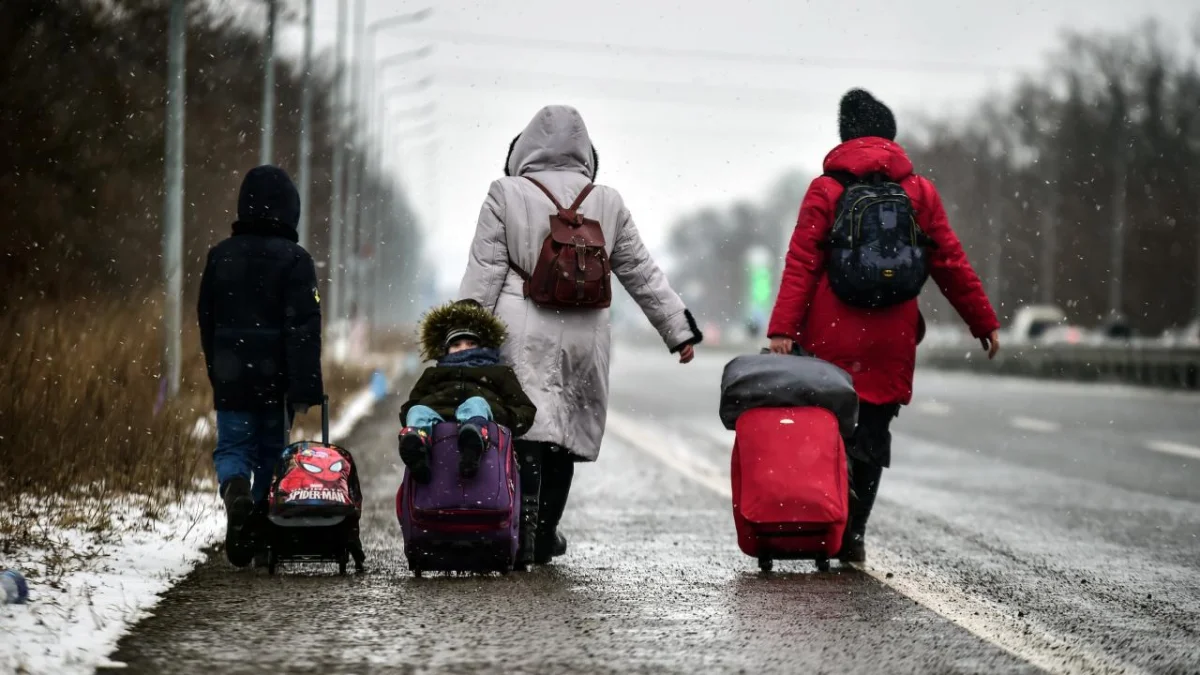
ANKARA, Turkey — Around 1.7 million Ukrainian refugees returned home in 2025, making Ukraine one of the world’s leading countries in migration balance, according to figures cited by Business Insider.
The first years of Russia’s full-scale war against Ukraine triggered one of the largest refugee movements in Europe. Millions of Ukrainians left their homes for neighboring countries, the European Union and other destinations. But new data suggests that, despite the continuing war, a significant number of Ukrainians have begun returning to their country.
Business Insider, citing 2025 data from the World Bank and the United Nations Population Fund, reported that the return of roughly 1.7 million people placed Ukraine at the top of the migration balance ranking.
Ukraine topped the migration balance ranking
One of the most important points in the report is that the ranking was not based on the total number of migrants, but on migration change as a share of each country’s population. Using that method, Ukraine’s migration-related increase was estimated at around 4.4% of its population.
That rate placed Ukraine in the leading position globally in 2025. According to the report, the figure was largely driven by the return of some of the refugees who had left the country during the first years of the war.


Ukraine’s position at the top of this ranking is not only a demographic indicator. It also points to the resilience of Ukrainian society and the continuing attachment of many displaced people to their homes, families and communities.
About 1.7 million people returned
According to the data cited by Business Insider, about 1.7 million Ukrainian refugees returned to the country last year. The figure suggests that part of the population that left for Europe, neighboring states or other regions after the war began has chosen to go back.
The reasons for return may differ from family to family. Some people may have faced economic difficulties, language barriers, integration problems, uncertain work conditions or social isolation abroad. Others may have returned because of family ties, property, employment, education or a strong sense of belonging to their home country.


Experts generally warn that refugee returns during wartime should not always be interpreted as permanent or one-directional movement. Some people may return temporarily, move again depending on security conditions, or divide their lives between Ukraine and host countries.
Population figures remain difficult to assess
Another notable point in the report concerns the population figure used for Ukraine. Business Insider reportedly used a population estimate of 39 million people. However, that number may reflect prewar figures or calculations including occupied territories.
For that reason, the 4.4% migration balance estimate may vary depending on the population baseline used. Ukraine’s actual resident population has become difficult to measure because of the war, external migration, internal displacement and the status of territories under occupation.
This shows how complex demographic analysis becomes during wartime. Migration figures must account not only for border crossings, but also for temporary protection status abroad, internal displacement, the durability of returns and where people actually live at a given moment.
Oman, Syria, UAE and Seychelles also ranked high
According to Business Insider, the countries following Ukraine in terms of population-adjusted migration growth included Oman, Syria, the United Arab Emirates and Seychelles.
The report said Oman recorded an increase equivalent to 2.1% of its population, Syria 1.6%, the United Arab Emirates 1.4% and Seychelles 1.2%.
The migration dynamics behind these countries vary widely. In Gulf states, labor migration is often a major factor. In countries affected by war or crisis, such as Syria, return movements or regional displacement patterns can play a greater role.
In Ukraine’s case, the result is linked primarily to the return of people who left during the early phase of the war.
Poland and other countries recorded negative balances
At the other end of the list were countries with negative migration balances. According to the report, Poland lost the equivalent of around 0.9% of its population through migration balance, while Jordan recorded a sharper decline of minus 2.6%.
Poland’s position is particularly notable because it was one of the main destinations for Ukrainian refugees in the first years of the war. The latest figures may indicate that some Ukrainians who had been living in Poland have returned home or moved onward to other countries.
Countries such as Lithuania, Armenia, Moldova, Estonia and Czechia were also listed among those with population outflows. The data reflects the continuing volatility of migration patterns in Eastern Europe and surrounding regions.
Returns do not mean the war’s impact is over
The return of Ukrainian refugees does not mean that the effects of the war have ended. Security risks, damaged infrastructure, economic uncertainty, regional differences and pressure on public services continue in many parts of the country.
Still, the return trend shows that many Ukrainians do not want to be permanently separated from their country. Home, family, language, work, identity and social belonging can all influence the decision to return, even under wartime conditions.
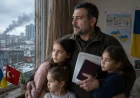
For families with children, the decision can be especially difficult. Parents must weigh security concerns against education, social stability, family unity and economic reality.
Europe faces a changing refugee landscape
The return of Ukrainian refugees also creates a new migration picture for European countries. At the beginning of the war, millions of Ukrainians received temporary protection and support across Europe. Now governments must manage a more complex landscape involving return, integration and long-term settlement.
Some Ukrainians have built stable work, education and social lives in Europe and may choose to remain abroad. Others are returning despite wartime risks. This two-way movement increases the need for flexible migration and social policies.
For Ukraine, returning citizens could play an important role in economic recovery and social resilience. But the sustainability of returns will depend on security, employment, housing, education, healthcare and access to essential services.
Demographic recovery will depend on stability
For Ukraine, refugee return is not only a statistical development. It is also an important part of the country’s long-term demographic and economic recovery.
The prolonged war has deeply affected Ukraine’s population structure, labor market, family life and regional demographics. Making returns sustainable will therefore be critical for reconstruction.
But bringing people back is only the first step. Returnees need safe living conditions, jobs, schools, medical services and social support. Without those conditions, return migration may remain unstable or temporary.
The figures cited by Business Insider show that Ukraine experienced a striking shift in migration balance in 2025. Whether that shift becomes a durable recovery will depend on the course of the war and the country’s ability to rebuild life, work and public services for those who come home.
What's Your Reaction?
 Like
0
Like
0
 Dislike
0
Dislike
0
 Love
0
Love
0
 Funny
0
Funny
0
 Wow
0
Wow
0
 Sad
0
Sad
0
 Angry
0
Angry
0

Editor | Wise News Press — Delivering accurate, timely global news with integrity, insight, and editorial responsibility.













Comments (0)