



Chancellor Merz: The World's Future Will Be Decided in Europe
The arrival of the USS Gerald R. Ford near Venezuela marks the largest US military buildup in the Caribbean in decades, escalating pressure on President Nicolás Maduro under the guise of an anti-narcotics operation.
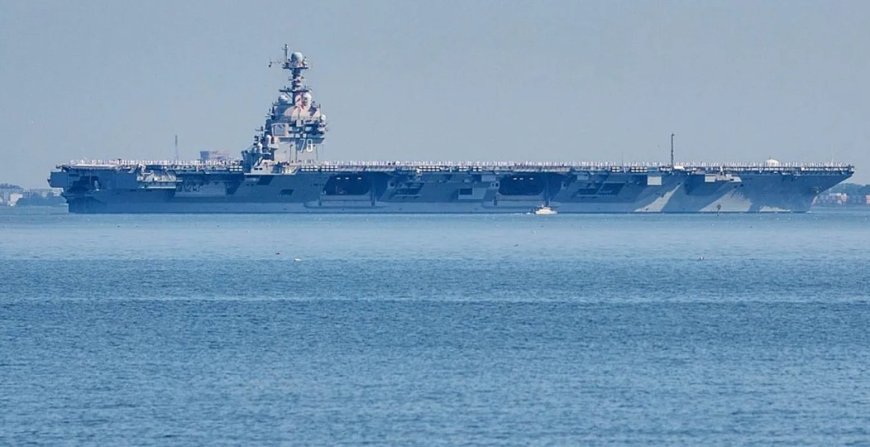


WISE NEWS PRESS / CARIBBEAN SEA — NOVEMBER 17, 2025
The United States' most advanced aircraft carrier arrived in the Caribbean Sea on Sunday, escalating questions about the possible direction of the Trump administration’s anti-narcotics operation in South America, which many see as a pressure campaign against Venezuelan President Nicolás Maduro. In response, the Venezuelan government announced a "massive" mobilization of soldiers and civilians against potential US attacks.
The US military announced that the arrival of the USS Gerald R. Ford battle group marks a critical phase in what the administration terms a “counter-narcotics operation,” which has seen at least 80 people killed in over 20 alleged drug-smuggling boat interdictions across the Caribbean and eastern Pacific since early September.
Largest Military Buildup in Decades
The Ford’s arrival completes the largest US military buildup in the region for decades. Dubbed "Operation Southern Spear" by US Defense Secretary Pete Hegseth, the deployment includes approximately 12,000 US troops and over 10 Navy warships.


The carrier strike group, which passed through the Anegada Passage near the Virgin Islands on Sunday morning, includes squadrons of fighter jets and guided-missile destroyers. Rear Admiral Paul Lanzilotta, commanding the Ford’s strike group, said the deployment would reinforce the large American forces already in the Western Hemisphere to "protect national security and prosperity against narco-terrorism."
Pressure on Maduro and Expanded Operations


While the administration insists the warships are meant to stem the flow of drugs into the US, it has not provided evidence that those killed in the operations were "narco-terrorists." President Trump has suggested the operations could expand, stating the US would stop drug flows coming from "land as well as sea."
Experts note that while the Ford may not be ideally suited for cartel interdiction, it is a highly effective tool for pressuring Maduro. Secretary of State Marco Rubio, who repeats the US does not recognize Maduro as the legitimate leader, accuses the Venezuelan government of being a "broker organization" openly cooperating with drug traffickers.
Maduro, who is wanted in the US on narco-terrorism charges, claims Washington is waging a "fabricated war" against him.
Republican senators recently rejected a bill that would have limited Trump’s authority to launch an attack on Venezuela without Congressional approval. Experts remain divided on whether US warplanes will strike ground targets in Venezuela, but the message delivered by the 100,000-ton carrier is clear.
"This is the basic signpost of what US military power means again in Latin America," said Elizabeth Dickinson, senior analyst for the Andes region at the International Crisis Group. "It’s created serious anxiety in Venezuela and across the whole region. Everyone is holding their breath, waiting to see how willing the US really is to use military force."
Historical US Intervention in Latin America
The US influence in Latin America has long been a contentious issue, with Washington frequently accused of shaping regional governments through covert operations, economic pressure, and military intervention, particularly during and after the Cold War.
Historical events that have fueled the perception of US "interventionism" include:
-
Guatemala (1954): A CIA-backed operation overthrew leftist President Jacobo Arbenz, who had enacted land reform, leading to decades of civil war.
-
Cuba (1961): The US backed the failed Bay of Pigs invasion to overthrow the Castro government.
-
Chile (1973): The CIA provided financial and operational support to forces seeking to oust socialist President Salvador Allende, who was killed in the coup that ushered in 17 years of military rule under General Pinochet.
-
Nicaragua (1980s): The US armed and financed rebels (Contras) fighting against the Sandinista government.
-
Venezuela (2002): The US was accused of giving early support to a failed coup attempt against Hugo Chávez, though Washington denied the claim.
What's Your Reaction?
 Like
0
Like
0
 Dislike
0
Dislike
0
 Love
0
Love
0
 Funny
0
Funny
0
 Wow
0
Wow
0
 Sad
0
Sad
0
 Angry
0
Angry
0

Editor | Wise News Press — Delivering accurate, timely global news with integrity, insight, and editorial responsibility.















Comments (0)