



Why conservative Turks oppose Cem Ozdemir's rise in Germany
As Green Party's Cem Ozdemir prepares to lead Baden-Württemberg, conservative Turkish diaspora members debate issues of representation and identity.



By Ahmet Taş | Wise News Press
BERLIN, GERMANY — As Green Party lead candidate Cem Ozdemir prepares to become the Minister-President of Baden-Württemberg, his historic political success faces significant resistance from conservative and nationalist Turks living in Germany.
While many view the elevation of a politician with Turkish roots to such a prominent state office as a landmark integration success story, the mixed reactions highlight deepening fractures within the diaspora over representation, cultural identity, and diplomatic ties with Ankara.
Representation and cultural alienation
Kenan Aslan, Chairman of the International Democrats Union (UID), an organization known for its proximity to Turkey's ruling AK Party, acknowledges the symbolic value of Ozdemir reaching an important office as a politician of immigrant background. However, he notes that a segment of the community struggles to embrace him.
"There is a clear difference between appreciating a person for their political success and adopting their stance and rhetoric," Aslan stated, emphasizing that the issue is not about personal animosity, but rather a matter of "representation, belonging, and values."
Speaking to DW Türkçe, Aslan explained that the diaspora seeks representatives who understand them, do not belittle their cultural and spiritual world, and do not criminalize their ties to Turkey. He argued that Ozdemir frequently uses a critical and exclusionary tone regarding Turkish affairs, which ultimately weakens the community's sense of belonging. "Appearing to be from us is different from actually being one of us," Aslan added, asserting that Ozdemir generates visibility primarily through his critique of Turkish domestic politics.


The 1915 events resolution fallout
The rift between Ozdemir and the conservative diaspora widened significantly in 2016. Aslan pointed to the Federal Parliament's resolution recognizing the 1915 events as the "Armenian Genocide," a process in which Ozdemir played a highly visible and supportive role.
"The fact that this process was brought to the forefront by a name of Turkish origin deepens the resentment," Aslan expressed, adding that the resolution had a polarizing and alienating effect on the diaspora.
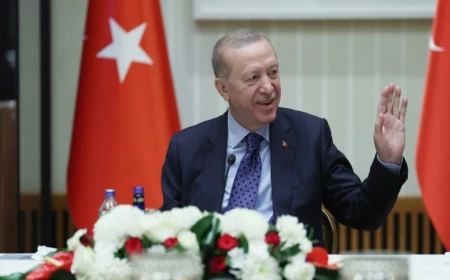
Following the resolution's approval, Turkish President Recep Tayyip Erdogan harshly criticized Ozdemir, infamously stating, "What kind of Turk is he? Their blood needs to go through a laboratory test."


"He is not Turkey's lawyer"
Offering a broader sociological perspective, Prof. Dr. Haci Halil Uslucan, Director of the Center for Turkish and Integration Studies (TAM) at the University of Essen, evaluated the backlash against the Green politician.
Uslucan emphasized that expecting politicians of immigrant origin to strictly serve their specific group's interests contradicts democratic principles. "A politician must do politics for the public. It is not right to do politics for a single group," he noted.
However, he acknowledged that years of facing racism have led Turkish and Muslim immigrants to expect more sensitivity from politicians seen as "one of us." Despite this, Uslucan firmly rejected the claim that Ozdemir builds his political capital on anti-Turkey sentiment. He clarified that Ozdemir's high recognition in Germany played a major role in his electoral success, and having Turkish roots does not obligate him to pursue pro-Turkey policies:
"Cem Ozdemir is a German politician and does politics for Germany. Not for Turkey. He is not Turkey's lawyer."
Uslucan added that labeling Ozdemir's criticisms of the Turkish government as "hostility toward Turkey" is a fundamentally flawed perspective.
Changing voter dynamics and foreign influence
Prof. Uslucan stressed that Turks settled in Germany must now focus their political orientation toward Germany, framing Ozdemir's potential premiership as proof that the child of a Turkish guest worker can rise to the top. He attributed the tendency of young Turkish Germans to follow Turkish politics over German politics to emotional bonds and a relatively low political consciousness regarding local affairs, exacerbated by the pressure to choose "either Germany or Turkey."
Meanwhile, allegations of Ankara interfering in German elections remain a contentious topic. German media recently claimed that former Turkish Minister Mustafa Varank, during a UID iftar dinner in Esslingen, implicitly urged Turkish voters to take a stance against Ozdemir.
UID Chairman Aslan firmly denied these allegations, stating that the organization has never directed voters toward or against specific parties and labeled the claims as a deliberate smear campaign based on preconceived stereotypes.
Despite the controversies, the political preferences of the 3.5 million-strong Turkish community in Germany are undergoing a notable shift. Uslucan noted that while the Social Democratic Party (SPD) and the Greens historically dominated the diaspora vote, the conservative Christian Democratic Union (CDU) is increasingly gaining traction among Turkish voters, with a small fraction even turning to the far-right Alternative for Germany (AfD). Furthermore, the Greens have reportedly lost some religious voters to the Left Party, largely due to ongoing debates over Gaza and Palestinian policies.
What's Your Reaction?
 Like
0
Like
0
 Dislike
0
Dislike
0
 Love
0
Love
0
 Funny
0
Funny
0
 Wow
0
Wow
0
 Sad
0
Sad
0
 Angry
0
Angry
0

Editor | Wise News Press — Delivering accurate, timely global news with integrity, insight, and editorial responsibility.



















Comments (0)