



Armenia’s shift toward the West raises questions over Russia ties
Two major summits in Yerevan signal a potential shift in Armenia’s foreign policy as the country balances its historic ties with Russia and growing relations with the West.


BY AHMET TAŞ | WISE NEWS PRESS
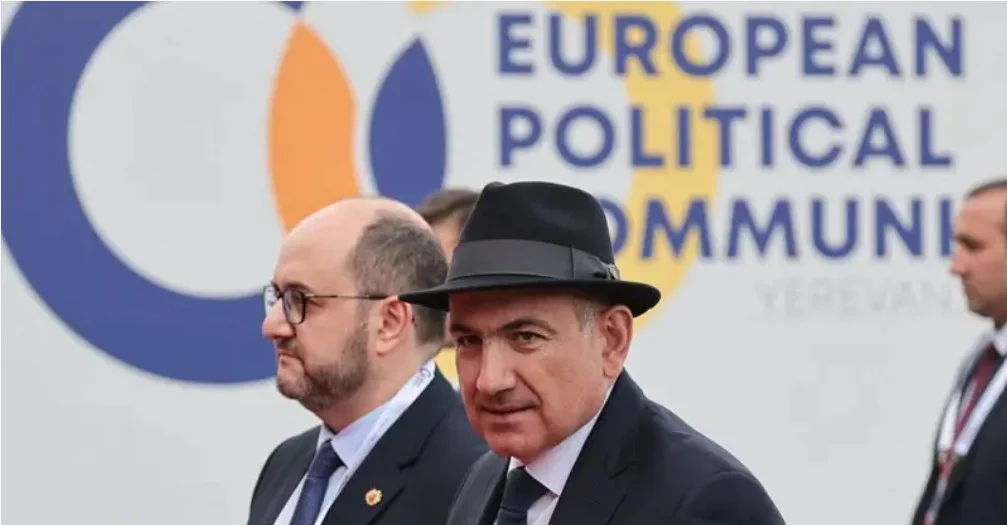
YEREVAN, Armenia — Armenia’s hosting of two high-level international summits in Yerevan is being seen as a sign of a potential shift in the country’s foreign policy, long shaped by its close ties with Russia.
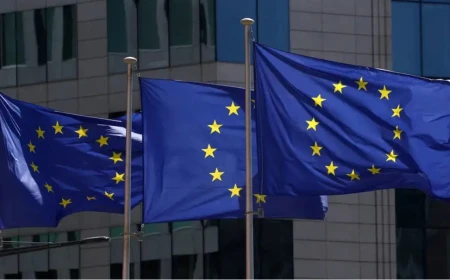
The European Political Community summit and the first-ever European Union–Armenia meeting have drawn dozens of Western leaders to the capital, highlighting a growing engagement with Europe and raising questions about the future of Armenia’s geopolitical alignment.
European leaders gather in Yerevan
More than 30 European leaders, along with the Prime Minister of Canada, attended the European Political Community summit in Yerevan. The event was followed by a separate EU–Armenia summit attended by European Commission President Ursula von der Leyen and European Council President António Costa.
The high-profile gatherings are considered symbolically significant for a country with a population of fewer than 3 million.
Strong ties with Russia remain
Despite its recent outreach to the West, Armenia continues to maintain strong political, economic, and security ties with Russia.
The country is a member of the Russian-led Eurasian Economic Union and hosts a Russian military base on its territory. It also relies heavily on Russian energy, benefiting from relatively low natural gas prices compared to European markets.


Turning point: 2023 Karabakh conflict
Analysts point to the 2023 conflict with Azerbaijan over Nagorno-Karabakh as a key turning point in Armenia’s foreign policy approach.
When Azerbaijan launched a military operation to regain control over the region, Russia—despite its peacekeeping presence—did not intervene. The conflict led to the displacement of more than 100,000 ethnic Armenians.
Armenian officials have since questioned the effectiveness of existing security arrangements, with some noting that European engagement has influenced public perception.


Growing relations with the EU
The European Union has increased its presence in Armenia in recent years, including deploying a civilian monitoring mission along the Armenia-Azerbaijan border and facilitating discussions on border recognition.
In March 2025, Armenia’s parliament approved legislation to initiate the process of seeking EU membership. Meanwhile, progress has been made in peace talks with Azerbaijan, including a landmark agreement signed in the United States.
Pressure from Moscow
Armenia’s closer ties with Europe have not gone unnoticed in Moscow.
Recent trade measures, including restrictions on certain Armenian imports, have been interpreted by analysts as signals of economic pressure. Experts also point to increased cyber activity and disinformation campaigns targeting Armenian institutions.
Risks ahead of elections
European officials have raised concerns about foreign interference, disinformation, and political polarization ahead of upcoming elections in Armenia.
The EU is expected to expand its support through a new civilian mission aimed at strengthening democratic institutions and countering hybrid threats.
Balancing between East and West
Despite its growing engagement with Europe, Armenia is unlikely to fully distance itself from Russia in the near term.
Given its dependence on Russian energy, security arrangements, and economic ties, analysts say the country will continue to pursue a careful balancing strategy between East and West.
What's Your Reaction?
 Like
0
Like
0
 Dislike
0
Dislike
0
 Love
0
Love
0
 Funny
0
Funny
0
 Wow
0
Wow
0
 Sad
0
Sad
0
 Angry
0
Angry
0

Editor | Wise News Press — Delivering accurate, timely global news with integrity, insight, and editorial responsibility.















Comments (0)