


German military on high alert over Iranian espionage threats
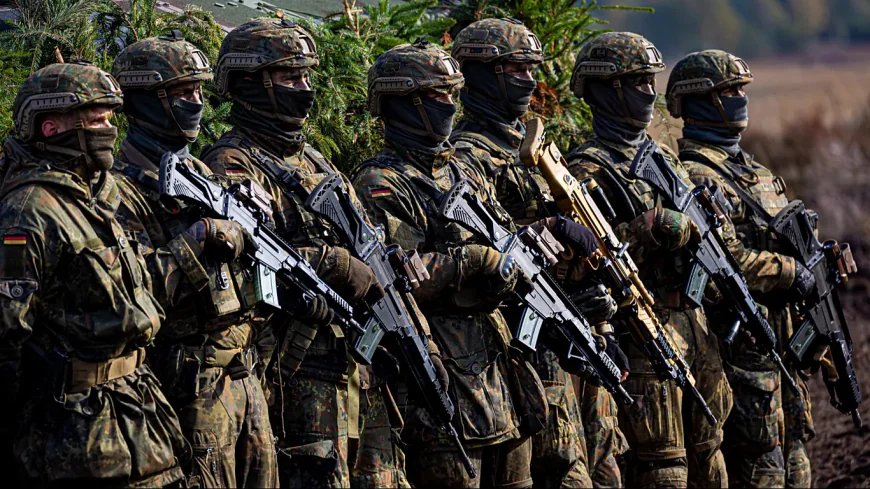
Germany has heightened security measures for its armed forces after Iran labeled the Bundeswehr a terrorist organization, raising fears of cyber espionage.


By Ahmet Taş | Wise News Press
BERLIN, GERMANY — Germany’s military intelligence agency has ramped up security protocols for the armed forces following Tehran’s designation of the Bundeswehr as a "terrorist organization," a move that officials warn has significantly elevated the risk of espionage and cyberattacks.
The escalation is viewed as a direct retaliation against the European Union's move to list the Iranian Revolutionary Guard Corps (IRGC) as a terrorist entity. According to security experts and lawmakers, this diplomatic rift has created a dangerous new threat environment for German military personnel and facilities.
Cyber risks and preventative measures
The Military Counter-Intelligence Service (MAD) continues to classify Iranian intelligence agencies as a "major actor" in espionage activities targeting the Bundeswehr. A spokesperson for MAD confirmed that beyond physical threats, the military must now account for "a serious risk posed by cyber espionage."
To counter these threats, the agency has prioritized preventative measures, including mandatory security briefings and consulting sessions designed to raise awareness among soldiers. The primary objective is to detect and disrupt intelligence-gathering attempts at the "earliest possible stage." Units considered particularly vulnerable to foreign infiltration are receiving targeted support to report suspicious activities swiftly.


Targeting dissidents and journalists
Iran has long been accused of conducting active espionage operations on German soil. The Federal Office for the Protection of the Constitution (BfV), Germany's domestic intelligence agency, describes Iranian services as "very active."


The targets often include politically active Iranian dissidents, journalists, and opposition figures living in Germany. Tactics range from surveillance and intimidation to smear campaigns and threats of violence. Authorities have warned that such surveillance can be a precursor to severe crimes, including kidnapping and assassination.
One of the most high-profile cases involves Jamshid Sharmahd, a German-Iranian activist who was abducted in 2020 and taken to Iran. Accused of involvement in a 2008 bombing—charges his family and rights groups dismiss as politically motivated—Sharmahd was sentenced to death. Iranian authorities recently claimed he died before execution, though these claims remain unverified independently.
Surveillance of Jewish institutions
The scope of Iran’s intelligence operations extends beyond military and political targets to include Israeli and Jewish institutions in Germany. Konstantin von Notz, Chairman of the Parliamentary Control Committee, noted that Iranian operations have intensified following the Hamas terror attacks on southern Israel on October 7, 2023.
In July of last year, a 53-year-old Danish national of Afghan descent was arrested in Berlin on suspicion of monitoring Jewish institutions and Israeli-linked locations on behalf of Iranian intelligence. Federal prosecutors believe the gathered information was intended for planning potential attacks.
Von Notz has called on the German government to take all necessary precautions to limit Iranian intelligence activities and ensure the safety of all residents, "especially our soldiers and Jewish institutions."
Source: EuroNews
What's Your Reaction?
 Like
0
Like
0
 Dislike
0
Dislike
0
 Love
0
Love
0
 Funny
0
Funny
0
 Wow
0
Wow
0
 Sad
0
Sad
0
 Angry
0
Angry
0

Editor | Wise News Press — Delivering accurate, timely global news with integrity, insight, and editorial responsibility.




















Comments (0)