



Welt: Germany weighs Turkish Yıldırımhan and Tayfun missiles
Welt reported that Germany is considering purchasing Türkiye’s Yıldırımhan and Tayfun Block-4 missile systems as part of wider European defense planning.


By Yusuf İnan | Wise News Press
ANKARA, TÜRKİYE — Germany is reportedly considering the purchase of Turkish-made Yıldırımhan and Tayfun Block-4 missile systems as Berlin seeks to address gaps in Europe’s long-range defense capabilities.
According to a report by German newspaper Welt, cited by DW Turkish, Berlin is working on alternative defense plans after the United States abandoned plans to deploy Tomahawk missiles in Germany. The report said Germany is evaluating both joint production with U.S. defense companies and the possible purchase of advanced missile systems from Türkiye. Welt, citing EU and NATO sources, reported that such an initiative could be publicly announced during the NATO summit expected to be held in Ankara in July.
Germany is looking for alternative missile capacity
Europe’s security architecture has been reshaped by Russia’s war against Ukraine, NATO’s increased focus on its eastern flank and changes in U.S. defense planning on the continent. Germany has emerged as one of the countries seeking to strengthen long-range strike and deterrence capabilities.
According to Welt, Washington’s decision not to proceed with the deployment of Tomahawk missiles in Germany pushed Berlin to examine new options. In this context, Germany is reportedly considering two parallel tracks: joint production with the U.S. defense industry and procurement of missile systems from NATO ally Türkiye.
The report said German and U.S. defense companies are discussing joint ventures to fill gaps in European defense capabilities. Such a model could help Germany diversify its weapons production while reducing Europe’s dependence on existing U.S. inventories.
Tomahawk production may begin in 2028
Under the plan cited by Welt, production of Tomahawk missiles in Germany could begin in 2028 under the best-case scenario. The model reportedly draws on the COMLOG joint venture between Bavaria-based MBDA and U.S. defense company RTX, formerly Raytheon, which is linked to Patriot missile production for NATO.


For Germany, this type of arrangement could serve several goals at once. Berlin wants to strengthen its long-range capabilities, expand domestic defense production and increase Europe’s ability to respond to future security threats.
For Washington, European production partnerships could reduce pressure on U.S. stockpiles. The United States could preserve more of its own inventory while still supporting allied deterrence through industrial cooperation.
The report suggested that U.S. officials view such models positively, as they could strengthen both European defense planning and the U.S. defense industry’s role in NATO procurement structures.


Yıldırımhan and Tayfun Block-4 on the agenda
The most striking part of the report was the claim that Germany is also considering Turkish missile systems, including Yıldırımhan and Tayfun Block-4.
According to Welt, consultations are ongoing over whether Germany and other European NATO allies could be protected through the procurement of Turkish-made long-range systems. The report described Yıldırımhan as an intercontinental ballistic missile and Tayfun Block-4 as a long-range hypersonic missile system.
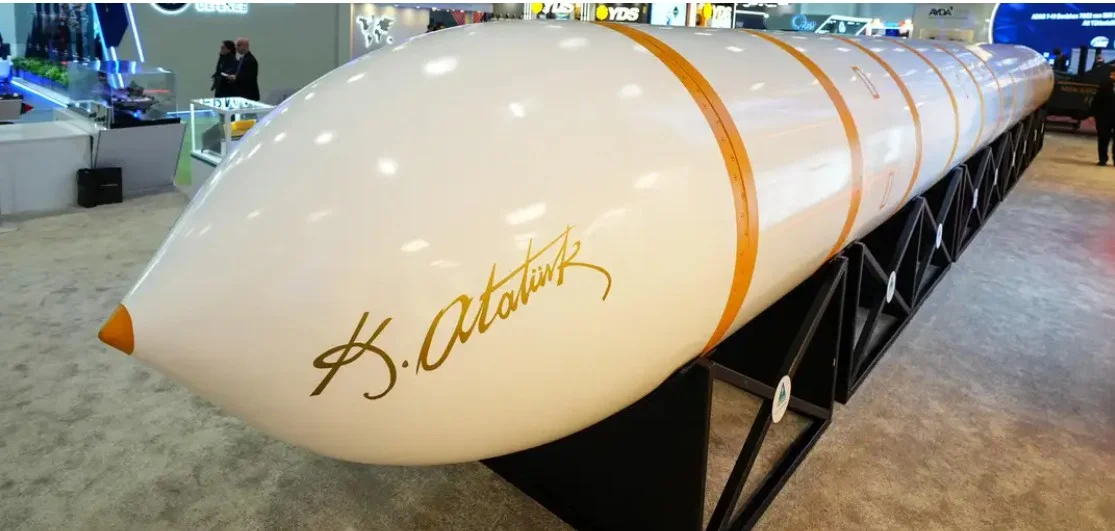
Türkiye recently presented the Yıldırımhan ballistic missile to the public. The system, reportedly developed by the research and development unit of Türkiye’s Ministry of National Defense, was displayed as a model at the SAHA 2026 International Defense and Aerospace Exhibition in Istanbul. Its range has reportedly been announced as reaching up to 6,000 kilometers, with field tests expected this year.
Tayfun Block-4, developed by Roketsan, was introduced last year at the International Defense Industry Fair in Istanbul. Although no official range has been announced, reports suggest the missile’s range could exceed 1,500 kilometers.
Deliveries may not begin before 2028
According to Welt, Berlin assumes that deliveries of Yıldırımhan, which is still under development, could begin no earlier than 2028. Deliveries of Tayfun Block-4 may take several more years.
This timeline suggests that Germany is not only looking for immediate procurement options but also planning for medium- and long-term deterrence capacity. Berlin’s defense planning appears focused not only on current ammunition and missile needs but also on the future structure of European deterrence.
For Türkiye, the inclusion of Yıldırımhan and Tayfun in Germany’s discussions could represent a significant development for the country’s defense industry. Ankara has increased its international visibility in recent years through drones, munitions, naval platforms, armored vehicles and missile projects.
If Turkish long-range missile systems enter the procurement agenda of a leading NATO member such as Germany, it could mark a new level of strategic recognition for Türkiye’s defense capabilities.
Greece and Cyprus may complicate financing
The report also highlighted possible financing challenges. According to Welt, Berlin is considering two options. The first would be a direct purchase agreement between Germany and Türkiye. The second would involve a smaller coalition within the European Union, led by Germany, to finance the purchase of Turkish missile systems.
However, the report said Greece and Cyprus, both EU members, are expected to oppose financing such purchases through the EU’s SAFE common fund. Because of this, Berlin is reportedly exploring more flexible financing mechanisms.
This issue shows that any potential missile purchase would not be only a military or technical matter. It would also carry diplomatic and political implications. Türkiye is a NATO ally, but defense procurement involving Ankara can still trigger debate inside the EU due to political tensions with Greece and Cyprus.
A German-led smaller coalition could provide a way around such objections, but Welt reported that Germany would likely have to bear a significant share of the cost in that scenario.
NATO summit may become a key moment
The report emphasized that no final decision has been made regarding the purchase of Turkish missile systems. However, diplomatic sources cited by Welt said a possible agreement could be announced during the NATO summit expected to take place in Ankara in July.
If such an announcement were made at the summit, it would carry broader political significance. It would signal not only a procurement decision but also a message about Türkiye’s role in NATO’s evolving defense architecture.
Ankara’s hosting of the summit could give additional visibility to any defense industry cooperation between Germany and Türkiye. It could also highlight the growing importance of missile defense, long-range strike capacity and industrial cooperation within the alliance.
Still, several issues remain unresolved. These include development timelines, delivery schedules, cost-sharing, NATO integration, operational doctrine, export permissions and the political response inside the European Union.
A strategic threshold for Turkish defense industry
Germany’s reported interest in Yıldırımhan and Tayfun Block-4, if confirmed, could become an important diplomatic and technological threshold for Türkiye’s defense industry.
Until now, Türkiye’s international defense profile has grown largely through unmanned aerial vehicles, armored vehicles, naval systems, precision munitions and air defense-related projects. The possibility that long-range Turkish missile systems could enter the procurement discussions of Germany, one of NATO’s most influential members, would move the conversation to a higher strategic level.
The development could also affect how Europe views Türkiye’s role in defense security. Türkiye is already important within NATO because of its geography, military capacity and position between Europe, the Black Sea, the Middle East and the eastern Mediterranean. Its expanding defense industry could make Ankara an even more significant actor in future European security planning.
For now, the claims reported by Welt have not turned into a confirmed agreement. But the fact that Berlin is reportedly considering the Turkish option is itself noteworthy. It suggests that Europe’s search for new deterrence capabilities may increasingly include Türkiye not only as a geopolitical ally, but also as a defense technology supplier.
Statements from Ankara, Berlin and NATO circles in the coming weeks may show whether the reported discussions become a concrete procurement process.
What's Your Reaction?
 Like
0
Like
0
 Dislike
0
Dislike
0
 Love
0
Love
0
 Funny
0
Funny
0
 Wow
0
Wow
0
 Sad
0
Sad
0
 Angry
0
Angry
0

Editor | Wise News Press — Delivering accurate, timely global news with integrity, insight, and editorial responsibility.




















Comments (0)