



Germany replaces 'Citizen's Income' with stricter welfare system
The German parliament has passed a bill to replace the current welfare system with 'Basic Security Money,' introducing stricter sanctions to push unemployed individuals into the workforce.


By Ahmet Taş | Wise News Press
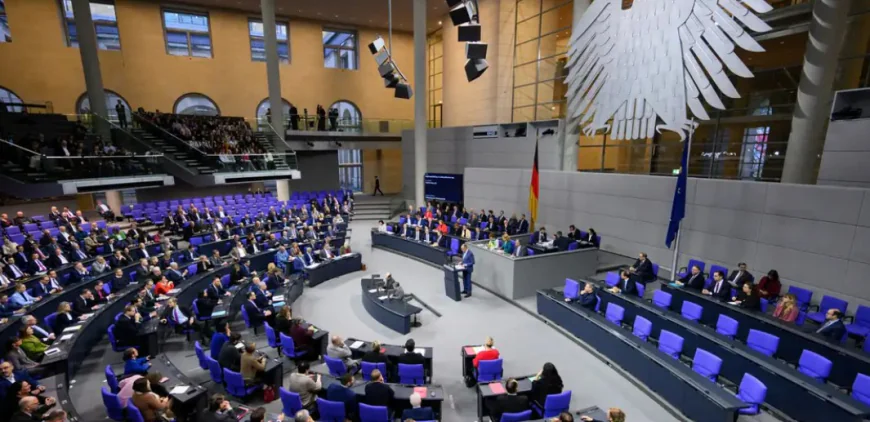
BERLIN, GERMANY — Following months of intense political debate, the German Bundestag has passed a controversial bill that will overhaul the country's social welfare system.
According to reports from DW Türkçe, the legislation, which replaces the existing "Citizen's Income" (Bürgergeld) with a new system called "Basic Security Money" (Temel Güvence Parası), was approved by a vote of 321 to 268 with two abstentions. The bill, heavily supported by the coalition partners Christian Union (CDU/CSU) and the Social Democratic Party (SPD), introduces much stricter rules for approximately 5.5 million welfare recipients and is set to take effect on July 1, 2026.
Stricter sanctions for the unemployed
The primary objective of the new system is to increase pressure on individuals receiving social assistance to actively seek and secure employment. The legislation introduces a series of graduated sanctions targeting those who are capable of working but fail to search for jobs while continuing to receive benefits.
Under the new regulations, the sanctions will operate as follows:
-
If an unemployed person refuses to participate in a course designed to help them find a job, their Basic Security Money will be cut by 30 percent for a duration of three months.


-
Financial penalties will also be applied to individuals who miss two appointments at the Jobcenter, Germany's employment agency.
-
If this non-compliance becomes a recurring issue, a complete suspension of social assistance will be considered.
-
However, individuals with special circumstances or health issues that prevent them from working will be entirely exempt from these sanctions.


Despite the evident tightening of rules, SPD politicians argue that the changes represent a reform rather than a complete overhaul of the system, insisting that the sanctions will only affect a very small number of people.
Economic rationale and savings targets
The German government cites the current economic climate and budgetary pressures as the main justifications for these significant changes to the welfare framework. The bill states that a robust social state requires the "participation of all people of working age" and emphasizes that assistance should be strictly directed to those in genuine need.
By implementing these changes, the government aims to significantly alleviate the financial burden on the social welfare budget. Steffen Bilger, Secretary General of the CDU/CSU parliamentary group, stated earlier this week that 1.7 million welfare recipients are capable of working. He suggested that integrating more than 100,000 of them into the workforce is a realistic target. The abolition of the Citizen's Income was a key campaign promise of the CDU/CSU and is expected to save billions of euros.
Currently, around 5.2 million people in Germany receive the Citizen's Income, which averages 563 euros per month and includes crucial support for rent and heating expenses. Approximately 1.4 million of these recipients are children under the age of 15, who are not of working age. The German government currently spends over 50 billion euros annually on these welfare programs.
What's Your Reaction?
 Like
0
Like
0
 Dislike
0
Dislike
0
 Love
0
Love
0
 Funny
0
Funny
0
 Wow
0
Wow
0
 Sad
0
Sad
0
 Angry
0
Angry
0

Editor | Wise News Press — Delivering accurate, timely global news with integrity, insight, and editorial responsibility.






















Comments (0)