



Potential AKP-DEM alliance: A new political shift in Türkiye?
Ankara is abuzz with discussions of a potential alliance between the AKP and DEM Party as parliamentary arithmetic becomes crucial for constitutional changes.


By Ahmet Taş | Wise News Press
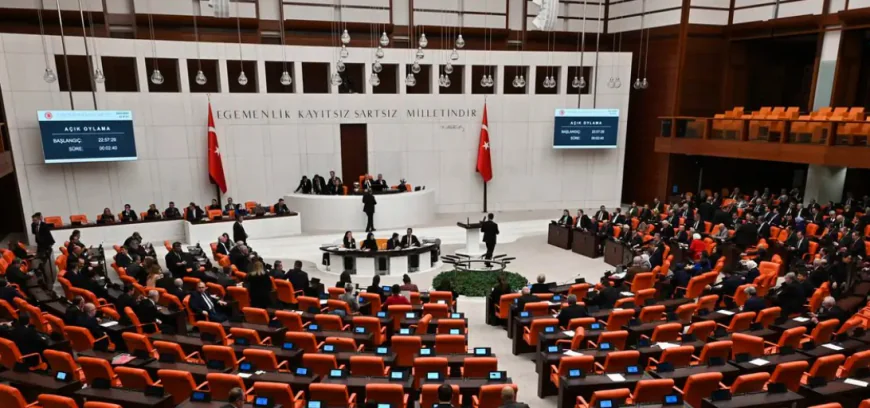
ANKARA, TÜRKİYE — Although general elections are two years away, the potential for a new political alliance between the ruling Justice and Development Party (AKP) and the Peoples' Equality and Democracy Party (DEM Party) has moved to the forefront of the Turkish political agenda.
The debate intensified following the approval of a joint commission report on February 18, leading to high-level visits by Parliament Speaker Numan Kurtulmuş to various political groups. While the government explores legal regulations and constitutional changes, the prospect of a new political equation was bolstered by AKP Deputy Chairman Ahmet Büyükgümüş, who left the door open for cooperation by stating, "We will walk with whoever strengthens us".
The Evolution of AKP’s Coalition Strategy
Historical analysis shows that the AKP has maintained its power since 2002 through a series of "conjectural and flexible coalitions". Party officials point to several distinct phases of cooperation with various social and political groups:
-
2002–2007: An initial coalition with liberal circles.
-
2005–2010: Increased engagement with Kurdish voters following President Erdoğan's 2005 Diyarbakır speech, reflected in significant electoral gains in the region during 2007.


-
2010–2013: A period marked by close ties with the Fethullah Gülen movement, which solidified during the 2010 referendum but collapsed following the 2013 Gezi Park protests and the December 17-25 process.
-
2016–Present: A shift toward Turkish nationalists, forming the "People's Alliance" with the MHP following the July 15 coup attempt.
DEM Party’s Departure from the Opposition Block
Political scientist İbrahim Uslu suggests that the DEM Party is entering a "new and critical period" characterized by a cooling of relations with the main opposition CHP. Following the CHP's rejection of a visit to İmralı, Uslu observes a significant emotional and political rupture between the two parties. He predicts that the DEM Party will move toward an independent stance in future elections, likely avoiding any open or secret cooperation with the CHP.


Furthermore, Uslu anticipates a shift in voter behavior, noting that while DEM Party supporters backed the opposition candidate almost unanimously in the previous election, a segment of the base may now favor Erdoğan in a potential second round.
Parliamentary Arithmetic and the Constitution
The strategic importance of the DEM Party is primarily driven by the current distribution of seats in the Grand National Assembly. The ruling AKP and its ally MHP currently hold 322 seats. However, specific thresholds are required for constitutional action:
-
360 Seats: Required to take a constitutional change to a referendum or to call for early elections.
-
400 Seats: Required to approve a constitutional amendment directly without a referendum.
The DEM Party's 56 seats are viewed as the "key" to reaching these thresholds. This arithmetic is particularly vital for President Erdoğan, whose current term ends in 2028. For him to run again, the constitution must be amended or Parliament must decide on an early election—both of which require at least 360 votes. While DEM Party officials maintain that their current focus is on legal steps related to the peace process rather than election support, the shifting political landscape makes their role increasingly central to the government's future plans.
What's Your Reaction?
 Like
0
Like
0
 Dislike
0
Dislike
0
 Love
0
Love
0
 Funny
0
Funny
0
 Wow
0
Wow
0
 Sad
0
Sad
0
 Angry
0
Angry
0

Editor | Wise News Press — Delivering accurate, timely global news with integrity, insight, and editorial responsibility.





















Comments (0)