



Putin describes 1915 events as "crime against humanity"
Russian President Vladimir Putin sparked diplomatic tension by labeling the 1915 events as a "crime against humanity," challenging Turkey's historical sensitivities.


By Ahmet Taş | Wise News Press
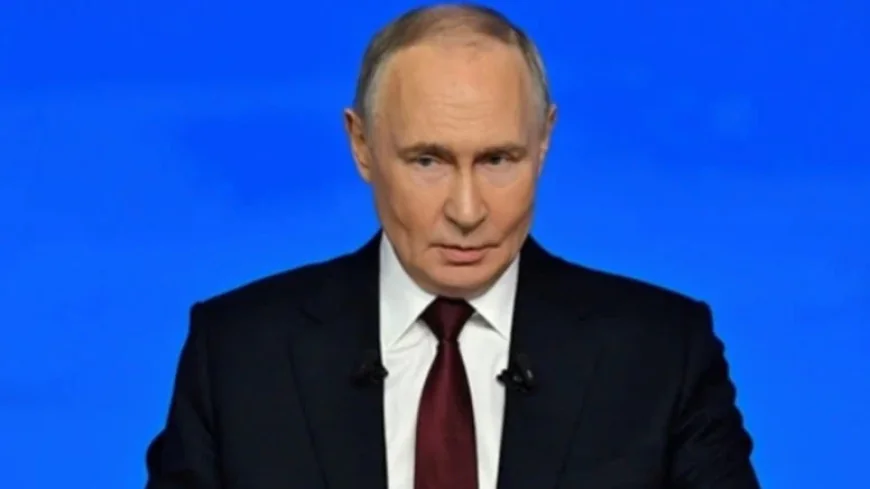
MOSCOW, RUSSIA — Russian President Vladimir Putin sparked diplomatic friction by labeling the 1915 events as "a crime against humanity and civilization" in a formal message released on the Kremlin's official website.
The statement, sent to commemoration events regarding the 1915 period, represents a significant challenge to Turkey’s diplomatic sensitivities and historical thesis. While Ankara and Moscow have recently deepened strategic cooperation in energy and defense, this provocative rhetoric highlights a persistent ideological divide regarding historical events in the late Ottoman Empire.
Russia’s historical stance and Duma decisions
In his message, President Putin described the historical process as a destructive result of religious enmity, nationalism, and xenophobia. He maintained that Russia's position on this issue has remained unchanged since 1915, citing joint declarations from that era and the 1995 decisions made by the Russian State Duma. By referring to these historical legal frameworks, the Russian leader reinforced Moscow’s long-standing support for the Armenian narrative, effectively disregarding Ankara’s calls for a joint historical commission.
"The 1915 events are a crime against humanity and civilization, and the international community must unite to ensure such barbarities never happen again."
Provocative rhetoric and nationalist sentiment
Putin further claimed that this "tragedy" remains an unhealed wound for generations of the Armenian people. He continued his provocative rhetoric by expressing support for the struggle to protect Armenian national identity and freedom. According to reports from the
Impact on Turkey-Russia strategic ties
The timing of this message has raised questions about the future of the strategic partnership between Turkey and Russia. Despite the "Dost [Brotherly] Armenian people" well-wishes included at the end of Putin’s statement, the use of the term "genocide" in official Russian communications is expected to draw a formal response from the Turkish Ministry of Foreign Affairs.
Political analysts suggest that while economic ties—such as the Akkuyu Nuclear Power Plant and natural gas trade—are likely to remain stable, such ideological clashes could complicate diplomatic mediation efforts in the South Caucasus. The message concluded with Putin wishing "prosperity and peace to the brotherly Armenian people," a gesture that further solidifies Moscow's role as a primary patron of Yerevan.
What's Your Reaction?
 Like
0
 Dislike
0
 Love
0
 Funny
0
 Wow
0
 Sad
0
 Angry
0

Editor | Wise News Press — Delivering accurate, timely global news with integrity, insight, and editorial responsibility.













Comments (0)