



Prof. Pampal on Sındırgı Earthquakes: 'Not Long-Term, Real Danger is Crete-Rhodes Line'
Following a M4.5 quake in Sındırgı, Prof. Süleyman Pampal suggests the swarm is 'magmatic activity-related' and temporary, but warns of a M7-M8 risk on the Crete-Rhodes fault line.


WISE NEWS PRESS / BALIKESIR, TURKEY — Nov. 10, 2025
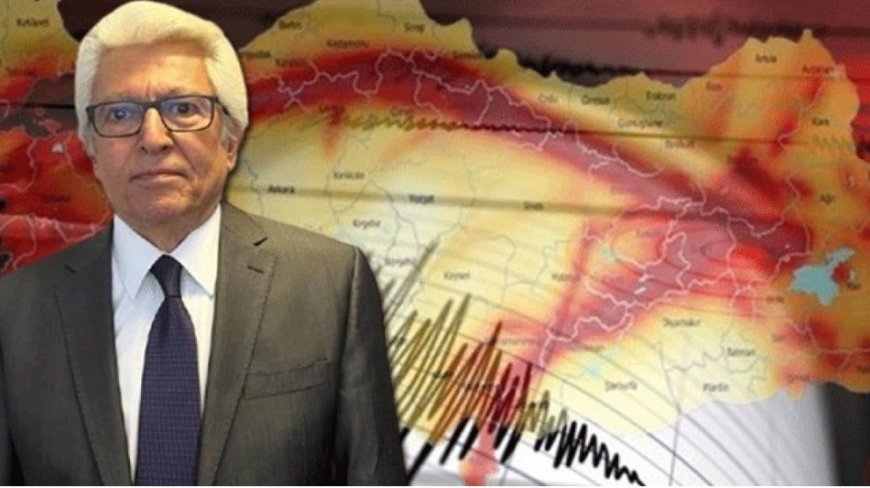
Sındırgı district of Balıkesir was shaken by a M4.5 earthquake recorded last night at 1:06 AM, followed by consecutive aftershocks. Geoscientist Prof. Dr. Süleyman Pampal suggested that the activity in the region is likely "magmatic activity-related" and will not last long, but stated the main risk lies in the Crete-Rhodes line, which has a potential for M7-M8 earthquakes.
The series of earthquakes in Sındırgı brought the region's seismic activity back into focus. Numerous aftershocks followed the main tremor of M4.5 recorded by AFAD.
Speaking on CNN TÜRK, geoscientist Prof. Dr. Süleyman Pampal pointed to the probable cause of the tremors in the region: "The activity in the region might be magmatic activity-related. We are going through an abnormal period. Earthquakes of M4-M5 are happening every day; my estimate is that the total number of tremors has exceeded 15,000. These tremors are linked to the deep sinking of the African plate. The rising of magma is increasing seismic activity in the Aegean region."
Pampal stated that he does not expect the activity in Sındırgı to turn into a long-term earthquake swarm.


M7-M8 Danger Signalled on Crete-Rhodes Line
Prof. Dr. Pampal issued important warnings regarding the fault lines that require primary attention and the potential risk of a major earthquake:
-
Crete-Rhodes Line: Pampal stated that there is a high probability of an earthquake with a magnitude of M7 to M8 occurring along this fault line in the Mediterranean.


-
Unbroken Fault Segments: He also emphasized that unbroken fault segments extending from Bandırma to Sakarya, and from Konya to Karaman, pose a potential risk. The expert added that earthquakes of M6 and above would not be a surprise if these faults were to rupture.
Prof. Dr. Pampal stressed that urgent studies on detailed geology, geophysics, and geodesy are needed to understand the subsurface and surface deformations caused by the high number of tremors.
What's Your Reaction?
 Like
0
Like
0
 Dislike
0
Dislike
0
 Love
0
Love
0
 Funny
0
Funny
0
 Wow
0
Wow
0
 Sad
0
Sad
0
 Angry
0
Angry
0

Editor | Wise News Press — Delivering accurate, timely global news with integrity, insight, and editorial responsibility.


















Comments (0)