



Hormuz crisis leaves 20,000 seafarers stranded at sea
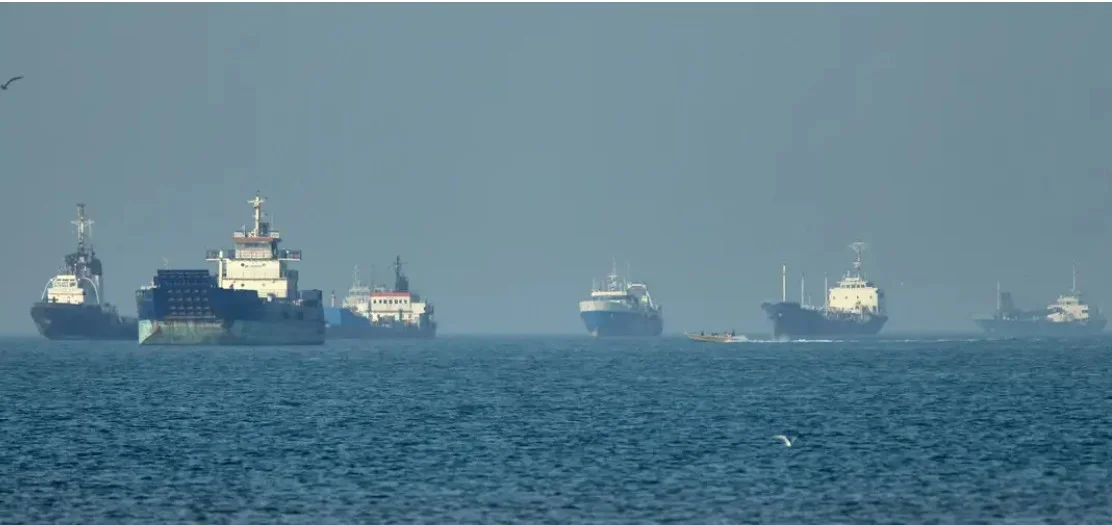
About 20,000 seafarers and 1,500 ships remain stranded around the Strait of Hormuz despite a ceasefire and renewed U.S.-Iran talks.


By Ahmet Taş | Wise News Press
PANAMA CITY, PANAMA — Around 20,000 seafarers remain stranded in and around the Persian Gulf as the Strait of Hormuz crisis continues despite a ceasefire between the United States and Iran and renewed diplomatic contacts.
According to DW Turkish, the International Maritime Organization said about 1,500 ships are still waiting near the Strait of Hormuz, one of the world’s most important energy shipping routes. The prolonged disruption has raised concerns not only over global oil and gas supplies, but also over the humanitarian conditions facing crews trapped at sea.
IMO says thousands remain trapped
International Maritime Organization Secretary-General Arsenio Dominguez said at an event in Panama that roughly 20,000 crew members and around 1,500 vessels remain stranded.
Dominguez described the seafarers as innocent people doing their daily work for the benefit of other countries, stressing that they are trapped by circumstances beyond their control.
The statement highlighted the human cost of the crisis. While much of the international attention has focused on oil prices, military threats and diplomatic negotiations, maritime workers have been forced to remain on board ships for extended periods with limited certainty about when they can move.
Food, water and mental pressure
Reports from last month indicated that some ships had begun facing shortages of food and drinking water. On several vessels, supplies were reportedly being rationed as crews waited for safe passage through the strait.


The uncertainty has also created psychological pressure. Many crew members have remained on board beyond their planned duty periods, unable to disembark or return home.
Maritime experts warn that long delays at sea can lead to exhaustion, stress and health risks, particularly when crews are operating in a tense security environment. The longer the crisis continues, the harder it becomes to maintain normal working and living conditions aboard the ships.
Why the Strait of Hormuz matters
The Strait of Hormuz links the Persian Gulf with the Gulf of Oman and the Indian Ocean. It is one of the most strategically important maritime chokepoints in the world.


Under normal conditions, about one-fifth of globally transported oil and natural gas passes through the strait. Tankers carrying crude oil, liquefied natural gas and other energy products use the route to reach markets in Asia, Europe and beyond.
Because of that importance, any disruption in Hormuz quickly affects global energy markets. Even limited restrictions can trigger sharp movements in oil and gas prices, increase insurance costs and create uncertainty across supply chains.
Iran halted traffic after attacks
Iran stopped traffic through the Strait of Hormuz in response to U.S. and Israeli attacks on February 28.
Before the conflict, commercial traffic through the strait had continued normally. After the closure, the region became one of the central flashpoints in the confrontation between Tehran and Washington.
Iran has warned that any outside military attempt to reopen the strait would be viewed as a violation of the ceasefire. That position has made the security situation more delicate, especially as many vessels remain trapped in the area.
U.S. operation plan paused
U.S. President Donald Trump announced that Washington would launch a new operation to reopen the Strait of Hormuz. However, the administration stepped back from that plan the following day.
Tehran had said it would consider such a move a breach of the ceasefire, increasing concerns that a military operation could restart the conflict.
In recent days, U.S. officials have said talks with Iran are making progress. Those statements helped ease some pressure in energy markets, but they have not yet resolved the shipping crisis.
Limited LNG traffic resumes
Maritime tracking company Kpler reported that five liquefied natural gas vessels crossed the Strait of Hormuz in the past two weeks.
That marks an increase compared with the period between March 1 and April 21, when only one LNG crossing was recorded.
Still, the rise in LNG movement remains limited. With around 1,500 ships reportedly waiting in the region, maritime traffic has not returned to normal. Analysts say a small number of crossings may signal cautious progress, but it does not mean the crisis has ended.
Oil prices remain sensitive
The closure of the Strait of Hormuz has had a major effect on oil prices.
Brent crude was trading near $70 per barrel when the conflict began on February 28. After Hormuz traffic was halted, prices climbed as high as $120 per barrel last month.
Following more positive signals from Washington about negotiations, Brent crude fell to around $98 per barrel. However, market analysts warn that prices could rise again if the strait remains blocked or if the ceasefire collapses.
Energy markets are now closely watching whether shipping flows increase in the coming days. A sustained reopening of Hormuz would likely calm prices, while renewed tension could deepen volatility.
Humanitarian concerns grow
The crisis has become a growing humanitarian issue for maritime workers.
Seafarers stranded on vessels face uncertainty over supplies, safety and relief schedules. If medical emergencies occur, evacuation could be complicated by security restrictions and regional tensions.
International maritime groups are expected to increase calls for safe passage, crew relief and reliable supply access. The immediate priority is to ensure that ships can move safely and that crews are not left indefinitely in dangerous and stressful conditions.
Diplomacy will shape the next phase
The future of the Hormuz crisis now depends largely on U.S.-Iran diplomacy and whether the ceasefire can be maintained.
Positive messages from Washington have helped reduce energy market pressure, but the continued presence of thousands of stranded seafarers and hundreds of vessels shows that the situation remains unresolved.
The next days will be critical. If negotiations produce a practical arrangement for maritime passage, the backlog of ships could begin to ease. If talks stall or military threats return, the crisis may deepen again.
For now, the Strait of Hormuz remains both a geopolitical flashpoint and a humanitarian concern, with thousands of seafarers waiting for a safe route out of the Gulf.
What's Your Reaction?
 Like
0
Like
0
 Dislike
0
Dislike
0
 Love
0
Love
0
 Funny
0
Funny
0
 Wow
0
Wow
0
 Sad
0
Sad
0
 Angry
0
Angry
0

Editor | Wise News Press — Delivering accurate, timely global news with integrity, insight, and editorial responsibility.




















Comments (0)