



The Anatomy of Geopolitical Suicide: Putin’s Final Jubilee & the Turkey Factor
An in-depth geopolitical analysis of Russia’s strategic miscalculations in Ukraine, the erosion of its influence in the Middle East, and Turkey’s emerging role as a global power broker.



Yusuf İnan
Journalist | Opinion Writer
Wise News Press – Izmir, Türkiye
The Anatomy of Geopolitical Suicide: Putin’s Final Jubilee and the Turkey Factor
ANALYSIS / STRATEGY
The world is witnessing one of the most profound geopolitical ruptures of modern history. Moscow, once driven by ambitions of anchoring itself in the warm waters of the Middle East, now finds itself spiraling into a strategic vortex of its own making. Having lost strategic influence and patronage power in Libya and Syria, Russia believed that the invasion of Ukraine would compensate for its regional setbacks. Instead, it appears that in the muddy fields of Kyiv, Moscow is burying not only its tanks but also its imperial ambitions.
The Crystal Has Cracked: Russia’s Geographic Paradox
In its pursuit of controlling roughly 10 percent of Ukrainian territory, the Kremlin has permanently pushed the remaining 90 percent of Ukraine into NATO’s embrace. This stands as one of the worst “win–lose” scenarios in modern geopolitical history. By triggering this outcome, Moscow has effectively handed Ukraine’s strategic rare-earth resources to the United States and its allies—while losing not only a neighboring state, but the loyalty and identity of an entire generation.
What emerged in Ukraine is no longer merely a national awakening; it is the strategic spirit of NATO itself. As a result, NATO has become Russia’s most formidable neighbor.
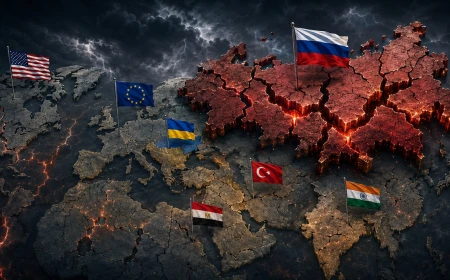
More alarmingly for the Kremlin, the geopolitical “crystal” of the Russian Federation has fractured. Former Soviet republics, once bound to Moscow by fear, are now turning westward with hope. Central Asia is no longer oriented toward Russia. People are fleeing isolation and stagnation, gravitating instead toward the political and economic promise represented by Washington and Brussels.


Europe’s Awakening and Moscow’s Isolation Trap
The early-2000s image of a charismatic and pragmatic Vladimir Putin has given way to deep strategic alarm across Europe. In an attempt to mask these losses, Putin has resorted to nuclear intimidation and threats of chaos. Yet this strategy has backfired dramatically.
Europe is experiencing its most significant military awakening in decades. While Russia loses access to one of the world’s largest markets, it has inadvertently unified and militarized a continent that is rediscovering its will to defend itself.
At this stage, the China factor becomes decisive. Beijing cannot indefinitely support a Moscow whose actions disrupt global trade and trigger economic instability. China views the entire world as its marketplace—and it is far too rational to sacrifice its global commercial empire for Russia’s isolationist ambitions.


Turkey: The Global “Master Key” of the New Century
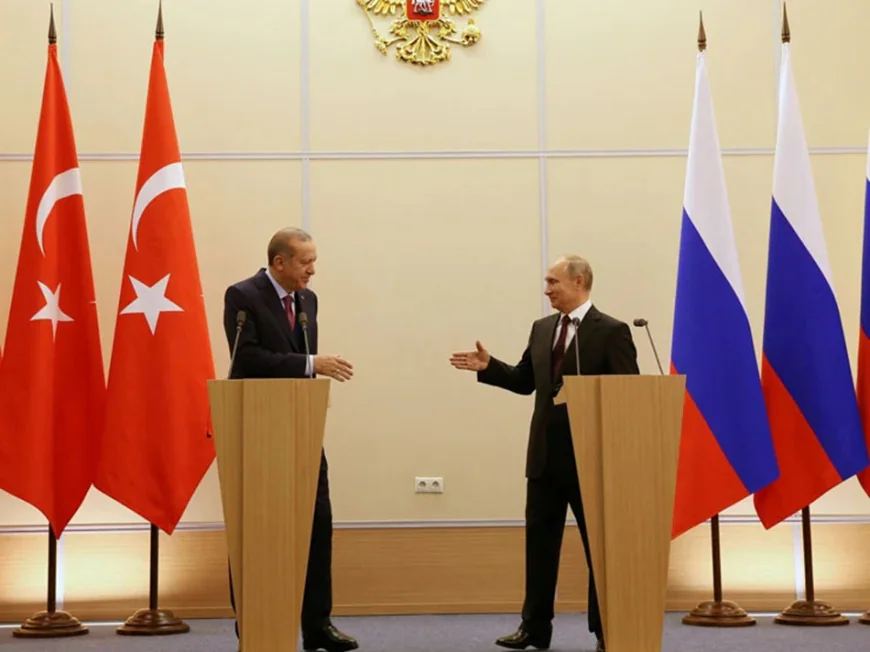
And here lies Moscow’s most critical miscalculation: the risk of losing Turkey.
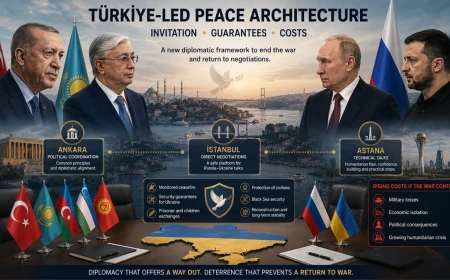
The provocative presence of Russian drones near Turkish airspace signals not strength, but strategic desperation. By choosing restraint and acting in coordination with its NATO allies, Ankara has reinforced its role as a stabilizing force in the region. Turkey should no longer be seen as a mere geopolitical “lock”; it is a global master key—capable of opening multiple strategic doors simultaneously.
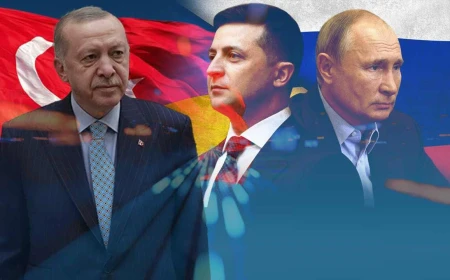
The coming century will be shaped by Turkey. Any capital that fails to engage Ankara meaningfully will struggle to emerge as a winner in this era. Europe must recognize that a strong Turkey is one of the greatest guarantees of its own security. Moscow, meanwhile, must understand that maintaining a strategic partnership with Turkey may be its final exit before a deeper collapse.
Toward a Failed Jubilee
Vladimir Putin was long regarded as a master of diplomacy and intelligence. History, however, is filled with leaders who failed to recognize when to stop at the peak. In striving to ascend further, Putin now risks a dramatic fall.
If this trajectory continues, his five-decade political career will be remembered not as a triumph, but as a “failed jubilee” in world history.
World leaders—and the Kremlin above all—must grasp one essential truth: once a crystal cracks, it cannot be restored through war. It requires reason, restraint, and strategic recalibration. Russia now faces a defining choice: build a rational bridge with Turkey and the West, or retreat into a silent geopolitical desert, fading into the depths of history.
Yusuf İnan
Yusuf İnan is a journalist and writer.
He serves as Editor-in-Chief of WiseNewsPress.com, SehitlerOlmez.com, and YerelGundem.com.
He specializes in strategic and political analysis on Turkish and global affairs.
What's Your Reaction?
 Like
0
Like
0
 Dislike
0
Dislike
0
 Love
0
Love
0
 Funny
0
Funny
0
 Wow
0
Wow
0
 Sad
0
Sad
0
 Angry
0
Angry
0

Editor | Wise News Press — Delivering accurate, timely global news with integrity, insight, and editorial responsibility.











Comments (0)