



Europe’s defense warning: Is it repeating Ukraine’s pre-2014 mistakes?
Three economists argue Europe risks repeating Ukraine’s pre-2014 security mistakes by underestimating Russia, relying on diplomacy and delaying defense preparation.


By Ahmet Taş | Wise News Press
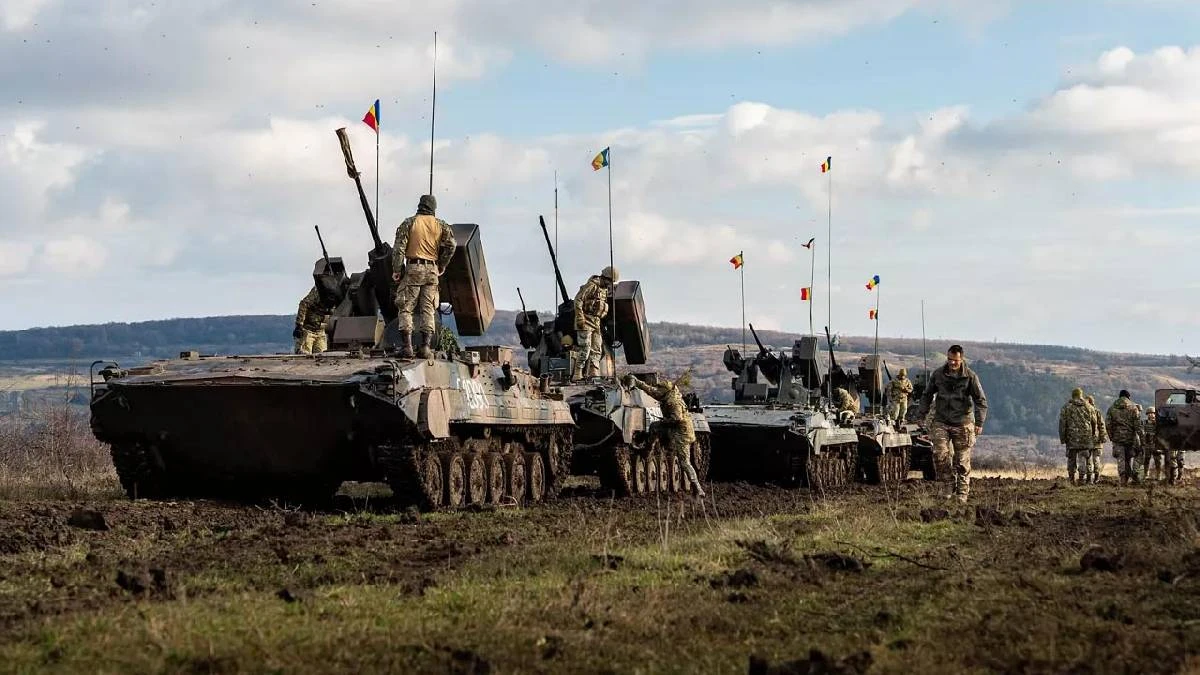
EUROPE — Europe risks repeating some of the strategic mistakes Ukraine made before 2014 by underestimating military threats, relying excessively on diplomacy and delaying costly defense preparations, three economists argue in a new assessment of the continent’s security outlook.
Tatyana Deryugina of the University of Illinois Urbana-Champaign, Yuriy Gorodnichenko of the University of California, Berkeley, and Ilona Sologoub, editor of VoxUkraine, compare Europe’s current security debate with Ukraine’s position before Russia’s seizure of Crimea and the outbreak of war in Donbas.
Their central argument is not that Europe and pre-2014 Ukraine are identical. Europe is wealthier, institutionally stronger and largely protected by NATO. Rather, they warn that some of the assumptions shaping European policy resemble ideas once common in Ukraine: that a major war is unlikely, economic ties reduce the danger of conflict and diplomacy can substitute for credible military deterrence.
Ukraine entered 2014 with badly weakened defenses
The authors point to the condition of Ukraine’s armed forces before Russia’s intervention in 2014.
After years of neglect, disarmament and limited defense investment, the military had lost much of its ability to respond rapidly to a major external threat. Ukraine had also surrendered the nuclear arsenal it inherited from the Soviet Union after receiving security assurances under the 1994 Budapest Memorandum.


In the political and intellectual climate that followed the Cold War, large-scale war in Europe was widely regarded as increasingly improbable. Economic integration, democratization and expanding international institutions appeared to offer a more stable security order.
According to the authors, that confidence contributed to a dangerous level of complacency.
They also argue that Russia developed political and informational influence inside Ukraine, promoted Kremlin-friendly narratives and built relationships with political actors. Under former President Viktor Yanukovych, they say, the vulnerability of state institutions became particularly serious.


Warnings nevertheless existed. Russia’s 2008 war with Georgia demonstrated Moscow’s willingness to use military force in the former Soviet space, while Vladimir Putin repeatedly questioned aspects of Ukrainian sovereignty and identity.
Yet the expectation that Russia would stop short of a wider confrontation remained influential.
Crimea exposed the cost of being unprepared
Russia’s seizure and annexation of Crimea in 2014 marked the collapse of many of those assumptions.
Ukraine had little capacity to mount an effective military response in Crimea. Soon afterward, fighting spread to parts of Donbas.
Kyiv began rebuilding its armed forces, but the authors argue that Ukrainian society still struggled for years to reach a common understanding of the scale of the threat.
For many, the conflict appeared geographically limited. There was hope that Russia had already achieved its main objectives and that political compromise could prevent a broader war.
The election of Volodymyr Zelenskyy in 2019 was partly shaped by public expectations that renewed negotiations might help end the fighting in Donbas.
That hope was shattered on February 24, 2022, when Russia launched its full-scale invasion, attacked multiple regions and moved toward Kyiv.
A war that many had treated as geographically contained became an existential conflict for the Ukrainian state.
Authors see uncomfortable parallels in Europe
The three economists argue that parts of Europe display similar patterns of thinking.
After decades of relative peace, many European governments reduced military capabilities and treated defense as a lower political priority.
For years, NATO’s target of spending 2% of gross domestic product on defense was missed by a number of European allies. Italy, Spain, Belgium and others spent substantially below that threshold for long periods.
Germany became one of the most frequently cited examples of post-Cold War military decline. The Bundeswehr faced persistent problems with equipment availability, ammunition stocks and operational readiness.
The authors argue that the reasoning behind these choices resembles the mindset that influenced Ukraine before 2014: NATO exists, nuclear deterrence exists, the United States provides security and economic interdependence makes a major European war irrational.
Russia’s full-scale invasion of Ukraine challenged those assumptions.
Hybrid threats complicate traditional deterrence
The concern is not limited to the possibility of conventional invasion.
European governments and NATO increasingly face cyberattacks, sabotage allegations, electronic interference, disinformation, political influence operations and incidents involving drones and critical infrastructure.
The authors describe these as especially dangerous because they can remain below the threshold of open warfare.
Such actions may test how quickly governments respond, how much disruption societies tolerate and whether political divisions prevent a coordinated reaction.
Nuclear weapons and conventional deterrence may discourage a major military attack, but they do not automatically stop cyber operations, covert sabotage or pressure against infrastructure.
That creates a gray zone in which states must decide how much hostile activity constitutes an unacceptable escalation.
The essay argues that repeated hesitation can itself encourage further testing.
Defense spending has become a political choice
European governments have increased defense investment substantially since Russia’s 2022 invasion, but the debate over the social and economic cost of rearmament remains intense.
Higher military budgets compete with spending on pensions, health care, infrastructure and social programs.
The authors argue that this is precisely why defense readiness is difficult: meaningful preparation requires governments and voters to accept costs before the worst-case scenario occurs.
Public resistance remains significant in parts of Europe.
In countries including Italy and Spain, higher military spending is politically contested. In France and Germany, some political groups question whether warnings about Russian threats are exaggerated. Political movements calling for renewed accommodation with Moscow also retain support in several countries.
The debate therefore extends beyond weapons procurement.
It concerns whether European societies believe a sustained security threat exists and whether they are willing to change budgetary priorities accordingly.
Europe is still in a stronger position than Ukraine was
The comparison has important limits.
Most European states are NATO members and benefit from Article 5 collective defense commitments. Europe also possesses far greater economic resources, larger industrial capacity and stronger institutions than Ukraine had before 2014.
European governments have already begun reversing years of military decline.
Russia’s war has driven increased defense budgets, expanded ammunition production, reinforced NATO’s eastern flank and accelerated investment in air defense, drones, cyber capabilities and military mobility.
Europe has also gained something Ukraine lacked before 2014: years of direct observation of a modern high-intensity war.
The conflict has demonstrated the importance of drones, electronic warfare, air defense, long-range strike systems, ammunition reserves, resilient communications and the ability to scale defense production rapidly.
The central question is therefore not whether Europe has recognized the danger at all.
It is whether political decisions and industrial capacity can move quickly enough to match it.
Deterrence depends on willingness, not only weapons
Deryugina, Gorodnichenko and Sologoub ultimately argue that Europe’s challenge is as much psychological and political as financial.
Their warning is that deterrence requires potential adversaries to believe Europe is both capable and willing to respond.
Military readiness, in this view, should not automatically be treated as provocation. Preparing for conflict is intended to reduce the likelihood that an adversary concludes military or hybrid pressure can succeed at an acceptable cost.
Ukraine’s experience provides the basis for their argument.
The cost of preparing earlier would have been substantial. But the price of confronting a full-scale invasion after years of inadequate preparation proved incomparably greater.
Europe still has time to strengthen its defenses, the authors argue, in part because Ukraine continues to absorb the direct military pressure of Russia’s war.
Their broader message is that Europe should not assume the international order will simply return to its pre-war form.
The strategic choice facing European governments is therefore not merely how much additional money should be allocated to defense. It is whether the continent is prepared to treat deterrence, resilience and military readiness as permanent elements of security policy rather than temporary responses to the war in Ukraine.
WiseNewsPress.com
What's Your Reaction?
 Like
0
Like
0
 Dislike
0
Dislike
0
 Love
0
Love
0
 Funny
0
Funny
0
 Wow
0
Wow
0
 Sad
0
Sad
0
 Angry
0
Angry
0

Ahmet Taş is a journalist, editor and Turkey Office Manager of the Wise News Press Media Group. He works across news, digital media and international publishing, focusing on accurate, responsible and accessible journalism. He contributes to the development of media projects that bring important political, social and global developments to a wider international audience.















Comments (0)