



12-centimeter aortic aneurysm treated with endovascular stent repair
A 67-year-old high-risk patient with a 12 cm thoracoabdominal aortic aneurysm was treated through the groin using eight endovascular stents.


By Ahmet Taş | Wise News Press
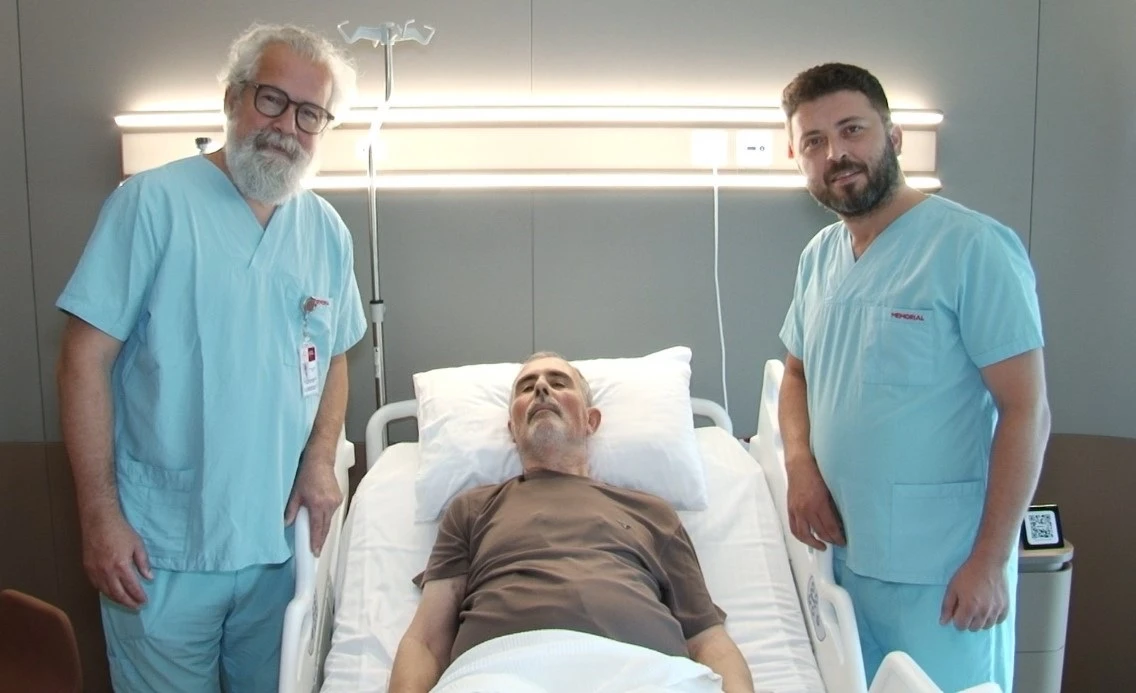
ISTANBUL, TURKEY — A 67-year-old man considered at high risk for open surgery underwent minimally invasive treatment for a 12-centimeter thoracoabdominal aortic aneurysm using eight endovascular stents.
According to information released by Memorial Göztepe Hospital, Murat Özgür had spent approximately one year seeking treatment after several medical centers reportedly concluded that conventional open surgery would carry substantial risks because of his chronic obstructive pulmonary disease, or COPD.
Following detailed vascular imaging, Prof. Dr. Mehmet Altuğ Tunçer and vascular surgeon Dr. Hidayet Demir developed a patient-specific endovascular plan. The hospital said the procedure was completed through small incisions in the groin, while preserving blood flow to the kidneys, liver and intestines.
Patient searched for treatment for nearly a year
Özgür said his symptoms began suddenly after he left the bathroom, when he experienced severe chest pain and difficulty breathing. Medical examinations later led physicians to refer him to cardiovascular surgery.


Because the aneurysm extended through the chest and abdominal portions of the aorta, treatment required consideration of several major arterial branches supplying vital organs.
Özgür said he consulted multiple doctors but was repeatedly informed that the operation would be technically difficult and that open surgery could carry a particularly high risk because of his lung disease.
After reaching the cardiovascular surgery team at Memorial Göztepe Hospital, his computed tomography images were examined using detailed three-dimensional measurements. The team assessed the aneurysm’s diameter, the sections of healthy aorta available for graft attachment and the positions of the arteries supplying the abdominal organs.


The hospital reported that the assessment indicated an endovascular procedure could be attempted without performing a large open operation.
“I can now walk on my own and move around comfortably,” Özgür said following treatment. “I had many fears, but I feel well now.”
Eight stents were used during the procedure
The operation was performed through incisions of approximately 3 centimeters in the groin, according to the hospital.
A main stent graft was advanced through the arteries and positioned inside the enlarged section of the aorta. Additional stents were then used to maintain circulation through the arteries supplying the kidneys, liver and intestines.
The team used eight stents of different dimensions and configurations. A congenital variation affecting one of the arteries supplying the kidney was also incorporated into the treatment plan so that blood flow could be maintained.
In endovascular aneurysm repair, a stent graft is moved through a blood vessel using a catheter and opened inside the aorta. Blood then travels through the graft rather than pressing directly against the weakened aneurysm wall, helping to isolate the aneurysm from circulation.
Prof. Dr. Tunçer said the patient’s aortic enlargement had reached approximately 12 centimeters when he arrived at the hospital.
“We connected the arteries supplying the intestines, liver and kidneys to the main system using specially selected stents and completed the procedure through an endovascular approach,” Tunçer said.
The hospital said Özgür was discharged five days after the operation and that no deterioration in his kidney function was detected during the initial recovery period.
What is a thoracoabdominal aortic aneurysm?
The aorta is the body’s largest artery and carries oxygen-rich blood from the heart to the rest of the body. A thoracoabdominal aortic aneurysm involves the section of the aorta extending through both the chest and abdomen.
These aneurysms are particularly complex because the affected segment may include branches that deliver blood to the kidneys, liver, intestines and spinal cord.
An aortic aneurysm can develop and enlarge without causing noticeable symptoms. If it becomes sufficiently large, it may rupture or lead to an aortic dissection, both of which can be life-threatening.
Possible symptoms include persistent or sudden pain in the chest, back or abdomen. Sudden severe pain, fainting, a rapid heart rate or light-headedness can be warning signs of rupture or dissection and require emergency medical care.
Tunçer described aortic aneurysm as a “silent cancer” because it can progress without obvious symptoms. However, the phrase is a metaphor rather than a medical diagnosis: an aortic aneurysm is not cancer.
Why was an endovascular approach selected?
Aortic aneurysms can be treated with open surgical repair or endovascular repair. The most appropriate method depends on the aneurysm’s size and location, the patient’s vascular anatomy, age, overall health and operative risk.
Open repair generally requires direct surgical access to the aorta and replacement of the diseased segment with a synthetic graft. Endovascular repair instead uses a catheter-based system introduced through an artery, usually in the groin.
The less invasive approach may allow selected patients to avoid a large chest or abdominal incision and may shorten initial recovery. However, not every aneurysm has anatomy suitable for a conventional or branched endovascular graft.
Dr. Demir said detailed three-dimensional planning was essential because the stents had to exclude the aneurysm while preserving blood flow through the organ arteries.
The patient’s COPD was also relevant to the treatment decision. Significant lung disease can increase the complexity and risk of anesthesia and major open surgery, although every patient requires an individualized assessment.
Endovascular repair still carries potential complications, including bleeding at the catheter site, injury to blood vessels, contrast-related kidney problems, graft leakage and loss of circulation through a branch artery. These risks must be weighed against the expected benefits by an experienced multidisciplinary team.
Smoking and high blood pressure increase risk
Risk factors for aortic aneurysms include increasing age, smoking, high blood pressure, family history, inherited connective-tissue conditions and other cardiovascular diseases. Risk varies according to which section of the aorta is affected.
Patients diagnosed with an aneurysm are generally advised to avoid smoking and to keep their blood pressure under medical control. Prescribed medicines should be taken as directed, and changes should not be made without consulting the treating physician.
Demir said patients should also discuss heavy lifting and activities that can cause sudden increases in blood pressure with their medical team. Recommendations must be individualized according to the aneurysm’s size, location and treatment status.
A sudden onset of severe chest, back or abdominal pain should not be monitored at home, particularly in a person known to have an aneurysm. Emergency assessment may be lifesaving.
Lifelong imaging follow-up remains essential
Endovascular treatment does not eliminate the need for continued surveillance.
Follow-up imaging is used to check whether the graft remains correctly positioned, whether the organ branches remain open and whether blood continues to enter the aneurysm sac around the graft—a complication known as an endoleak.
Current cardiovascular guidance emphasizes consistent imaging before and after aortic repair. After thoracic endovascular aortic repair, computed tomography is generally recommended at one month and 12 months, followed by annual imaging when findings remain stable; the schedule may be adjusted for complex repairs or individual risk factors.
Özgür’s son, Mert Özgür, said the family had spent months worried that the aneurysm might rupture while they searched for an appropriate treatment option.
He said his father was able to walk independently after the procedure and encouraged patients with similarly complex conditions to seek evaluation at specialist aortic centers rather than assuming that no treatment was possible.
Treatment outcomes from a single patient cannot predict what will happen in other cases. Complex thoracoabdominal aneurysms require assessment by teams experienced in open and advanced endovascular aortic surgery.
This article is intended for general information and does not replace personal medical diagnosis or treatment. Sudden and severe chest, back or abdominal pain requires urgent medical attention.
WiseNewsPress.com
What's Your Reaction?
 Like
0
Like
0
 Dislike
0
Dislike
0
 Love
0
Love
0
 Funny
0
Funny
0
 Wow
0
Wow
0
 Sad
0
Sad
0
 Angry
0
Angry
0

Editor | Wise News Press — Delivering accurate, timely global news with integrity, insight, and editorial responsibility.




















Comments (0)