Mecca Pact expansion: Could Egypt, India and Central Asia join next?

Egypt is weighing the Mecca Pact, while India and Central Asian states face different strategic constraints. Said Nursi’s Tiflis dialogue adds historical context.

Aug 23, 2026 - 21:22
0
Mecca Pact expansion: Could Egypt, India and Central Asia join next?

By Ahmet Taş | Wise News Press

ANKARA, TÜRKİYE — The Mecca Joint Defence Agreement may be approaching its first expansion test as Egypt openly studies accession, while India, Azerbaijan and the Turkic states of Central Asia confront very different strategic calculations.

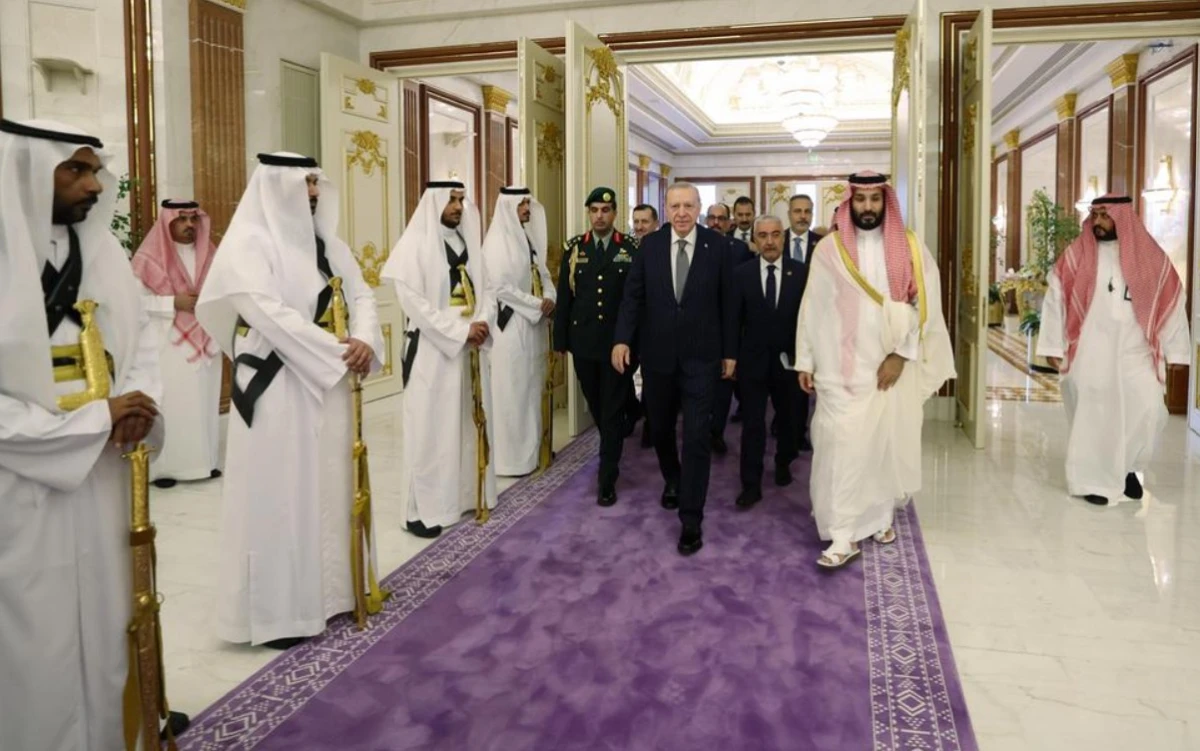
Signed by Türkiye, Saudi Arabia and Pakistan on August 7, the pact declares that an armed attack against one member will be regarded as an attack against all three. President Recep Tayyip Erdoğan has also said the mechanism is not directed against any third country and is open to other states seeking regional peace and stability.

The deeper question is no longer simply whether a fourth flag will be added. Every new participant would alter the geographical reach, political identity and practical meaning of the pact.

Egypt is the most realistic next member — but has not joined yet

Egypt has not joined the Mecca Pact.

Cairo is, however, the clearest candidate currently under discussion. Chatham House notes that Egyptian Foreign Minister Badr Abdelatty said Egypt was studying the agreement “very seriously,” while stressing that accession required examination under Egypt’s constitution and existing legal commitments. Turkish Foreign Minister Hakan Fidan has meanwhile said he expects Egypt to join at a later stage once technical issues are resolved.

Erdoğan has also publicly described Egyptian accession as possible.

Strategically, Egypt would transform the pact. Türkiye contributes a major conventional military, NATO experience and a rapidly expanding defence industry; Saudi Arabia brings financial weight and Gulf influence; Pakistan contributes a large military and nuclear deterrent. Egypt would add control of the Suez axis, substantial armed forces, Red Sea reach and enormous weight in the Arab world.

Yet Cairo also has reasons to hesitate. Its foreign policy traditionally values room for mediation, and a binding mutual-defence commitment could complicate its relations with Israel, Iran, the United States, the UAE and other partners. Chatham House therefore assesses that the costs may currently outweigh the benefits for Egypt, even though that calculation could change.

For now, Egypt should be described as the most plausible next member, not the fourth member.

Said Nursi’s Tiflis dialogue offers a striking historical parallel

A conversation attributed to Bediuzzaman Said Nursi in Tiflis more than a century ago provides an unusual historical lens through which to view today’s debate.

According to his biography, Nursi was looking across Tiflis from the Sheikh Sanan hill when a Russian policeman questioned his optimism about the future of the Muslim world.

The policeman argued that Islam was fragmented.

Nursi replied briefly:

“They have gone to study.”

He then portrayed India as learning under British rule, Egypt gaining administrative experience under Britain, and the Caucasus and Turkestan being trained inside the Russian military system.

The exchange should not be presented as a century-old prediction of the Mecca Pact.

Its strategic significance is subtler. Nursi viewed societies that appeared politically divided and subordinated to imperial powers as communities accumulating knowledge, administrative capacity and military experience that could later re-emerge as independent actors.

The historical terminology also matters. When Nursi spoke of “India” around 1910, he was referring to the much larger political geography of British India. Modern Pakistan did not yet exist as a sovereign state.

Seen in that context, the fact that Pakistan today stands among the three founding members of the pact is historically interesting — but it does not mean Nursi’s “India” can simply be equated with today’s Republic of India.

India is watching the pact, not preparing to join it

India is currently on the opposite side of the strategic equation.

New Delhi’s Ministry of External Affairs says it is examining the agreement’s implications for Indian national security and regional peace and stability, while stressing that India will take whatever steps are needed to safeguard its interests.

That is the language of a state assessing a new security structure — not a state preparing to enter it.

The central obstacle is Pakistan.

India and Pakistan remain nuclear rivals with an unresolved Kashmir dispute and a history of wars and military crises. Placing both countries under the same arrangement in which an attack on one member is considered an attack on all would create an immediate conceptual contradiction.

What would happen if India and Pakistan fought each other while both were members?

Which state would the collective-defence clause protect?

For that reason, full Indian membership is extremely unlikely under the pact’s current architecture.

A different possibility could emerge only if the structure evolves beyond one class of membership. A future system of full members, strategic partners and dialogue partners could allow India to cooperate on Red Sea security, energy routes, counterterrorism or Indian Ocean stability without accepting a mutual-defence commitment involving Pakistan.

That would be a very different proposition from joining the pact itself.

‘Turkestan’ cannot enter as one bloc because Central Asia is politically divided

Nursi’s historical reference to “Turkestan” also requires translation into today’s political map.

There is no modern state called Turkestan. The term broadly overlaps with several independent Central Asian republics, each of which operates under different defence constraints.

Uzbekistan is the clearest example. Its official foreign-policy doctrine explicitly commits the country to non-alignment with military-political blocs, and President Shavkat Mirziyoyev reiterated in 2026 that a revised defence doctrine should preserve non-participation in military blocs.

Turkmenistan faces an even stronger constraint: its internationally recognised policy of permanent neutrality makes membership in a collective military alliance highly improbable.

Kazakhstan and Kyrgyzstan, meanwhile, already belong to the Russia-centred Collective Security Treaty Organization. The CSTO’s current membership list includes both states alongside Russia, Belarus, Armenia and Tajikistan.

For them, joining another pact based on the principle that an attack against one is an attack against all could create overlapping — and potentially contradictory — security obligations.

The more plausible route for Central Asia is therefore cooperation without full membership: defence industry, military education, drones, cyber security, intelligence coordination and counterterrorism.

Azerbaijan may be a more natural Caucasus bridge

The Caucasus presents a different picture.

Azerbaijan already has unusually deep defence ties with Türkiye. The 2021 Shusha Declaration formally elevated Turkish-Azerbaijani relations to an allied level and provides for defence coordination, military training and joint exercises.

Baku also maintains strong political and military relations with Pakistan.

From a purely strategic perspective, that makes Azerbaijan structurally closer to the existing Mecca Pact members than India or most Central Asian states.

There is currently no announced accession process for Azerbaijan, so membership should not be reported as an ongoing development.

But if the pact eventually expands into the Caucasus, Azerbaijan would be among the countries analysts would logically watch.

Expansion could force the pact to develop several levels of partnership

The future of the Mecca Pact may ultimately depend less on how many countries sign the same mutual-defence clause and more on whether it develops a flexible institutional architecture.

A three-tier model would solve several of its expansion problems.

Full members could accept binding collective defence.

Strategic partners could participate in defence production, exercises, technology and intelligence without assuming an automatic war obligation.

Dialogue partners could cooperate on maritime security, energy routes, counterterrorism and regional diplomacy.

Such a structure could accommodate Egypt more easily, connect Central Asian states without forcing them to abandon existing doctrines, and create channels for India without demanding that New Delhi and Islamabad guarantee each other’s defence.

The official pact already envisages deeper defence cooperation, while Turkish officials have outlined high-level political and military coordination, joint exercises across land, sea, air and cyber domains, and cooperation in unmanned systems, electronic warfare and artificial intelligence.

The strategic question is larger than who joins fourth

Said Nursi’s Tiflis conversation is relevant to 2026 not because it foretold a specific alliance.

Its enduring idea was that regions appearing fragmented and politically weak at one moment in history could later acquire their own administrative, military and intellectual capacity.

Today Türkiye, Saudi Arabia and Pakistan have brought three very different forms of power into a single security framework.

Egypt is considering whether to move closer.

Central Asia is constrained by neutrality, non-alignment and existing Russian-centred arrangements.

Azerbaijan has a natural strategic bridge to Türkiye and Pakistan.

India, meanwhile, remains outside the structure and is calculating what the pact may mean for the balance with Pakistan.

The decisive question, therefore, may not be “Who becomes the fourth member?”

It is whether the Mecca Pact remains a narrow mutual-defence agreement among a few states — or evolves into a layered security architecture stretching from the Red Sea and Eastern Mediterranean through the Caucasus and Central Asia toward the Indian Ocean.

If that second model emerges, the pact’s importance would no longer be measured simply by its membership count.

It would mark the creation of a new network in which regional powers increasingly attempt to organise security with one another rather than relying exclusively on external great powers.

WiseNewsPress.com

What's Your Reaction?

Like Like 0
Dislike Dislike 0
Love Love 0
Funny Funny 0
Wow Wow 0
Sad Sad 0
Angry Angry 0
Ahmet Taş

Ahmet Taş is a journalist, editor and Turkey Office Manager of the Wise News Press Media Group. He works across news, digital media and international publishing, focusing on accurate, responsible and accessible journalism. He contributes to the development of media projects that bring important political, social and global developments to a wider international audience.


Comments (0)

User