



Psychologist Oksana Babenko: People don't get used to war — they adapt
Mykolaiv psychologist Oksana Babenko discusses anxiety, children, family crises, adaptation to war and when people should seek psychological help.
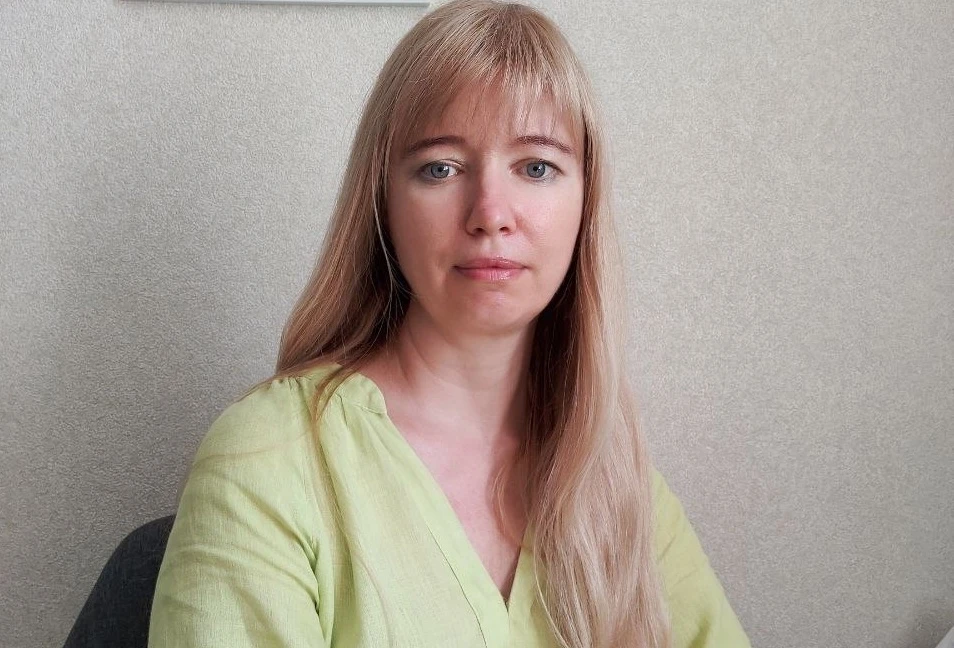


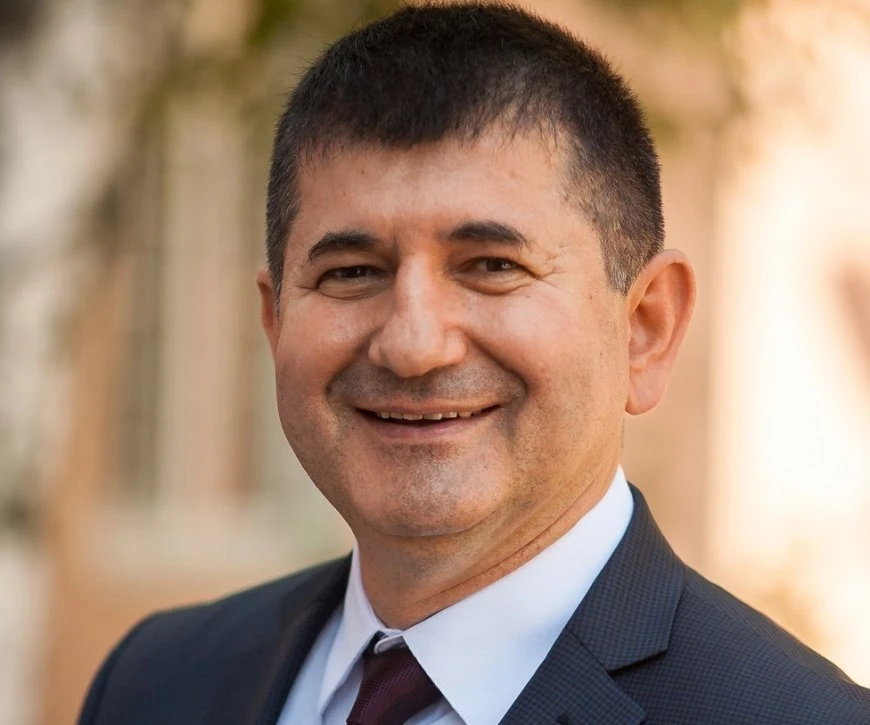
By Yusuf Inan | Wise News Press
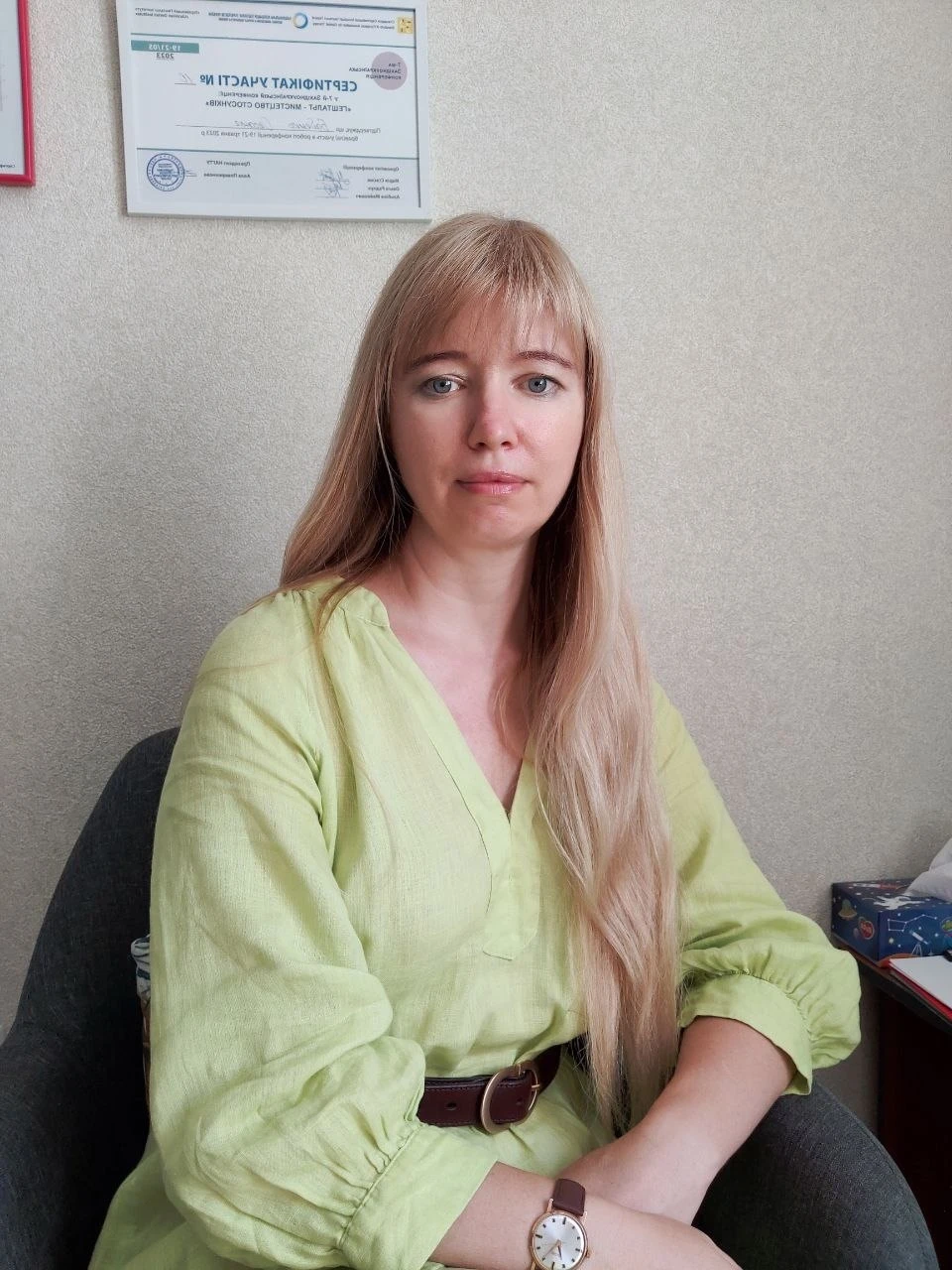
MYKOLAIV, UKRAINE — Mykolaiv psychologist, psychotherapist and Gestalt therapist Oksana Babenko says people do not get used to war but adapt to it, while prolonged stress places a deep strain on mental health.
War has changed not only the daily lives of Ukrainians, but also the nature of the problems for which people seek psychological support. Anxiety, panic attacks, loss, forced separation, migration, military service of loved ones, and difficulties experienced by children and adolescents are increasingly becoming part of psychologists’ work.
Wise News Press spoke with Mykolaiv psychologist Oksana Babenko about how the psyche adapts to prolonged war, why it is dangerous to perceive constant tension as normal, which changes in children’s behavior should not be ignored, and why it is better to seek psychological support before reaching a crisis point.
Oksana Babenko is a psychologist, psychotherapist and Gestalt therapist who works at the “Farby Zhyttia” (“Colors of Life”) psychological center in Mykolaiv. She received her psychology education at the Sloviansk Pedagogical Institute and later completed extensive training at the Ukrainian Gestalt Institute. She has maintained an active practice since 2014–2015.


Professional journey and changing reasons for seeking help
Yusuf Inan: Ms. Oksana, please tell us a little about yourself. Where did you receive your education, why did you choose psychology at the time, and what was your path toward practicing psychotherapy?
Oksana Babenko: I studied at the Sloviansk Pedagogical Institute. I graduated in 1997 with a degree in psychology as a psychology teacher. At that time, psychology was only beginning its journey in Ukraine. There was not even a psychologist at my school, but there was an elective course, and I simply found it very interesting. It was a new, almost unexplored field, and that was exactly what attracted me at the time.
After graduating from the institute, I did not work in the profession for some time — there were simply no job offers for a young specialist. Later, I decided to return to the profession and began studying at the Ukrainian Gestalt Institute. The training lasted six years. By 2010, I was already practicing Gestalt therapy. I attended conferences and intensive programs and completed many specializations. I underwent my own individual therapy and supervision. The training was very intensive and interesting.


I have been in active practice since 2014–2015. Even then, at the beginning of the conflict — back when it was still referred to as the “ATO” — I worked with people who had suffered and left the Donetsk region, which is my home region. It was very close to my heart. At that time, we also brought my mother from the Donetsk region to the Mykolaiv region. I completed additional training to work with military personnel and visited military units together with colleagues.
From 2022 through 2024, I worked for a French humanitarian organization in the de-occupied territories of the Mykolaiv and Kherson regions. I traveled extensively and met people of different ages — from 4 years old to 85+. This gave me a great deal of experience working with the older generation and with issues related to war.
Today, I have an active practice in Mykolaiv — I have my own office and also work online. My clients are our people living all over the world.
Yusuf Inan: What issues do people in Mykolaiv most often bring to psychologists today? Has the nature of these concerns changed compared with the pre-war period?
Oksana Babenko: Of course it has changed. Today, people most often seek help for anxiety, anxiety-depressive states, panic attacks and severe stress. Many concerns are connected with separation — someone is under occupation, someone has left, someone is serving in the military.
There are also issues related to grief: how to live through losses, including ambiguous losses — when a person has lost a great deal but is not yet able to fully comprehend it. People are trying to understand how to integrate into a new place and how to find themselves there. There are many family difficulties caused by separation, and children suffer as well. At the moment, I work with many adolescents who come with different concerns. I also work with veterans, where the work is more specific and more difficult.
Compared with the pre-war period, everything has changed dramatically. Sometimes I even feel nostalgic for the times when we worked with issues such as self-realization, femininity and masculinity, discovering talents and building relationships. Back then, the requests were more coaching-oriented and focused on development. Now there are almost no such “light” issues. All the topics have become much deeper and more difficult.
War and psychological adaptation
Yusuf Inan: The war has continued for many years and has become part of everyday reality. In your view, how has people’s psychological state changed? What have we learned to endure, and which problems, on the contrary, are accumulating?
Oksana Babenko: Indeed, the war has been going on for many years, and the psyche is gradually adapting to this abnormal reality. In some ways, it is even beginning to be perceived as a kind of “normal.”
We have learned to endure and adapt: to plan our lives around air-raid alerts and shelling, and to quickly adjust when the electricity suddenly goes out or there is no water. People have developed a high level of adaptability.
But the psychological state of many people is depressed. There are many depressive states or, on the contrary, states of intense agitation. The psyche cannot withstand such pressure indefinitely. Adaptation takes place, but everyone pays a different price for it. Chronic illnesses often become aggravated.
The psyche does not have enough resources to deal with everything at once. So people address only urgent issues and postpone the rest “until later” — until they have more strength and physical resources.
Yusuf Inan: Is there a danger that people become accustomed to constant anxiety, explosions and bad news and begin to perceive an abnormal level of tension as “normal”? How does this affect the psyche?
Oksana Babenko: This question is closely related to the previous one. People often say, “We are used to it now.” But in reality, they are not getting used to it — they are adapting. The psyche is simply looking for ways to survive in an already abnormal situation.
The threshold of what is considered “normal” has shifted. If a person from Ukraine comes to Europe or to a quiet region where there are no sirens and there is peace, that silence may even feel strange. Sometimes, while on vacation, a person suddenly experiences anxiety because the psyche has already become conditioned to remain ready for anything at all times.
Yes, it affects the psyche. And it affects it quite deeply.
Children and families during war
Yusuf Inan: Children and adolescents are particularly vulnerable to war. What signs in a child’s behavior should tell parents that professional psychological support is already needed?
Oksana Babenko: The signs depend greatly on age.
In very young children, this may appear as “freezing,” quiet and almost unnoticeable behavior, developmental delays, speech difficulties, or the absence of behaviors and abilities that should already be present at their age.
Among children of middle-school age, there may be a decline in academic performance and “bad” behavior, as adults perceive it. Often, this is a way of coping with what is happening. Depressive states can already appear at this age.
Adolescents also often experience depressive disorders, destructive or suicidal behavior, withdrawal or, conversely, questionable friends and alcohol use.
Statements such as “I don’t want to live,” “There is no point in living,” or “Why live?” should be particularly alarming. In such situations, it is better to be overly cautious than to overlook something. It is worth consulting a psychologist or psychiatrist so that the condition does not worsen.
I would also add that children are not the only vulnerable group. Older people are vulnerable too, because for many of them this is not the first war they have experienced, and because of their age, it is difficult for them to adapt and to make decisions about change.
Yusuf Inan: How strongly do children pick up on their parents’ fear, anxiety and emotional state? What can adults do to support a child even when they themselves are going through a difficult period?
Oksana Babenko: Children of any age pick up on their parents’ emotional state. Young children do so especially strongly because their entire world depends on adults. Older children sense it too, although they may react differently.
I believe adults should tell the truth even when they themselves are afraid, confused or very anxious. It is important to say: “This is not your fault. I am having a difficult time right now. These are my feelings, and they have a right to exist. We can go through this together.”
You can simply talk, sit next to each other or hug. The main thing is to notice that the child is also having a difficult time and to meet them where they are.
There is no need to try to be a superhero and “hold up the sky.” It does not always work, and children can sense when an adult is struggling anyway. Sometimes they begin to “take care” of their parents and become almost like parents to their own parents. That is not right. An adult must remember: I am the adult here.
Yusuf Inan: Have family and partner relationships changed under the influence of war, forced separation, migration and constant uncertainty? What crises do couples face most often today?
Oksana Babenko: Of course they have changed. Forced separation has become very common: someone is living abroad, someone is serving in the military, and someone has already lost a loved one.
People have been living in different life contexts for more than four and a half years. The things that once connected them gradually become thinner. Not everything can be shared. Different events happen in each person’s life, and different people appear around them.
For example, a husband is serving in the military while his wife remains in the city with the children. It is difficult for both of them, but in different ways. The woman has to deal with all the everyday issues on her own and carry the responsibility. The man is constantly in danger, and often he does not even have enough emotional resources to find out in detail how she is coping.
Conversations are reduced to something brief: “How are things? Is everyone alive and well? Good.” The distance grows.
Constant uncertainty also has a strong impact: even planning a vacation is difficult because you do not know when leave will be granted.
The most common crises today are connected precisely with living apart, migration, one partner’s military service or evacuation. People find themselves in different realities, and it becomes more difficult for them to meet each other emotionally.
When to seek help and what group therapy can offer
Yusuf Inan: Many people still turn to a psychologist only when the situation has already become critical. How can someone understand that it is time to ask for help, and why can seeking preventive support be useful?
Oksana Babenko: Indeed, many people come when things are already very bad: their sleep deteriorates significantly, and anxiety begins to interfere with their lives. Then the person realizes that it is time to ask for help. But there are also people who seek help earlier. And that is very good.
Prevention is a wonderful thing. Today, many civil society organizations offer free support: group sessions, art therapy, training programs and psychological games. There are quite a few such centers in Mykolaiv.
I myself worked for three years in a humanitarian organization, and we provided individual consultations and therapeutic sessions completely free of charge.
It is important to go to a specialist or join group work not only when things are already very bad, but when you simply feel “a little unwell.” When we help ourselves, we can then better support our children, parents, grandparents — the whole family.
Yusuf Inan: You work not only individually but also with group therapy and psychological games of your own design. What can a group format offer a person that individual work sometimes cannot?
Oksana Babenko: Yes, I run therapeutic groups. At the moment, I have two active groups in Mykolaiv — one in person and one online — and we are recruiting for a new one.
I also conduct sessions using psychological games. I have six original decks of metaphorical cards, and I use them in art-therapy work. It is an interesting tool.
Individual work is wonderful and can be very deep — it is just the client and me. But when the issues are connected with society and relationships, a group offers something different.
I often tell clients: a group is a small micro-society, a kind of relationship simulator. The way you build relationships in life is the way you will build them here as well. It is an opportunity to see your habits and change something in a safe environment.
We run the groups together with co-therapist Natalia Aleksieienko-Strukova. We create conditions in which people can open up confidentially and without fear.
‘Colors of Life’ and psychology on social media
Yusuf Inan: You have also organized the “Farby Zhyttia” psychological festivals. How did the idea arise, and why, in your opinion, are open psychological events where people can talk about themselves without stigma important for a city?
Oksana Babenko: I have already organized 25 psychological festivals in different formats. The most recent one was held this spring. I started organizing them back in 2012.
The idea came from a desire to popularize psychology and make it more accessible to people. The ticket price was always symbolic so that anyone could come and meet psychologists working in the city.
There were different approaches — systemic family constellations, psychoanalysis, Gestalt therapy, cognitive behavioral therapy, psychological games and art therapy using metaphorical cards. It is like a tasting: you can try different approaches and understand what resonates with you. Sometimes people even decide afterward to continue studying in the field.
It is important that the festival format is light and safe. Our goal is not for a person to open up deeply or dig into painful issues. The workshops are short — an hour and a half to two hours. The main objective is to show how a particular approach works and to avoid causing harm.
At the beginning of every festival, we always explain the rules: be attentive to yourself and do not go too deep. The specialists do not know you yet, and you do not know them either, so the format is specifically introductory.
The atmosphere is somewhat festive: there are gifts, prize draws and a handmade market. Under the current circumstances, it is difficult to create a completely festive atmosphere, but we try to give people an opportunity to rest at least a little.
Anyone can come to the festival — no special preparation is required. We offer discounts to military personnel, students and other groups so that people of different ages can participate. It is an event for a broad audience where people can simply be present and become acquainted with psychology without stigma or fear.
Yusuf Inan: Social media today is filled with psychological advice. How can an ordinary person distinguish professional psychological content from attractive but questionable recommendations?
Oksana Babenko: This is a really painful topic. I even wrote a Facebook post about it recently.
Today, almost anyone can think that they already understand psychology. But people study for many years to become psychologists — and then they continue learning throughout their lives. There is genuinely useful advice, and there is advice that is completely questionable. This creates confusion for people.
If a blogger’s advice suddenly resonates with you very strongly, take a few extra minutes and check it. Look at the sources the person relies on. Very often, people cannot answer that question.
We live in an era of information garbage, where we have to look for a needle in a haystack. It is better to listen to verified professionals: look at their education, practice and biography. Or look for information in books and sources that can be trusted.
I would also like to say something specifically about ChatGPT. Sometimes it can help as a conversation partner, but it can just as easily lead a person into a dead end. A person formulates a question in their own way, while the algorithm responds in its own way — and it is easy to become confused.
So the rule is simple: you heard it — you checked it — and only then do you apply it to yourself. It is like listening to different doctors or dietitians: until you check, you cannot know what is actually useful and what is not.
The psychology profession, burnout and a message to readers
Yusuf Inan: A psychologist works every day with other people’s pain, fears and crises. How does the professional protect themselves from emotional burnout, and where is the line between professional empathy and excessive emotional involvement?
Oksana Babenko: Becoming a psychotherapist requires serious preparation. For example, to obtain certification as a Gestalt therapist, you need to complete around 200 hours of personal therapy, supervision and group work, as well as many intensive programs and conferences.
And the work does not end even after certification. A specialist continues their own therapy and attends supervision and intervision groups. I have all of this in my schedule.
Peer support is essential. Without it, especially under our current conditions, it is simply impossible to work.
In addition to professional support, simple things are also important: vacations, weekends, breaks between clients and doing something good for yourself. We take care of ourselves from different angles — and then we can work for a long time and work well, without burning out and without crossing the line between empathy and excessive involvement.
Yusuf Inan: Psychology traditionally attracts many young women. Would you recommend this profession today to girls and young people choosing their future careers? What qualities are genuinely needed?
Oksana Babenko: In general, I do not like giving advice such as “go into it” or “do not go into it.” Either this work resonates with a person or it does not.
But I can say one thing for certain: it is a long journey. First comes basic education — today, a master’s degree is required, which already means five years. Then comes specialized training in the chosen field of psychotherapy, personal therapy and group work.
You need intelligence — to analyze and learn — perseverance and organization. Beyond that, people can have very different qualities. There are calm and balanced colleagues, and there are very active ones — and they all find their own clients.
I would especially like to draw attention to one important point. Today, many young women are entering the profession. That is a good thing. But when it comes to working with military personnel and veterans, it would be very valuable if more specialists came specifically from military backgrounds — people who themselves served and, because of their health, can no longer remain in active service.
One of your own understands one of your own better. American experience shows that such specialists achieve the best results. Young women can be excellent psychologists, but military personnel sometimes find it more difficult to trust them — they are simply different worlds.
Yusuf Inan: What would you like to say to Wise News Press readers who are currently experiencing fatigue, anxiety, family difficulties, or simply feel that it is difficult to keep moving forward?
Oksana Babenko: Life is difficult for all of us right now. Everyone has their own difficulties, their own fatigue and their own anxiety.
Albert Camus, in his essay “The Myth of Sisyphus,” wrote about that moment when the familiar routine suddenly breaks down and a person begins to ask themselves: what is all of this for?
He answered that continuing to live and struggle despite the absurd requires enormous inner effort. But it is precisely this endless struggle and acceptance of one’s fate that can fill the heart and create a sense of fullness.
“The struggle itself is enough to fill the human heart,” Camus says.
So today, we should not try to embrace everything at once or plan too far ahead — that often only makes things feel more overwhelming.
It is better to take small steps: today we did a little, rested a little, and planned something small for this week.
Step by step, issues are resolved. New ones appear — and we take the next step again. And in this way, we gradually keep moving forward.
Sometimes simply continuing is already a great deal. And in that, strangely enough, there can be its own strength and even its own joy.
WiseNewsPress.com
What's Your Reaction?
 Like
0
Like
0
 Dislike
0
Dislike
0
 Love
0
Love
0
 Funny
0
Funny
0
 Wow
0
Wow
0
 Sad
0
Sad
0
 Angry
0
Angry
0
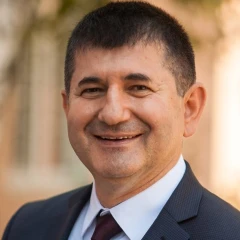
Yusuf İnan is a journalist, columnist, strategic analyst and head of the Wise News Press Media Group. His work focuses on international affairs, geopolitics, security and major social issues. Through his journalism, he promotes peace, dialogue, mutual understanding and responsible reporting while contributing to the development of international media projects.















Comments (0)