



Ukraine: SBU and HUR clash in Kyiv as shooting sparks investigation
A confrontation between Ukraine’s SBU security service and HUR military intelligence in Kyiv escalated into gunfire, prompting criminal and internal investigations.


By Ahmet Taş | Wise News Press
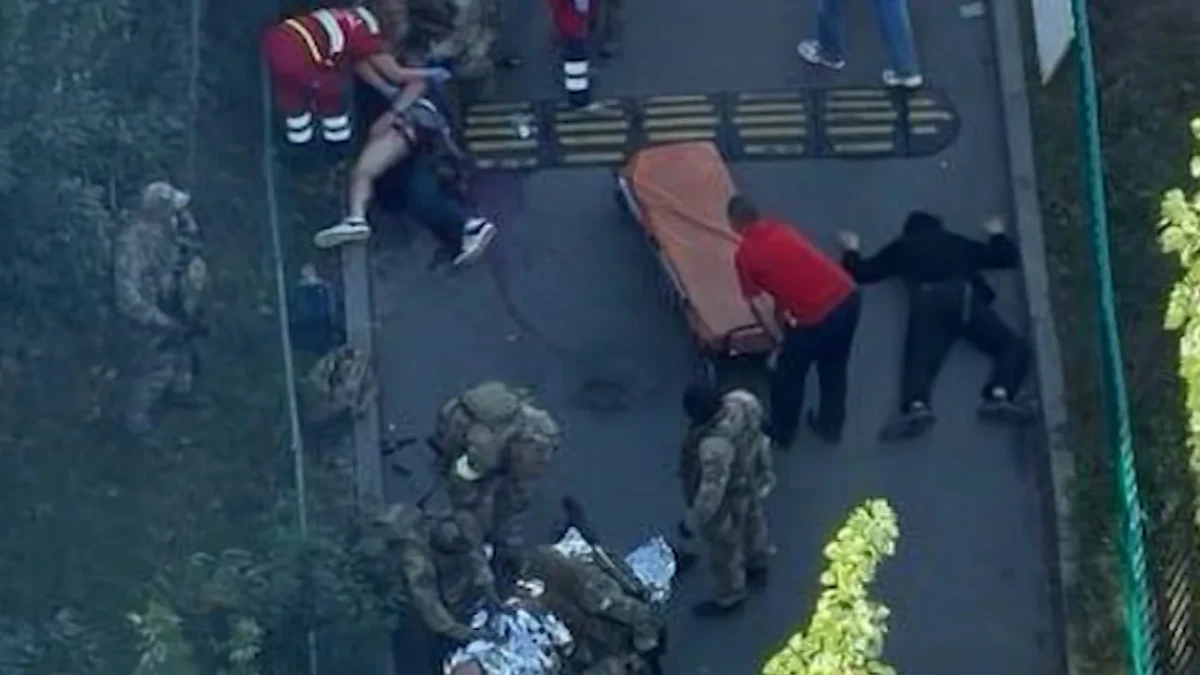
KYIV, UKRAINE — An operation involving Ukraine’s domestic security service and military intelligence escalated into gunfire in Kyiv, exposing a rare public confrontation between two of the country’s most powerful security institutions and triggering separate investigations.
The incident involved the Security Service of Ukraine, or SBU, which is responsible for domestic security, counterintelligence and counterterrorism, and the Main Directorate of Intelligence of Ukraine’s Defense Ministry, known internationally as HUR and often rendered as GUR. The two agencies have different formal responsibilities but have both taken on broader operational roles since Russia’s full-scale invasion.
Accounts of how the confrontation began differ significantly. The SBU says its officers were carrying out investigative actions connected to a counterintelligence case when armed individuals attempted to interfere with the operation. Representatives linked to the military intelligence side, however, have disputed parts of that account.
What are the SBU and HUR?
For readers outside Ukraine, the distinction between the two institutions is central to understanding why the incident has attracted such attention.
The SBU — Security Service of Ukraine — is primarily Ukraine’s domestic security and counterintelligence agency. Its responsibilities include combating espionage, terrorism, sabotage and threats to state security. Since the start of the full-scale war, the SBU has also carried out increasingly complex combat and special operations.


The HUR — Main Directorate of Intelligence of the Ministry of Defense of Ukraine — is the country’s military intelligence service. It gathers military intelligence, conducts special operations and works with units involved in missions linked to the war against Russia.
The acronym is sometimes written GUR, based on the Ukrainian or Russian rendering of the agency’s name, while HUR is widely used in English-language Ukrainian government communications.
The SBU’s Alpha unit, also mentioned in reports about the Kyiv confrontation, is the service’s elite special operations force.


Another institution now central to the case is the State Bureau of Investigation, or SBI, which investigates serious alleged crimes involving law enforcement officers, military personnel and senior state officials.
The confrontation centered on Stepan Kaplunov
At the center of the dispute is Stepan Kaplunov, described in reports as a deputy commander responsible for combat activities in the Russian Volunteer Corps, commonly known as the RDK.
The RDK is composed largely of Russian citizens fighting on Ukraine’s side against Moscow and has operated in connection with Ukraine’s military intelligence structures.
According to the account presented by the SBU, its officers were conducting investigative actions as part of a case involving an alleged Russian Federal Security Service, or FSB, plot against a Russian opposition figure who was in Ukraine.
Kaplunov’s name emerged in connection with that investigation.
His legal representatives and people associated with the RDK, however, have challenged the SBU’s version of events and described his detention as unlawful.
Those competing claims have not yet been resolved in court, making it important to distinguish between allegations by the agencies and independently established facts.
SBU says armed men tried to disrupt its operation
According to the SBU’s account, officers were carrying out authorized investigative actions at a location in Kyiv when a group of armed men arrived in several vehicles.
The group allegedly blocked exits and attempted to prevent the security officers from completing their work.
The SBU then called in personnel from its Alpha special operations unit.
The confrontation escalated and firearms were used. Only afterward, according to accounts of the incident, was it established that the armed men involved were not criminal suspects or hostile infiltrators but serving members of Ukraine’s defense and intelligence structures.
The SBU has maintained that force was used in response to armed resistance.
The military intelligence side has disputed key elements of that description, including the circumstances that led its personnel to the scene.
HUR-linked side reports three personnel wounded
According to representatives associated with the HUR side, military intelligence personnel arrived because they believed one of their affiliated servicemen was being unlawfully detained.
The situation then deteriorated into an armed confrontation.
Three HUR personnel were reported wounded, with some accounts describing the injuries as serious.
The most important unresolved question is who fired first and whether the use of weapons by either side was lawful and proportionate.
For that reason, descriptions such as “HUR attacked the SBU” or “SBU attacked HUR” should not yet be presented as established conclusions.
The available accounts show that personnel associated with both agencies were involved in the confrontation, firearms were discharged and military intelligence personnel were injured. Determining criminal responsibility is now a matter for investigators and the courts.
The incident reached Ukraine’s top leadership
The confrontation quickly became a national political and security issue because it involved armed personnel from two institutions central to Ukraine’s wartime defense.
President Volodymyr Zelenskyy called for a full explanation of what happened and demanded that the security agencies establish responsibility.
According to Ukrainian media reports, the president described the incident as unacceptable and said weapons carried by Ukrainian security personnel should be directed against the enemy rather than used in confrontations between state institutions.
Internal reviews were also announced within the agencies.
The case has therefore developed on two parallel tracks: a criminal investigation into the use of force and internal disciplinary examinations into command decisions and coordination failures.
Prosecutors and investigators examine individual responsibility
Ukraine’s law enforcement authorities have also begun examining the actions of individual participants rather than treating the incident solely as an institutional dispute.
Reports from Ukrainian media said formal suspicions were issued in connection with the use of weapons, including against personnel linked to both the SBU and HUR.
Investigators are examining firearms, ballistic evidence, witness statements, video recordings and the sequence of orders issued before the confrontation.
Courts are also expected to consider preventive measures for suspects as the proceedings continue.
The outcome will be important because the case raises questions not only about the conduct of individual officers but also about the command structure governing operations involving different security agencies.
Claims of a deeper SBU-HUR rivalry remain unproven
Some Ukrainian media commentary has portrayed the shooting as evidence of a long-running rivalry between the SBU and HUR.
There are reasons why such interpretations have emerged.
Since Russia’s full-scale invasion, the operational boundaries between Ukrainian security institutions have become less distinct. The SBU, traditionally focused on domestic counterintelligence, has developed powerful combat and special operations capabilities.
HUR, meanwhile, has expanded the use of special units and maintains relationships with armed formations involved in operations connected to the war against Russia.
That overlap can create risks when separate agencies investigate the same individuals or operate in the same area under a high level of secrecy.
Foreign volunteer formations are another sensitive issue. Military intelligence may work closely with such units operationally, while the SBU retains responsibility for counterintelligence checks inside Ukraine.
However, the claim that the Kyiv shooting was the direct result of a broader institutional power struggle has not been established as the conclusion of an official investigation.
Likewise, claims that senior HUR commanders explicitly ordered personnel to use force to recover Kaplunov, or that the government has already decided to restrict HUR operations inside Ukraine, should be treated as allegations or analysis unless formally confirmed.
Why the case matters for Ukraine’s security system
The incident is significant because Ukraine is fighting a large-scale war while depending heavily on close coordination between intelligence, military and law enforcement institutions.
A breakdown in coordination between those bodies carries risks far beyond the immediate confrontation.
It can complicate counterintelligence operations, undermine confidence between units and create uncertainty over which agency has authority during sensitive missions.
The investigation is therefore expected to focus not only on who fired and whether criminal offenses were committed, but also on how two Ukrainian security structures reached a point where armed personnel confronted each other in the capital.
For now, several facts are clear: an SBU operation in Kyiv led to a confrontation involving HUR-linked personnel, firearms were used, members of the military intelligence side were reported wounded, and Ukrainian authorities opened investigations into the incident.
What remains disputed is the chain of events that led to the shooting and which individuals or commanders bear legal responsibility.
The answers could determine whether the incident is ultimately treated as an isolated operational failure or as evidence of a wider coordination problem within Ukraine’s wartime security apparatus.
WiseNewsPress.com
What's Your Reaction?
 Like
0
Like
0
 Dislike
0
Dislike
0
 Love
0
Love
0
 Funny
0
Funny
0
 Wow
0
Wow
0
 Sad
0
Sad
0
 Angry
0
Angry
0

Ahmet Taş is a journalist, editor and Turkey Office Manager of the Wise News Press Media Group. He works across news, digital media and international publishing, focusing on accurate, responsible and accessible journalism. He contributes to the development of media projects that bring important political, social and global developments to a wider international audience.










Comments (0)