



Zelenskyy says Russian airspace will effectively close amid drone war
Zelenskyy warned airlines and insurers that expanding Ukrainian drone operations will make Russian airspace increasingly unsafe as the war escalates.


By Ahmet Taş | Wise News Press
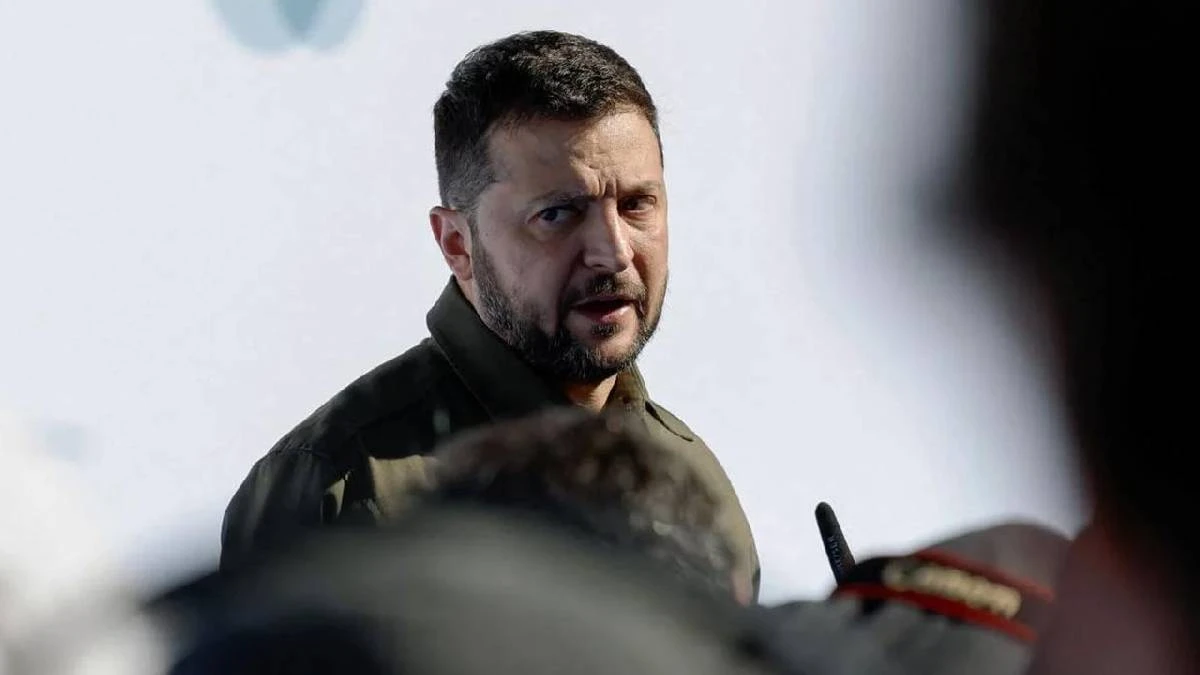
KYIV, Ukraine — Ukrainian President Volodymyr Zelenskyy warned international airlines, insurers and foreign governments that an expanding Ukrainian long-range strike campaign would make Russian airspace increasingly hazardous, saying it would “effectively” begin to close as the war intensifies.
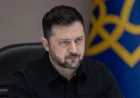
In an address on September 1, Zelenskyy stressed that Ukraine was not targeting civilian aircraft. Instead, he said the growing number of Ukrainian drones and missiles operating over Russian territory would create risks that airlines, insurers and companies using major Russian airports could no longer ignore.
The statement does not constitute a formal closure of Russian airspace by Russian aviation authorities. Rather, Zelenskyy argued that growing operational risks, air-defence activity and repeated drone incursions could make sections of Russian airspace increasingly difficult for commercial aviation to use safely.
Zelenskyy says escalation will not remain inside Ukraine
Zelenskyy framed the warning as a consequence of Russia’s intensifying attacks on Ukrainian cities and infrastructure.
According to the Ukrainian president, Moscow has changed the scale and tactics of its air campaign since August, increasing attacks on energy systems, transport infrastructure, cities and civilian areas.


He said Ukraine was responding under what Kyiv considers its right of self-defence by striking Russian military facilities and economic infrastructure supporting Moscow’s war effort.
Zelenskyy argued that the consequences of the war could no longer remain confined to Ukrainian territory.
Russian airspace, he said, was already becoming an operational area for Ukrainian drones and missiles and would increasingly become so as Kyiv expands its long-range strike capabilities.


The warning comes as Ukraine has intensified attacks against Russian energy and logistical infrastructure, while Moscow has simultaneously stepped up missile and drone strikes against Ukraine. Reuters reported that Ukrainian operations have recently damaged facilities in Russia, including in the Ust-Luga port area.
Airlines and insurers told to reassess Russian airspace
The most internationally significant part of Zelenskyy’s address was directed at the aviation industry.
He specifically addressed airlines flying through Russian airspace, insurance companies covering those operations and businesses continuing to use major Russian airports.
“Russian airspace will effectively be closing.”
Zelenskyy said Ukraine posed no deliberate threat to civilian aircraft, but warned that the scale of drone activity over Russia would have to be incorporated into commercial aviation risk assessments.
He also said foreign ambassadors in Kyiv and Moscow should inform their governments of the changing security environment.
Particular attention was drawn to airlines serving Moscow, St. Petersburg and other major Russian destinations. Zelenskyy said Ukraine’s Foreign Ministry and other state institutions would provide international organizations with information about the risks.
The practical consequences could extend beyond physical danger.
Commercial airlines base route decisions on security assessments, airport availability, insurance requirements, crew safety and the probability of disruption. Even without a formal government ban, higher insurance costs, repeated airport closures or growing uncertainty could make certain routes economically or operationally unattractive.
Ukraine says civilian aviation is not a target
Zelenskyy repeatedly sought to distinguish Ukraine’s military campaign from attacks on civil aviation.
Ukraine’s stated targets are Russian military installations and economic facilities connected to Moscow’s war effort, not passenger aircraft.
But a widening drone campaign creates indirect risks even if civilian aviation is not deliberately targeted.
Russian air-defence systems may operate near civilian flight paths, airports can be temporarily closed during drone alerts and aircraft may need to be rerouted at short notice.
Zelenskyy summarized his warning by saying that “the safe days in Russia’s skies are over.”
Reuters described his remarks as a warning that Ukrainian drone activity was making Russian airspace increasingly hazardous for international aviation.
The Ukrainian leader’s message therefore appears aimed partly at creating an economic consequence of the war inside Russia: if airlines and insurers begin treating Russian airspace as significantly higher risk, Moscow could face additional isolation even without new formal aviation sanctions.
US requested three-day pause on Moscow and St. Petersburg strikes
Zelenskyy also disclosed details of diplomatic contacts concerning Ukrainian long-range operations.
He said the United States asked Ukraine not to strike Moscow and St. Petersburg on August 25, 26 and 27.
According to Zelenskyy, Kyiv complied with the request and refrained from attacks on the two cities during that period, even as Russian attacks against Ukraine continued.
The president also revealed that another country — which he described only as a “global power” — had asked Ukraine to suspend attacks in the direction of Vladivostok for a specified period.
Zelenskyy said Ukraine agreed to that request as well.
He did not identify the country involved.
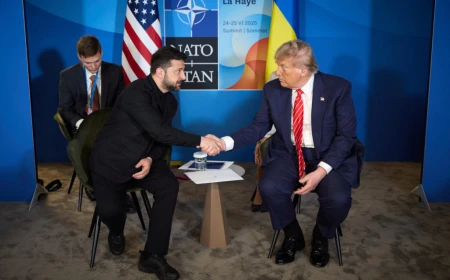
The disclosures suggest that Ukraine’s long-range strike campaign is increasingly becoming part of international diplomatic negotiations rather than being treated solely as a military instrument.
Kyiv says drone pauses can support diplomacy
Zelenskyy went further, saying Ukraine could temporarily keep specified areas of Russian airspace free of its drones when international partners request such measures in support of negotiations.
He said new meetings in Moscow were being prepared and that Kyiv would take diplomatic developments into account.
Ukraine, he suggested, could agree to limited pauses by date, geographic direction or route if doing so facilitated negotiations or other peace efforts.
That introduces a new dimension to Kyiv’s long-range strike strategy.
The ability not to launch drones may become almost as politically relevant as the ability to launch them.
If specific flight corridors, cities or regions can temporarily be excluded from Ukrainian operations as part of diplomatic arrangements, Kyiv could use its drone campaign as leverage in negotiations with international partners and, indirectly, with Moscow.
Zelenskyy linked the restoration of lasting safety over Russia to what he called genuine movement toward peace.
Warning comes amid another surge in Russian attacks
The statement was issued during another particularly intense phase of Russian attacks on Ukraine.
On September 1, Russian missile and drone strikes killed 12 people in the Kyiv region, according to Reuters. Eight railway workers were among those killed in Kyiv, while four civilians were reported dead in Boryspil. Residential areas, rail infrastructure and energy facilities were also damaged.
The attack marked the sixth consecutive day of major Russian air strikes.
Ukraine’s Foreign Minister Andrii Sybiha has appealed for additional Western air-defence support as Russia expands its use of ballistic missiles and faster jet-powered drones.
At the same time, Kyiv has intensified its own attacks on Russian oil and logistics infrastructure.
The two campaigns illustrate how the air war has increasingly moved beyond the traditional front line.
For Ukraine, long-range drones offer a way to impose military and economic costs deep inside Russia. For Moscow, long-range strikes remain a central instrument for damaging Ukrainian infrastructure and pressuring the population.
The air war is becoming an economic pressure campaign
Zelenskyy’s aviation warning indicates that Ukraine is now highlighting a broader consequence of its long-range operations.
The objective is no longer presented only in terms of destroying military facilities, refineries or logistical sites.
Repeated incursions could also affect commercial aviation, insurance markets, airport operations and Russia’s international connectivity.
That distinction is strategically important.
If insurers increase premiums or withdraw coverage, international carriers could reduce flights even without a direct Ukrainian threat to passenger aircraft. Regular airport closures could create further disruption for passengers, freight operators and businesses.
In effect, Ukraine is signalling that Russia may increasingly experience some of the economic and transport consequences that Ukrainians have lived with since their own civilian airspace was closed following Russia’s full-scale invasion.
Zelenskyy explicitly connected the two, arguing that the war Russia began was now making its own skies unsafe.
His message, therefore, was both military and political:
Ukraine intends to continue expanding its ability to strike targets inside Russia, while warning civilian operators in advance that the security environment is changing.
For international airlines and insurers, the immediate question is not whether Kyiv has formally “closed” Russian airspace — it has not.
The question is whether the expanding drone war will make operating there too risky, too expensive or too unpredictable to continue as before.
WiseNewsPress.com
What's Your Reaction?
 Like
0
Like
0
 Dislike
0
Dislike
0
 Love
0
Love
0
 Funny
0
Funny
0
 Wow
0
Wow
0
 Sad
0
Sad
0
 Angry
0
Angry
0

Ahmet Taş is a journalist, editor and Turkey Office Manager of the Wise News Press Media Group. He works across news, digital media and international publishing, focusing on accurate, responsible and accessible journalism. He contributes to the development of media projects that bring important political, social and global developments to a wider international audience.
















Comments (0)