



Ibrahim Kalin reflects on digital distraction and the meaning of presence
Turkish intelligence chief Ibrahim Kalin discussed digital distraction, social media, privacy, worship, time and the search for meaning in MyMecra’s Kendi Gökkubbemiz.


By Yusuf İnan | Wise News Press
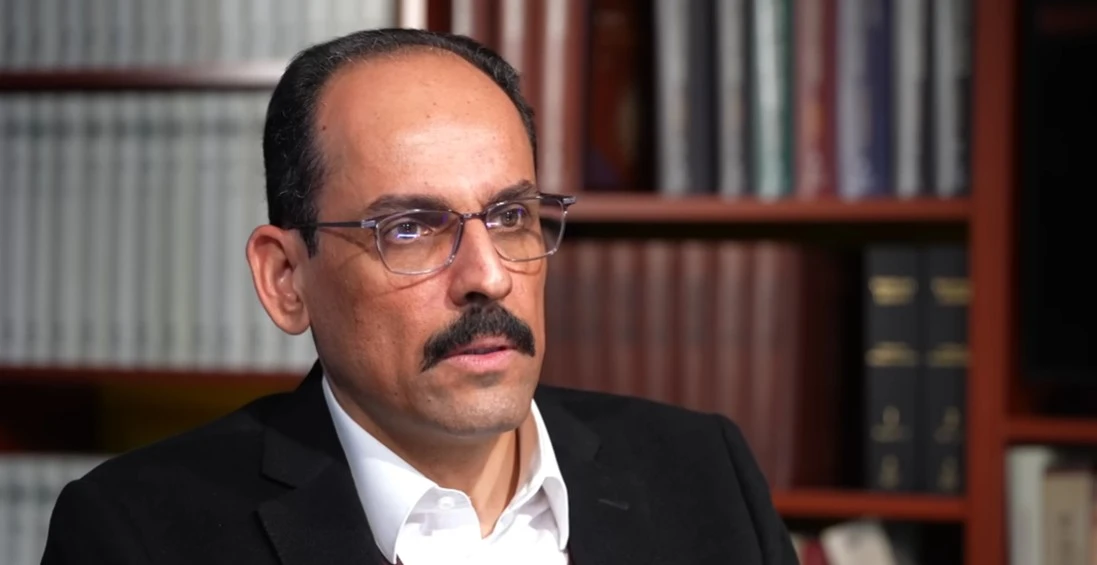
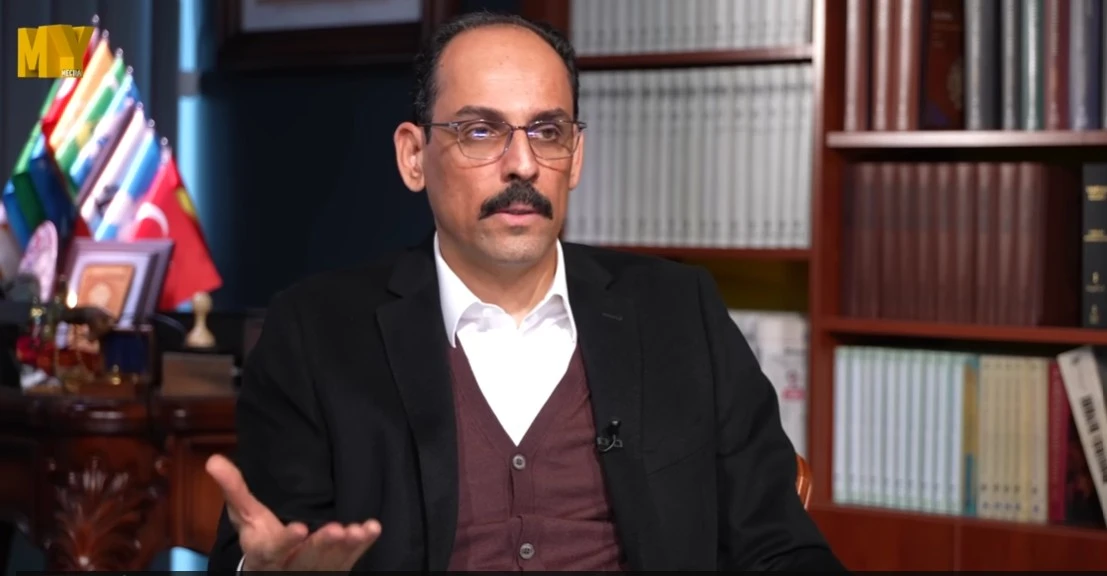
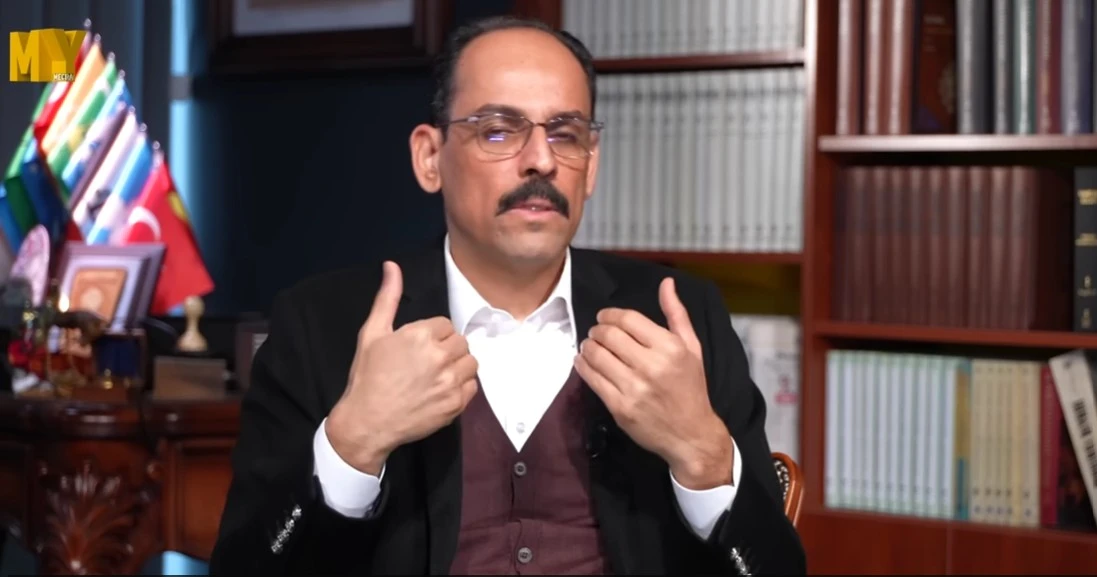
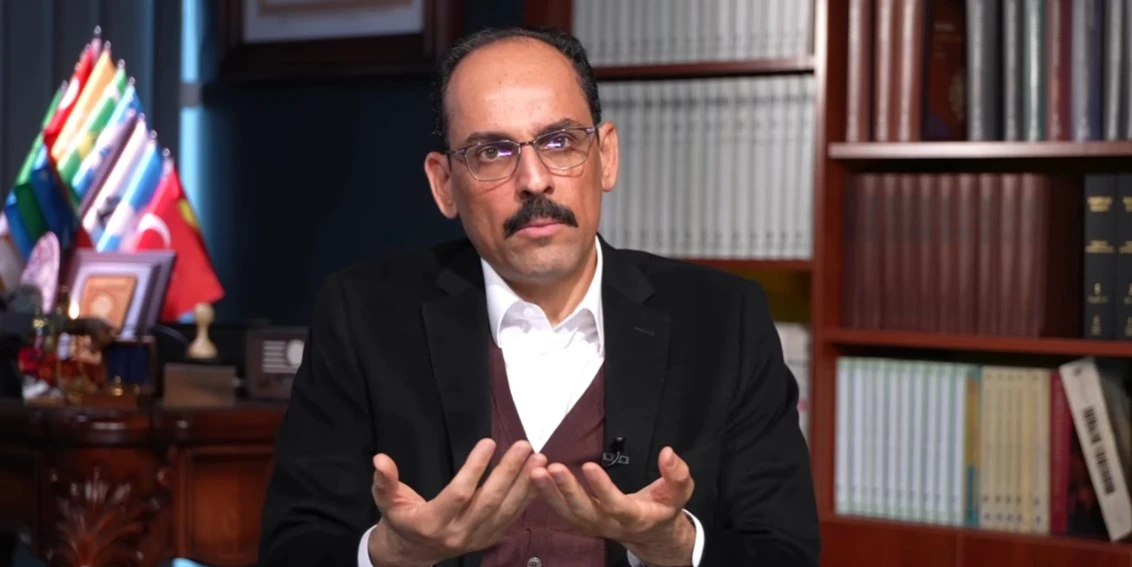
ANKARA, Türkiye — Turkish intelligence chief Ibrahim Kalin has offered a wide-ranging reflection on digital distraction, social media, privacy and the meaning of human existence in a new episode of MyMecra’s “Kendi Gökkubbemiz.”
In the program, Kalin continued his distinctive style of combining philosophy, history, Islamic thought, literature and modern cultural criticism. The episode focused on one of the most pressing questions of contemporary life: Can human beings still truly experience the present moment in an age of constant notifications, images, messages and digital performance?
MyMecra’s “Kendi Gökkubbemiz” returns with a reflective tone
“Kendi Gökkubbemiz,” broadcast on the MyMecra YouTube channel, is not a standard current affairs interview. The program has built its identity around deeper conversations on civilization, meaning, culture, tradition and the human condition.
In this episode, Ibrahim Kalin addressed modern life not through a narrow political lens, but through a philosophical and existential one. He spoke about the difficulty of concentration, the loss of inner privacy, the tyranny of digital stimuli, the meaning of worship, the misuse of the word “hobby,” the illusion of “free time,” and the modern claim that human beings can become masters of existence.
The conversation opened with the idea that people often miss the present moment. According to Kalin, living in the present is not as easy as modern slogans suggest. It requires mental discipline, moral awareness and the ability to resist external noise.


Why living in the moment has become harder
Kalin argued that modern people are constantly pulled away from themselves. Phones, breaking news alerts, social media feeds, messages and digital platforms keep the mind in a state of permanent stimulation.
Even focusing on a single book, a lecture, a conversation or a task for a few minutes can now require serious discipline. Kalin described the modern mind as increasingly restless, moving from one stimulus to another without arriving anywhere in depth.


His point was not that searching is wrong. On the contrary, the human being is naturally a seeker. But seeking must have direction. A person who can go everywhere, Kalin suggested, may end up going nowhere if he has no idea of what he is truly looking for.
This critique directly touches one of the central crises of the digital age. People have access to almost everything, but that access often produces distraction rather than wisdom.
Social media and the life lived for others
One of the strongest themes of the conversation was Kalin’s critique of social media. He argued that digital platforms often push people to live not for themselves, but for the gaze and approval of others.
A beautiful landscape, a meaningful conversation or a moment of silence is no longer simply lived. It is photographed, recorded, edited and shared. The moment becomes content before it becomes memory.
Kalin warned that when people immediately turn every experience into a public image, they may lose the depth of the experience itself. A person who rushes to capture the sunset may fail to truly see it. A person who records a gathering may fail to be present in it.
This, in his view, is part of a wider shift: reality is increasingly replaced by its representations. Images, videos and digital performances begin to stand in for actual experience.
The erosion of privacy
Kalin also underlined the importance of privacy, not only as a social or legal concept, but as a spiritual and psychological necessity.
Human beings have inner worlds. Their hearts expand and contract. They pass through moments of joy, grief, calm, anxiety, hope and hesitation. Not every one of these states should be frozen into a digital image and exposed to public curiosity.
The modern tendency to share everything, Kalin suggested, leaves people vulnerable to irrelevant attention, superficial judgment and emotional intrusion. Privacy is not merely about hiding something. It is about protecting the sanctity of the inner life.
In that sense, the constant public performance demanded by social media can damage the human being’s ability to remain whole. People begin to create identities for the platform rather than live from their own truth.
Living for oneself is not selfishness
The interview also explored the difference between living for oneself and living selfishly. Kalin rejected the idea that a person who refuses to live for public approval must necessarily be egoistic.
Living for oneself, in his framing, means living with awareness of one’s own soul, mind, heart and responsibilities. It means refusing to reduce life to the expectations of others. But this is not the same as selfishness.
For Kalin, a meaningful life is one lived in relation to a higher metaphysical principle. Human beings become truly free not by doing whatever they desire, but by submitting to higher values such as truth, goodness, beauty, justice and responsibility.
Freedom, therefore, is not the ability to do everything. Human beings are limited creatures. They cannot fly like birds or live underwater like fish. Their dignity lies in recognizing the limits and gifts given to them, and using them properly.
Worship as a discipline of presence
Kalin connected the problem of attention to the spiritual practices of Islamic tradition. He noted that worship is one of the most powerful ways of teaching the human being to be present.
When a person stands in prayer physically but is mentally elsewhere, the full taste and transformative power of worship is weakened. The obligation may be fulfilled, but the deeper purpose — the reorientation of the soul toward God — remains incomplete.
Kalin was careful to describe this as a human difficulty, not a reason for despair. The heart changes states. The mind wanders. The challenge is to notice the dispersion and return to the center.
In this sense, worship is not only a religious duty. It is also a discipline of attention, a way of protecting the soul from the noise of the world and restoring inner order.
There is no such thing as empty time
Another striking part of the conversation focused on the word “hobby.” Kalin suggested that calling meaningful pursuits “hobbies” can sometimes diminish their value.
Reading, music, calligraphy, gardening, handcrafts, listening well, caring for flowers or spending time with one’s child are not merely activities to fill empty time. They are acts that give value to time.
He also challenged the common phrase “free time.” Human beings, he argued, do not truly have empty time. They are always doing something. The real question is not whether time is empty, but how it is filled and whether what fills it refines the person.
From this perspective, reading a book or making music is not a secondary activity to be pushed to the margins of life. These are practices that enrich existence, cultivate attention and deepen the human being.
Göbeklitepe and the myth of linear progress
Kalin also turned to history, questioning the modern assumption that humanity has moved in a straight line from primitive simplicity to advanced civilization.
He pointed to Göbeklitepe as a discovery that challenges conventional narratives of progress. For a long time, modern anthropology tended to assume that human beings first met basic material needs and only later developed religious or symbolic life. Göbeklitepe complicates that picture.
For Kalin, this suggests that human beings were never merely biological creatures concerned only with survival. From the beginning, they were beings of meaning, worship, symbol, ritual and transcendence.
This view stands against a purely materialist reading of history. Civilization is not measured only by tools, machines or technical systems. It is also measured by the depth of meaning a society carries.
Is modern humanity truly civilized?
The conversation also raised a sharp question: Does technology automatically make human beings civilized?
Kalin referred to examples from modern history to argue that technical advancement can coexist with barbarism. Modern technology has been used not only to heal and build, but also to dominate, exploit and destroy.
He contrasted this with communities that modern people often label “primitive,” such as isolated tribes living in harmony with nature. If technologically advanced people invade their lands for gold, kill them and then observe them with drones, who is truly primitive?
The question turns the modern self-image upside down. Civilization, Kalin implied, is not a matter of possessing advanced tools. It is a matter of justice, mercy, wisdom, restraint and moral awareness.
History is not behind us, but beneath our feet
One of the most powerful lines of the conversation was Kalin’s statement that in the human journey, history is not behind us but beneath our feet.
The phrase suggests that history should not be seen merely as a series of events left in the past. It is a ground on which human beings stand and from which they may rise.
If human beings grow intellectually, morally and spiritually, history becomes a step upward. But if they only move horizontally — producing more tools, consuming more images, collecting more information — they may simply circle the same place without true elevation.
Kalin placed this reflection in a cosmic perspective. The universe is vast, human life is brief, and the human being occupies an extremely small place in the order of existence. Yet this smallness does not mean insignificance. It means responsibility.
A warning against the illusion of mastery
The episode ended with a warning against the human claim to become the master of existence. In a universe of immense scale, with billions of galaxies and countless forms of life, the human being’s physical place is tiny.
Yet modern man often acts as though he can rule over everything. Kalin’s message was a reminder of limits, humility and the need to know one’s place.
The true task of the human being is not to dominate existence, but to understand the trust placed upon him: his mind, soul, heart, time, abilities and moral responsibility.
In the end, the interview offered a quiet but powerful message for the digital age. To live well, human beings must learn again how to be present, how to protect their inner world, how to resist constant distraction and how to remember that existence is not a performance to be displayed, but a trust to be honored.
Yusuf Inan
Yusuf Inan is a journalist and writer. He serves as Editor-in-Chief of UAPresa.com, WiseNewsPress.com, SehitlerOlmez.com and YerelGundem.com, and specializes in strategic and political analysis of Turkish and global affairs.
What's Your Reaction?
 Like
0
Like
0
 Dislike
0
Dislike
0
 Love
0
Love
0
 Funny
0
Funny
0
 Wow
0
Wow
0
 Sad
0
Sad
0
 Angry
0
Angry
0

Editor | Wise News Press — Delivering accurate, timely global news with integrity, insight, and editorial responsibility.





















Comments (0)