



Luana Lopes Lara: Kalshi rise makes her youngest self-made billionaire
Former ballerina and MIT graduate Luana Lopes Lara built a $2.6 billion fortune as Kalshi expanded prediction markets in the United States.


By Ahmet Taş | Wise News Press
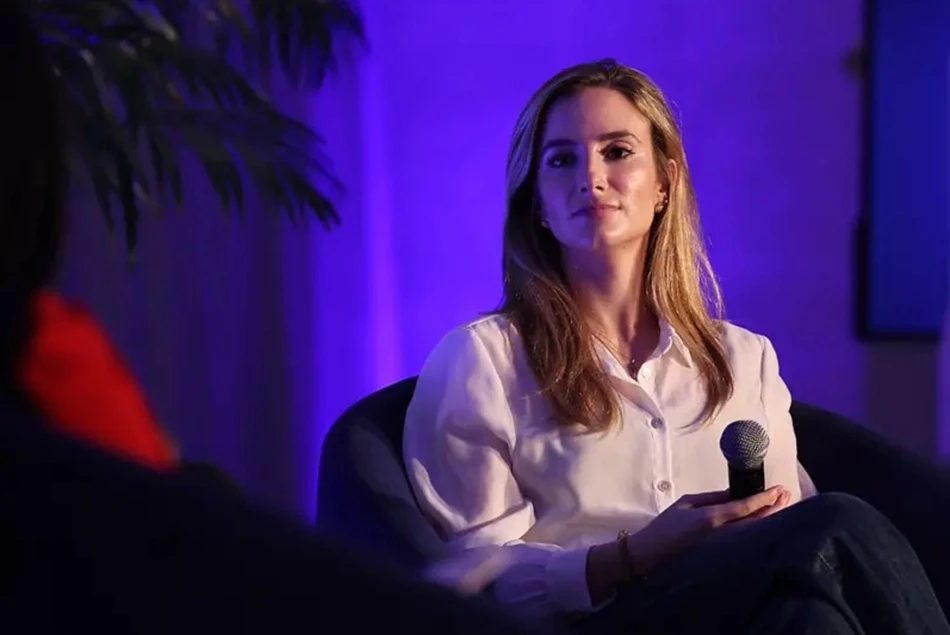
RIO DE JANEIRO, BRAZIL — Brazilian entrepreneur Luana Lopes Lara, a former ballerina and MIT graduate, has built a $2.6 billion fortune through Kalshi, the prediction-market platform she co-founded with Tarek Mansour.
According to BBC News Mundo, Forbes now ranks the 30-year-old as the world’s youngest self-made billionaire, marking an extraordinary rise for an entrepreneur whose career began not on Wall Street or in Silicon Valley, but in a demanding Brazilian ballet school.
Kalshi allows users to trade contracts linked to the outcomes of real-world events, ranging from elections and inflation data to sports and entertainment. Its rapid expansion has also fueled a wider debate over whether prediction markets should be viewed as financial exchanges, a new form of betting, or something that falls between the two.
From ballet to MIT
Before entering finance, Lopes Lara trained at the Brazilian campus of the Bolshoi Theatre School, the renowned institution’s only branch outside Russia.
Her teenage years combined academic studies with an intensive ballet schedule. Lopes Lara told the BBC that she trained for as many as eight hours a day in a highly competitive environment where the number of professional roles was limited.


She has described that experience as important preparation for the pressures she would later encounter as an entrepreneur.
At the same time, Lopes Lara pursued mathematics and science. She won a gold medal in the Brazilian Astronomy Olympiad and a bronze medal in the Santa Catarina Mathematics Olympiad.
After finishing high school, she moved to Salzburg, Austria, where she danced professionally for a season of “Swan Lake.” About nine months later, she decided to leave professional ballet and pursue a different career.


Lopes Lara moved to the United States to study computer science and mathematics at the Massachusetts Institute of Technology. She later focused on statistics and quantitative finance.
MIT also brought her into contact with Tarek Mansour, a computer science student who was born in California and raised in Lebanon. Both later completed internships on Wall Street.
Their shared experience in financial markets would eventually lead to Kalshi.
The idea behind Kalshi
The concept emerged in 2018 while Lopes Lara and Mansour were working in finance.
Lopes Lara noticed that investors who held strong views about future political or economic events generally had to express those expectations indirectly through existing financial instruments.
Brexit was one example. An investor expecting Britain to leave the European Union might trade the British pound or another asset influenced by the outcome rather than directly trade a contract on whether Brexit would occur.
Lopes Lara and Mansour envisioned a marketplace where the outcome itself could become the object of a financial transaction.
They called the company Kalshi, a name derived from an Arabic word meaning “everything,” reflecting their broader ambition to make a wide range of uncertain future events tradable.
Prediction markets operate through what are commonly described as event contracts. Users can take positions on whether a defined outcome will happen, while the market price reflects participants’ collective assessment of its probability.
The platform has offered markets related to elections, economic indicators, sporting events and entertainment awards.
The founders later took their idea to Y Combinator, the California-based startup accelerator associated with companies including Airbnb and Reddit, presenting Kalshi as an exchange for events.
The concept attracted investors, but it also faced an immediate problem: regulation.
Years of regulatory hurdles
Building a nationwide prediction market in the United States meant confronting the complex boundary between financial trading and gambling regulation.
Lopes Lara and Mansour argued that Kalshi was not a traditional betting company. Instead, they sought to have its products treated as federally regulated event contracts under the oversight of the U.S. Commodity Futures Trading Commission, or CFTC.
The regulatory strategy was critical because gambling laws differ across U.S. states, while the CFTC operates at the federal level.
According to the BBC report, the founders consulted more than 60 lawyers, many of whom advised them not to pursue the project because similar ideas had failed to win approval in previous decades.
They eventually began working with Jeff Bandman, a lawyer and former CFTC official who helped guide the company through the regulatory process.
After roughly two years of discussions with regulators, Kalshi received federal approval in November 2020.
The company opened its platform to the public in July 2021, initially operating through its website and gradually adding more event contracts.
By 2022, Kalshi had an office in New York, 32 employees and was processing about 2 million contracts a week, according to figures cited by the BBC.
Election markets transform Kalshi’s growth
U.S. elections became one of the most important turning points for the company.
The CFTC initially blocked Kalshi from offering contracts tied to election outcomes, arguing that such markets were too similar to gambling.
Lopes Lara challenged the regulator in court despite concerns from some of the company’s own investors. She argued that election outcomes have broad economic and social consequences and that markets could provide useful information about expectations surrounding those events.
Kalshi won the case in September 2024, clearing the way for legal election-related prediction trading on the platform.
The decision significantly increased public attention surrounding the company, and Kalshi’s mobile application rose sharply in U.S. app rankings during the presidential election period.
Prediction-market data also began appearing in political debate.
During the 2025 New York City mayoral race, candidate Zohran Mamdani at one point referred to Kalshi figures showing his probability of victory above 90%, according to the BBC.
Lopes Lara argues that such markets can provide information that complements traditional polling because participants have money at stake when expressing their expectations.
An $11 billion valuation creates a billionaire
Kalshi’s growth eventually transformed its founders’ personal wealth.
By December 2025, the company had reached a valuation of $11 billion.
At the time, Lopes Lara reportedly owned about 12% of the company, valuing her stake at approximately $1.3 billion and making her, at 29, the youngest woman to create a fortune of that scale herself.
Kalshi continued expanding geographically.
In March 2026, the company launched outside the United States for the first time, beginning international operations in Lopes Lara’s home country of Brazil.
The founders’ estimated wealth continued climbing as the company’s valuation increased. By May 2026, their net worth had reportedly more than doubled in roughly six months.
BBC News Mundo reported Lopes Lara’s fortune at $2.6 billion, placing her at the top of Forbes’ ranking of the world’s youngest self-made billionaires.
Prediction market or gambling platform?
The financial success has not ended questions surrounding Kalshi’s business model.
One central dispute is whether prediction markets represent a legitimate financial marketplace or a technologically sophisticated form of gambling.
Kalshi argues that its structure differs fundamentally from a traditional casino or sportsbook because users trade against other market participants rather than against the company itself.
The company says it generates revenue from transaction fees rather than directly profiting when users lose their positions. Lopes Lara has compared the model with established futures and options markets.
Market integrity presents another challenge.
A person with confidential knowledge about an event could potentially trade before the information becomes public, gaining an advantage over other participants. Kalshi says the use of inside information is prohibited and that suspicious activity is investigated.
Ethical concerns extend beyond insider trading to the types of events that should be tradable.
Lopes Lara has said Kalshi draws a line at markets directly involving violent acts such as terrorism or murder. However, the BBC noted that the platform has permitted contracts connected to highly sensitive geopolitical and humanitarian developments, prompting questions about where those boundaries should be drawn.
Craig Holman, a government affairs lobbyist with the consumer advocacy organization Public Citizen, has criticized the expansion of markets that effectively allow financial positions to be taken on an increasingly broad range of real-world events.
Kalshi, meanwhile, argues that financial incentives encourage participants to seek better information and that aggregated market prices can provide useful signals about future events.
That debate is likely to remain central to Kalshi’s development as prediction markets become more visible in finance, politics and popular culture.
For Lopes Lara, the transformation has already been dramatic: from years of ballet training in Brazil to MIT, Wall Street and ultimately a multibillion-dollar technology company built around trading expectations about the future.
WiseNewsPress.com
What's Your Reaction?
 Like
0
Like
0
 Dislike
0
Dislike
0
 Love
0
Love
0
 Funny
0
Funny
0
 Wow
0
Wow
0
 Sad
0
Sad
0
 Angry
0
Angry
0

Editor | Wise News Press — Delivering accurate, timely global news with integrity, insight, and editorial responsibility.




















Comments (0)