



Can Russia weaken Ukraine from within? The hybrid war beyond the front
Russia has struggled to achieve its maximal aims in Ukraine by force. This analysis examines hybrid warfare, political pressure and internal resilience.


By Yusuf İnan | Wise News Press
Journalist and Author | Political and Strategic Analyst
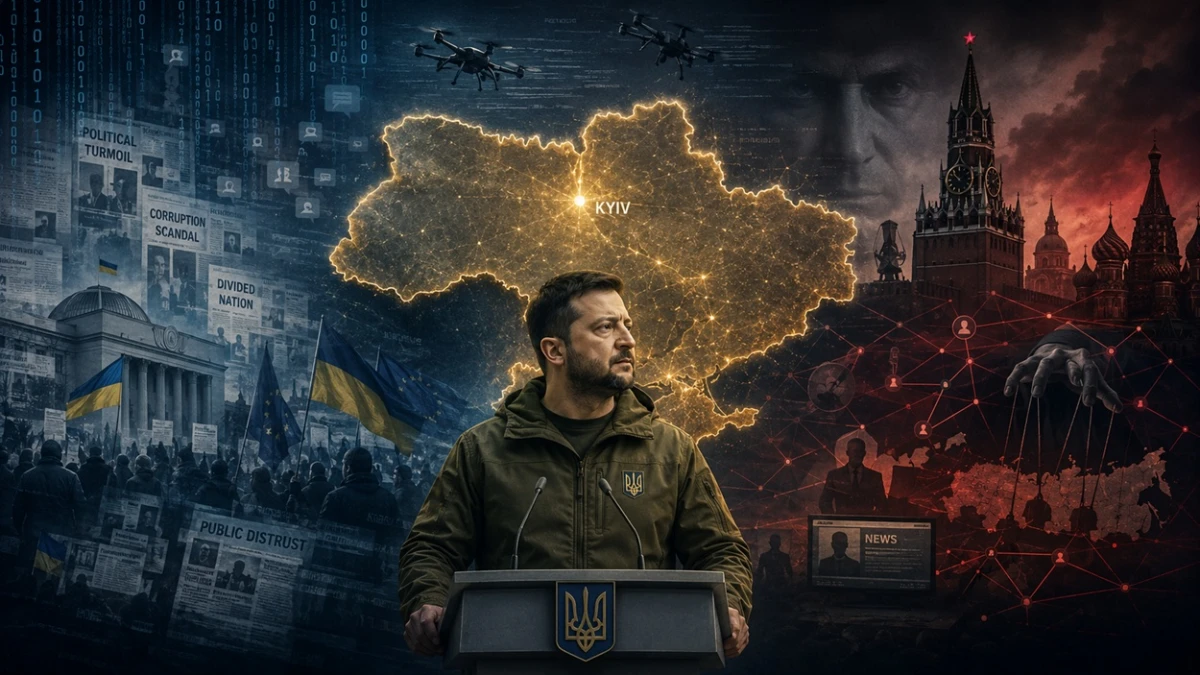
ANKARA, TÜRKİYE — Russia has failed for more than four years to achieve its maximal objectives in Ukraine through military force alone, while a second battlefield is increasingly emerging around state institutions, political competition, public trust and Kyiv’s relations with its Western partners.
That does not mean Russia is no longer a formidable military threat. Moscow still occupies roughly one-fifth of Ukraine and continues to seek territorial gains. But the swift political collapse in Kyiv that Russia appeared to anticipate in 2022 never materialized. The Ukrainian state survived, its armed forces gained extensive combat experience, and the war has increasingly reached deep into Russia’s own economic and logistical infrastructure.
The next phase of the conflict, therefore, will not be fought only with tanks, missiles and drones.


A second front after battlefield objectives fell short
One of the most striking strategic consequences of Russia’s invasion has been the reversal of some of Moscow’s original geopolitical expectations.
Finland abandoned decades of military non-alignment and joined NATO in 2023. Sweden followed in 2024, becoming the alliance’s 32nd member. NATO itself explicitly links both countries’ policy changes to Russia’s full-scale invasion of Ukraine.
Moscow is also facing more independent behavior from partners across the former Soviet space.


On 25 July, Kazakh President Kassym-Jomart Tokayev, speaking alongside Russian President Vladimir Putin, publicly suggested freezing the war and returning to what he called an “Istanbul formula 2.0” for negotiations. Putin did not embrace the proposal.
At the same time, Ukraine has developed the capability to carry the war deep into Russian territory.
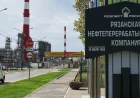
A large Ukrainian drone attack hit the Moscow region on 16 August, while repeated strikes against Russian oil infrastructure have contributed to fuel shortages and sales restrictions, including in Moscow.
The cost of the war for Russia can therefore no longer be measured only by developments on Ukrainian territory.
But this creates another strategic possibility:
If Ukraine cannot be forced into submission on the battlefield, can it be weakened from within?
Ukraine’s internal fractures may be Russia’s cheapest weapon
The logic of modern hybrid warfare is not necessarily to manufacture every crisis from nothing.
It can be far more effective to amplify an existing dispute, turn a genuine corruption scandal into a crisis of state legitimacy, frame a legitimate protest as evidence of national collapse, or intensify political rivalry until it begins to damage a country’s wartime capacity.
The European External Action Service said in its 2025 report on foreign information manipulation that Russia-linked operations repeatedly targeted Ukraine’s struggle for sovereignty while spreading narratives such as “Ukraine does not want peace” and portraying Kyiv as a puppet of Western powers. The report also documented tactics including AI-generated content, manipulated translations, impersonation and proxy actors.
Recent sabotage cases demonstrate that the hybrid threat is not merely theoretical.
A German court on 18 August convicted a Ukrainian national over what prosecutors described as a Russian intelligence-linked sabotage operation involving parcels sent through Europe. In Estonia, authorities are investigating possible Russian involvement in an arson attack on a building used by defence contractor Milrem Robotics, which supplies unmanned systems to Ukraine. Russia routinely rejects accusations that it is behind such operations.
Against that background, internal political tensions inside Ukraine acquire extraordinary strategic value for Moscow.
Why Kyiv’s protests matter to Moscow
Ukraine experienced one of its most serious episodes of wartime political tension during the summer of 2026.
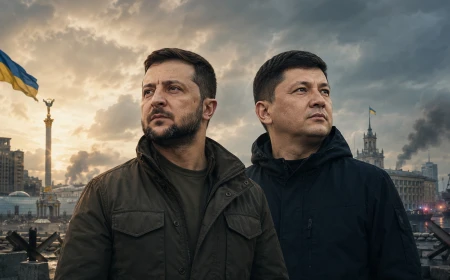
President Volodymyr Zelenskyy’s decision to dismiss Defence Minister Mykhailo Fedorov triggered protests in Kyiv and other cities. Fedorov later called for elections during the war and described the country as facing a systemic governance crisis. Ukrainian law does not allow national elections while martial law remains in force.
The Kremlin quickly incorporated that dispute into its own political narrative.
Kremlin spokesperson Dmitry Peskov presented Fedorov’s call as evidence of divisions inside Ukraine and repeated Moscow’s longstanding argument questioning Zelenskyy’s legitimacy in the absence of elections.
A crucial distinction must be made here:
The existence of protests in Ukraine does not mean the protesters are being directed by Russia.
Ukrainians who objected to Fedorov’s dismissal may have legitimate political and administrative concerns. Criticizing the government in a democratic country is not evidence of a Russian operation.
The strategic danger is different: Moscow can seek to amplify real disagreements, manipulate their meaning and transform political criticism into a broader narrative of wartime illegitimacy and state failure.
Labeling every critic a “Russian agent” would itself be a serious mistake. It would weaken democratic accountability and could ultimately create precisely the distrust between society and the state that Moscow would benefit from.
The Ankara NATO Summit showed why Türkiye matters
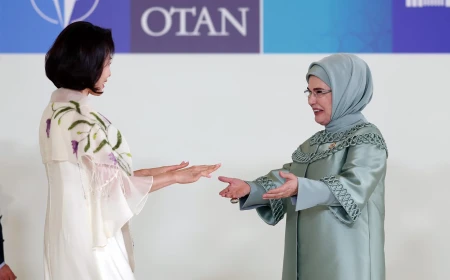
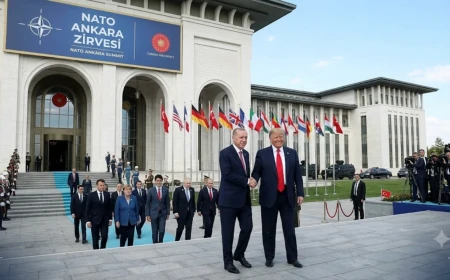
The NATO Summit held in Ankara on 7–8 July again demonstrated Türkiye’s strategic importance in the Ukraine war.
Zelenskyy delivered a keynote address at the NATO Summit Defence Industry Forum in Ankara, while NATO also held direct meetings and remarks involving the Ukrainian president. NATO’s official media archive confirms both his participation and the forum’s location in Ankara.
Türkiye is not an ordinary partner for Kyiv.
Its role touches the Black Sea, Crimean Tatars, defence cooperation, prisoner exchanges, grain diplomacy and the unusual ability to maintain direct channels with both Ukraine and Russia.
For precisely that reason, incidents capable of producing public anger between Türkiye and Ukraine deserve particular attention in the context of hybrid warfare.
A local administrative dispute can remain a local dispute. But if mishandled, it can also become material for a much larger information operation.
The Mykolaiv case: How can a local crisis become a strategic risk?
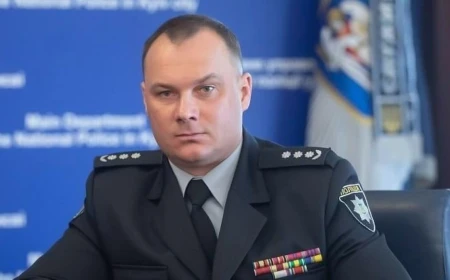
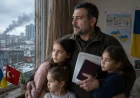
During 2026, I personally experienced and documented a series of disputes in Mykolaiv involving my children, my residence procedures, contacts with the SBU and police authorities, and later property-related issues.
I have brought those events to public attention together with the documents available to me.
At the same time, I must draw a clear analytical boundary: my assessment that these incidents could potentially be exploited within Russia’s broader hybrid-war strategy is an analysis, not a proven allegation that Russian intelligence organized them. There is currently no independent, publicly available evidence establishing such a direct connection.
But that distinction does not make the strategic risk irrelevant.
The experience of a Turkish citizen in Ukraine could be transformed in Turkish public opinion into a much broader message: “This is how Ukraine treats Turkish citizens.”
From there, such a narrative can be amplified by pro-Russian media outlets and social networks.
An individual legal dispute can evolve into a Türkiye-Ukraine diplomatic controversy; from there, into criticism of Ukraine’s rule-of-law record; and eventually into propaganda aimed at NATO, European and Turkish audiences.
That is one of the central mechanisms of hybrid warfare:
You do not always have to create the small incident. It may be enough to turn an existing incident into a strategic weapon.
This is why local bureaucratic misconduct, arbitrary police decisions or failures to respond transparently can become national-security vulnerabilities during wartime.
Zelenskyy’s reshuffle reflects a changing battlefield
Recent changes at the highest levels of Ukraine’s security establishment also form part of this wider picture.
In January, Zelenskyy replaced SBU chief Vasyl Maliuk and appointed Major-General Yevhenii Khmara as acting head of the security service. Reuters described the move as a significant reshuffle of an institution central to Ukraine’s shadow war against Russia.
The restructuring continued through the summer.
Major-General Mykhailo Drapatyi was appointed commander-in-chief of the armed forces in July as Zelenskyy sought to reset Ukraine’s military strategy. Khmara subsequently moved to the Defence Ministry and was confirmed by parliament as defence minister on 19 August.
These changes are not evidence of Russian infiltration.
They do, however, underline that Kyiv understands the war can no longer be managed solely as a conventional battlefield campaign.
Ukraine must simultaneously maintain military effectiveness, fight corruption, protect intelligence institutions, dominate technological warfare, preserve public legitimacy and retain the confidence of international partners.
Claims that the West has entirely abandoned Ukraine are also inaccurate. The European Union reported in June that its overall support to Ukraine and Ukrainians had reached €211.3 billion.
Russia’s cheaper victory may be to isolate Kyiv
It is increasingly insufficient to define Moscow’s objective solely as the capture of additional Ukrainian territory.
A cheaper strategic victory could look very different:
Erode Ukrainian society’s confidence in government.
Turn political and military factions against one another.
Amplify corruption scandals until Western support becomes politically harder to sustain.
Constantly question Zelenskyy’s legitimacy.
Intensify demands for elections while the war continues.
Damage relations with strategic partners such as Türkiye through local controversies.
Convince European publics that Ukraine is no longer worth supporting.
And eventually isolate Kyiv politically at the negotiating table rather than defeating it militarily.
This possibility is not purely theoretical. The Kremlin’s public emphasis on divisions in Kyiv demonstrates how valuable that narrative already is to Moscow.
Ukraine nevertheless retains an important advantage.
Fedorov’s attempt to broaden the political confrontation by calling for wartime elections failed to gain the expected momentum. Reuters reported that the protests faded significantly, most Ukrainians continued to oppose elections during active war, and Zelenskyy’s approval remained at around 60%.
That suggests Ukrainian society still possesses considerable resilience.
Defeating Russia’s hybrid strategy, however, requires more than counter-intelligence operations.
Ukraine must strengthen the rule of law, investigate corruption transparently, protect the rights of foreign citizens, prevent arbitrary conduct by local police and security bodies, distinguish democratic criticism from hostile activity, and professionally identify genuine Russian influence networks. The revised analysis makes this institutional resilience the central battlefield of the next phase.
Because every Ukrainian institutional failure is also a potential Russian opportunity.
An unlawful decision at a police station, an arbitrary immigration procedure, an unexplained personnel change or an unanswered corruption allegation is no longer merely a local problem in wartime.
Each can become ammunition in an information war.
Russia has so far failed to achieve its maximal objectives in Ukraine through conventional military power. But if Moscow can turn Ukrainian institutions against one another, deepen distrust between citizens and the state, and separate Kyiv from its international partners, it may seek by political means what it could not achieve on the battlefield.
The new front is therefore not only Donbas, Zaporizhzhia or the Black Sea.
The new front is the internal resilience of the Ukrainian state.
And that may now be one of the most critical battles Kyiv has to win.
Yusuf İnan
WiseNewsPress.com
Yusuf İnan is a journalist, author, and political and strategic analyst. He serves as editor-in-chief of UAPresa.com, WiseNewsPress.com, SehitlerOlmez.com, SiyasetinSesi.com and YerelGundem.com. His work focuses on strategic and political analysis concerning developments in Türkiye and around the world.
What's Your Reaction?
 Like
0
Like
0
 Dislike
0
Dislike
0
 Love
0
Love
0
 Funny
0
Funny
0
 Wow
0
Wow
0
 Sad
0
Sad
0
 Angry
0
Angry
0
Yusuf İnan is a journalist, columnist, strategic analyst and head of the Wise News Press Media Group. His work focuses on international affairs, geopolitics, security and major social issues. Through his journalism, he promotes peace, dialogue, mutual understanding and responsible reporting while contributing to the development of international media projects.














Comments (0)