



The hidden heroine of May 19: The only woman to greet Atatürk in Samsun
Discover the story of Sakine Baturay, the only woman to welcome Atatürk at the Samsun pier in 1919 and a vital organizer of the national struggle.



By Ahmet Taş | Wise News Press
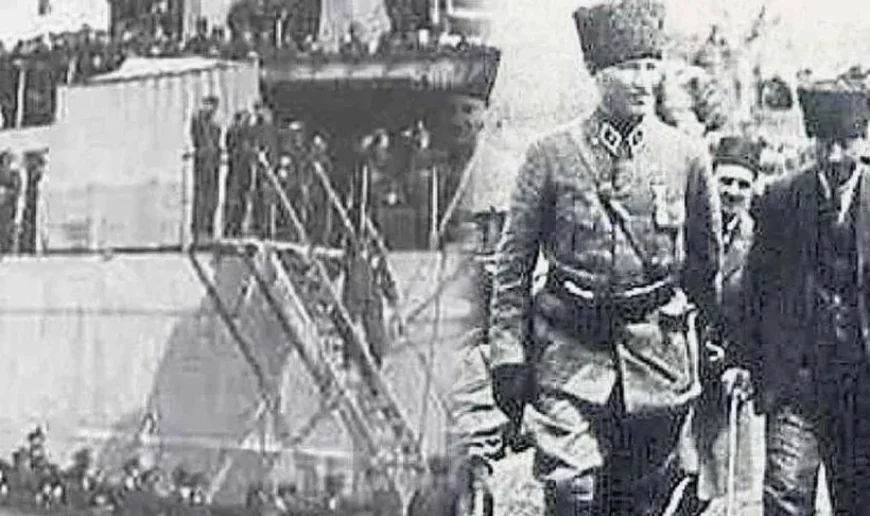
SAMSUN, TÜRKİYE — Sakine Baturay stands as a unique figure in the annals of Turkish history, recognized as the only woman among the crowd to welcome Gazi Mustafa Kemal Atatürk and his 18 companions at the Reji Pier in Samsun on May 19, 1919. Her presence at the pier was not merely a symbolic gesture but the beginning of a dedicated period of organizing local women to support the front lines during the arduous years of the War of Independence.
Born in the Erzurum province, Baturay’s life was marked by extreme hardship and a relentless spirit of survival that eventually placed her at the center of one of Turkey's most significant historical moments. According to family accounts and historical researchers, her journey from a village in Erzurum to the pier in Samsun represents the resilience of Anatolian women who formed the backbone of the national resistance.
From the mountains of Erzurum to the shores of Samsun
Sakine Hanım was born in 1896 in the village of Baksır-Kındız, located in the İspir district of Erzurum. In the early 1910s, she married Muhsin Bey, and in 1913, she gave birth to her son, Lütfü. However, the joy of motherhood was accompanied by a significant challenge; Lütfü was born with a physical disability, with his feet turned inward at a 90-degree angle.
While her husband was away serving in the Yemen War, her village faced frequent attacks by Armenian militias. Fearing for the safety of her disabled son, Sakine Hanım made the courageous decision to seek refuge with her father, Hasan Reis, who was living in Samsun. This journey, undertaken during the peak of winter, lasted two and a half months. Carrying her disabled child through the snow and difficult terrain, she finally reached the Black Sea coast, where she began a new life working alongside her father.


Self-education and hospital service
Upon arriving in Samsun, Sakine Hanım sought medical help for her son. With the assistance of a prominent local family, the Ömerzadeler, she managed to get Lütfü admitted to a hospital. During his treatment, she remained by his side, but she did not stay idle. She began volunteering at the hospital, assisting other patients and eventually being employed as a formal nurse.

It was during this time that her intellectual curiosity blossomed. A resident American doctor at the hospital took notice of her dedication and began teaching her English and the Latin alphabet. This education was rare for women of her background at the time and would later assist her in her organizational efforts. Her time at the hospital not only provided her with the skills to care for the wounded but also integrated her into the social and political fabric of Samsun as the clouds of the Great War began to clear.


The historic morning at Reji Pier
As news spread through Samsun that Mustafa Kemal Atatürk would be arriving on May 19, 1919, Sakine Hanım felt a profound sense of duty to be present. She made her way to the Reji Pier (known today as the Tütün Pier) to witness the arrival of the SS Bandırma. Among the military officials and local dignitaries gathered to meet the future founder of the Republic, Sakine Hanım was the only woman present.

Historian and teacher Necat Çetin, who has researched Baturay’s life extensively, noted that she carried the pride of this moment for the rest of her life. "She would always tell her children and grandchildren, 'I was the only woman at the pier to greet Mustafa Kemal Pasha on that day,'" Çetin said. Her presence was a testament to the quiet but firm involvement of women in the early stages of the National Struggle, even before the official mobilization of the Anatolian resistance.
Organizing the resistance in Samsun
Greeting Atatürk was only the beginning of Sakine Baturay’s contribution to the War of Independence. Throughout the conflict, she utilized her position in the community to organize the women of Samsun. She led efforts to collect wool and raw materials to produce clothing, underwear, and blankets for the soldiers fighting on the various fronts of Anatolia.

Her bilingual skills and medical knowledge made her a bridge between the local community and the medical needs of the burgeoning resistance. After learning that her first husband had been martyred in the Yemen War, she eventually married Abdullah Bey, a fellow nurse at the hospital. Together, they continued to serve the community until the end of the war, after which they moved to the Torbalı district of İzmir.
The legacy of a silent hero
The story of Sakine Baturay remained largely confined to family lore until it was brought to light through oral history. In 2008, Necat Çetin met with Sakine’s son, Orhan Baturay, in Torbalı. During their conversation, Orhan Bey shared his mother's frequent reminiscences about the Samsun pier. Çetin proceeded to verify these accounts by interviewing elderly neighbors and community members, such as Hasan Varlık and Çetin Çorapçıoğlu, who confirmed that Sakine Hanım had shared these memories with the public throughout her life.
Sakine Baturay passed away in 1976 in İzmir, leaving behind a legacy of quiet heroism. While formal records of the time often focused on military commanders, the narrative of Sakine Hanım reminds modern historians of the crucial roles played by civilians, especially women, in the founding of the Republic. Her life serves as a bridge between the traditional world of Erzurum and the modern, secular ideals of the new state, as evidenced by her early adoption of the Latin alphabet and her active role in the public sphere.
As Turkey continues to celebrate the spirit of May 19, the story of the lone woman at the pier serves as a poignant reminder that the National Struggle was a collective effort of the entire nation, regardless of gender or social standing.
What's Your Reaction?
 Like
0
Like
0
 Dislike
0
Dislike
0
 Love
0
Love
0
 Funny
0
Funny
0
 Wow
0
Wow
0
 Sad
0
Sad
0
 Angry
0
Angry
0

Editor | Wise News Press — Delivering accurate, timely global news with integrity, insight, and editorial responsibility.



















Comments (0)