



Moldova’s Sovereignty: A Journey of History and Identity
Moldova navigates its complex path between European integration and Soviet legacy, facing economic hurdles and frozen conflicts in a strategic region.


By Ahmet Taş | Wise News Press
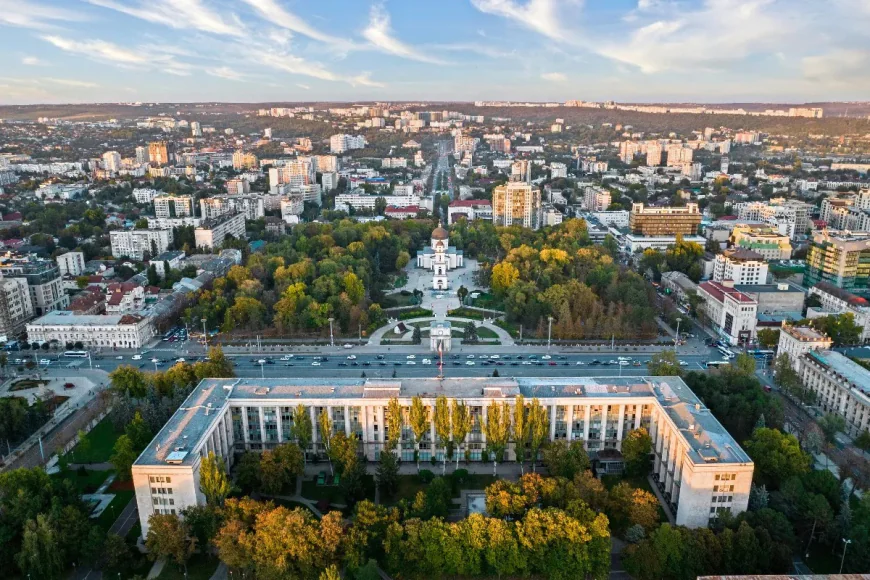
CHISINAU, MOLDOVA — Moldova, a landlocked nation situated between Ukraine and Romania, continues to define its sovereign path more than three decades after the 1991 collapse of the Soviet Union.
While the country boasts a relatively high Human Development Index, it remains the second poorest nation in Europe by GDP per capita, struggling with a legacy of shifting borders and geopolitical polarization. Today, the capital of Chisinau serves as the heart of a semi-presidential republic that is attempting to balance deep historical ties with Romania against a persistent Russian influence that complicates its territorial integrity.
From Ottoman Rule to Soviet Integration
The history of Moldova is a chronicle of frequent occupations and shifting allegiances. Historically known as Bessarabia, the region between the Prut and Dniester rivers was part of the Principality of Moldavia. For 300 years, until 1812, the principality—referred to by the Ottomans as "Bogdan"—remained under Ottoman sovereignty. The 1812 Treaty of Bucharest ceded a portion of this land to the Russian Empire, where it remained a province until 1918.
Following the 1917 Russian Revolution, the region briefly emerged as the autonomous Moldavian Democratic Republic before voting to join Romania in 1918. This union was contested by Soviet Russia, leading to the creation of the Moldavian Autonomous Soviet Socialist Republic (MASSR) on the eastern bank of the Dniester. By 1940, as a result of the Molotov-Ribbentrop Pact, the Soviet Union forced Romania to cede Bessarabia, establishing the Moldavian Soviet Socialist Republic (MSSR). This era saw forced Russification, the mandatory use of the Cyrillic alphabet, and the mass deportation of ethnic Romanians to Central Asia.
Post-Independence Realities and Frozen Conflicts
Moldova’s declaration of independence on August 27, 1991, followed the failed coup attempt in Moscow. However, the early years of statehood were immediately tested by ethnic and regional tensions. In 1992, the War of Transnistria broke out, resulting in the de facto independence of the Transnistria region along the eastern bank of the Dniester River. To this day, Russian troops remain stationed in the area, serving as a barrier to any potential reunification with Moldova.


In contrast to the frozen conflict in the east, the issue of the Turkic-speaking Gagauz people in the south was resolved through peaceful means. The 1994 Gagauz Law established an autonomous region (Gagauzia) with its own parliament, police force, and presidency. While Gagauzia remains politically aligned with pro-Russian parties, its autonomy stands as a unique example of a successfully negotiated ethnic settlement in the post-Soviet space.
The Struggle for Economic Sustainability
The transition to a market economy has been arduous for Moldova. Since the collapse of Soviet industrial and agricultural supply chains, the service sector has grown to dominate over 60% of the nation's GDP. Despite this growth, Moldova ranks 80th globally in the Human Development Index, the lowest in Europe.
Corruption remains a systemic obstacle. International reports frequently highlight widespread bribery within the judiciary, police, and bureaucracy. This lack of judicial integrity has allowed criminal elements to maintain influence in rural areas, further eroding public trust in state institutions. Consequently, the "flawed democracy" rating by The Economist’s Democracy Index reflects low scores in government functioning and political culture, despite relatively high marks for the electoral process and civil liberties.


Geopolitical Polarization: EU vs. Russia
Moldovan politics is defined by a sharp divide between pro-European and pro-Russian factions. The election of Maia Sandu as President in 2020 and the subsequent victory of the Action and Solidarity Party (PAS) in 2021 signaled a clear mandate for European integration. Under the leadership of Prime Minister Dorin Recean, the current government aims to modernize the state apparatus and align with European standards.
However, opposition parties, including the Party of Socialists and the Party of Communists, strongly oppose NATO membership and closer ties with Romania, favoring strategic cooperation with Russia. This polarization is often exploited during election cycles, particularly in regions like Transnistria, where the central government sets up polling stations on the western side of the border to allow residents to vote while preventing administrative interference from de facto authorities.
The Crisis of Identity: Moldovan or Romanian?
A central question in Moldovan society remains the debate over national identity. While the country shares deep historical and linguistic ties with Romania, the Soviet-era "Moldovanism" policy—which aimed to distinguish Moldovans from Romanians—continues to influence the populace. A February 2023 survey revealed that while 32% of Moldovans feel culturally connected to Romania, 74% still identify primarily as "Moldovan" rather than "Romanian."
The debate over the union with Romania is closely tied to the country's broader geopolitical orientation. Parties that support the union are typically the same factions advocating for European Union and NATO membership. Conversely, those who identify with the "Moldovan" label often view the union as a threat to sovereignty and prefer to maintain a neutral or pro-Russian stance. This identity crisis remains a potent factor that shapes everything from linguistic policies to foreign relations.
As Moldova moves further into 2026, its ability to reform its judicial system and maintain stability in the face of external pressures will determine its success in achieving long-term European aspirations. For a nation that has spent centuries as a borderland for empires, the current era represents its most significant opportunity to secure a permanent place within the European community.
What's Your Reaction?
 Like
0
Like
0
 Dislike
0
Dislike
0
 Love
0
Love
0
 Funny
0
Funny
0
 Wow
0
Wow
0
 Sad
0
Sad
0
 Angry
0
Angry
0

Editor | Wise News Press — Delivering accurate, timely global news with integrity, insight, and editorial responsibility.
















Comments (0)